Issue · Budget & Taxes

Budget & Taxes

Every budget & taxes bill, vote, and legislator stance in Oklahoma, automatically classified by Maddy, our AI policy reader.

Total bills
150
119th Congress
Top supporter
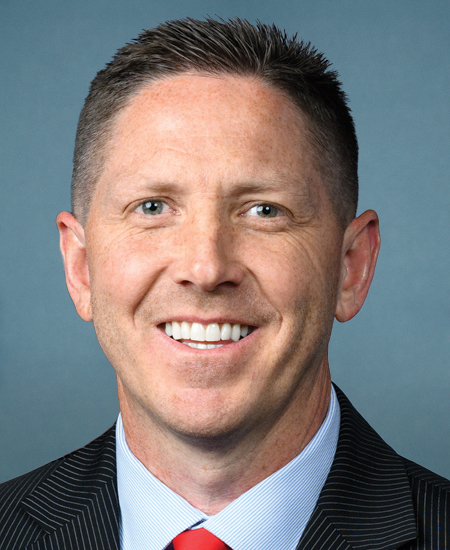
Josh Brecheen
80% support rate
Top opponent
Alan Armstrong
24% support rate
Ranked legislators
7
5 support · 2 oppose
Key legislators

Who's moving budget & taxes in Oklahoma

Legislators moving budget & taxes in Oklahoma
Legislator Party Stance Support rate Votes
Josh Brecheen
Josh Brecheen House · District 2
R
Strong +
80% 180
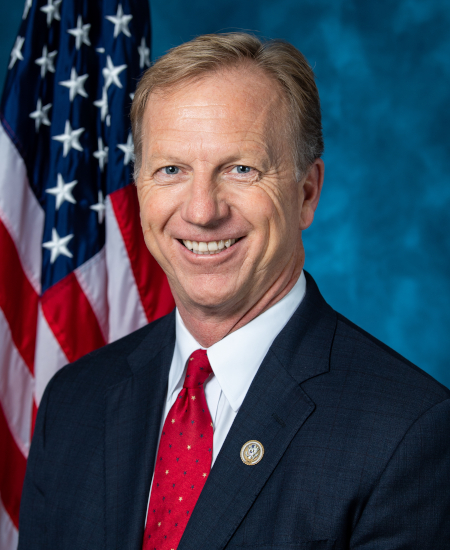
Kevin Hern
Kevin Hern House · District 1
R
Support
76% 183
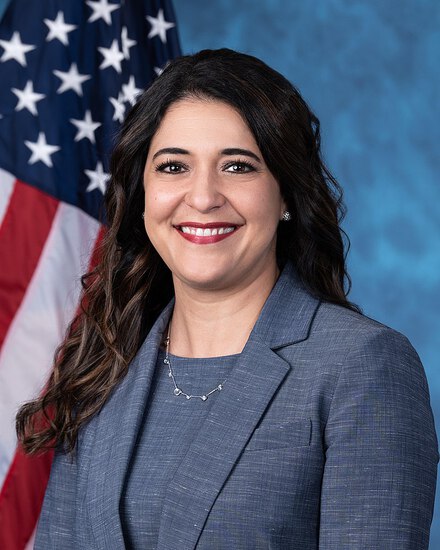
Stephanie I. Bice
Stephanie I. Bice House · District 5
R
Support
64% 184
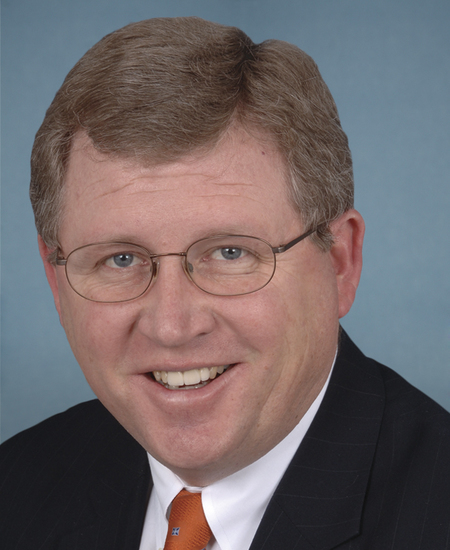
Frank D. Lucas
Frank D. Lucas House · District 3
R
Mixed
58% 182
Tom Cole
Tom Cole House · District 4
R
Mixed
58% 184
AA
Alan Armstrong Senate
R
Oppose
24% 60
James Lankford
James Lankford Senate
R
Oppose
33% 274
Showing 1–10 of 150 bills

All budget & taxes bills

in committee · United States · Senate Jul 14, 2026

S 4979: PROMISE Act of 2026

The PROMISE Act of 2026 establishes a mandatory process for Congress to address Social Security solvency by requiring the Social Security Advisory Board to develop and submit specific legislative recommendations by September 2026. This legislation mandates that Congress convene and consider a Social Security bill by November 2026, with strict rules limiting debate to 100 hours and prohibiting amendments that would not achieve long-term solvency or alter the program's funding. To pass the bill, the Senate requires a three-fifths majority vote while the House requires a simple majority, and the process restricts the inclusion of unrelated provisions to ensure the focus remains on the financial stability of the Social Security Trust Funds.
passed · United States · House Jul 22, 2026

HR 9770: Continuing Appropriations Act, 2027

Continuing Appropriations Act, 2027 This bill provides continuing FY2027 appropriations for federal agencies and extends various expiring programs and authorities. Specifically, the bill provides continuing FY2027 appropriations to federal agencies through the earlier of December 4, 2026, or the enactment of the applicable appropriations act. It is known as a continuing resolution (CR) and prevents a government shutdown that would otherwise occur if the FY2027 appropriations bills have not been enacted when FY2027 begins on October 1, 2026. The CR funds most programs and activities at the FY2026 levels with several exceptions that provide funding flexibility or additional appropriations for various programs. For example, the bill includes exceptions for the Special Supplemental Nutrition Program for Women, Infants, and Children (WIC); Small Business Administration loan programs; the Federal Emergency Management Agency’s Disaster Relief Fund; the Indian Health Service; and wildfire suppression activities. In addition, the bill extends several expiring programs, authorities, and restrictions, including the Department of Agriculture’s livestock mandatory price reporting program, the National Flood Insurance Program, limits on pay increases for the Vice President and certain senior political appointees, the Temporary Assistance for Needy Families (TANF) program, the authority to waive certain pay limitations that apply to wildland firefighters and other wildland fire personnel,  the authority for the District of Columbia to spend local funds, and the freeze on cost-of-living adjustments for Members of Congress.  The bill also provides the customary payments to the beneficiaries of the late Representative David Scott and the late Senator Lindsey Graham.
Sub-Topics Appropriations
introduced · United States · Senate Jul 14, 2026

S 4952: Protecting American Taxpayers Act

The Protecting American Taxpayers Act is a comprehensive bill designed to combat government fraud, recover misused funds, and strengthen oversight across various federal programs. It directly affects federal agencies, state governments administering public assistance, small businesses, veterans, and contractors by imposing new reporting requirements, extending statutes of limitations for fraud cases, and restricting financial assistance to entities linked to foreign agents or the Taliban. Key mechanisms include requiring child care payments to be based on recorded attendance rather than enrollment, mandating investigations into sudden spikes in health care spending, prohibiting small businesses with convicted fraudsters from receiving loans, and creating a new officer within the Department of Veterans Affairs dedicated to scam prevention. Additionally, the legislation rescinds unspent pandemic-era funds for deficit reduction, expands whistleblower protections for defense and non-defense contractors, and establishes stricter rules against transferring public assistance money abroad via remittance transfers.
in committee · United States · Senate Feb 9, 2026

S 2544: GUARD Act

The GUARD Act allows state, local, and tribal law enforcement agencies to use existing federal grant funds to investigate elder financial fraud (targeting elderly or disabled individuals), "pig butchering" scams (where victims are tricked into investing in fake crypto schemes), and general financial fraud. It requires agencies to hire specialized staff, use technology tools for tracking scams, and report annually on how funds were used and their impact on fraud statistics. The bill also mandates two key federal reports: one to Congress on scam trends and enforcement actions, and another detailing annual consumer losses and government spending on fraud prevention. These provisions aim to improve coordination between law enforcement, financial institutions, and federal agencies to combat evolving fraud schemes.
Sub-Topics Law Enforcement
in committee · United States · House Jun 24, 2026

HR 9452: Budgeting for a Better America Act

This bill, the Budgeting for a Better America Act, fundamentally changes how the federal government plans its spending by shifting the congressional budget process from an annual cycle to a biennial one, covering two consecutive fiscal years. It establishes a new National Commission on Fiscal Responsibility and Reform composed of 18 members from both political parties to propose specific policies that would reduce the federal deficit to 3% of the gross domestic product within a decade. The legislation also mandates that any joint resolution implementing the commission's recommendations be given expedited floor consideration in both the House and Senate without the possibility of amendment. Additionally, the bill requires the President to submit supplemental budget estimates annually, mandates a hearing on the nation's fiscal state, and ensures new members of Congress receive budgetary training before taking their seats.
Sub-Topics State Budget
in committee · United States · House Jun 24, 2026

HR 9250: Great American Outdoors Act 250

This bill redesignates the existing National Parks and Public Land Legacy Restoration Fund as the America's Legacy Restoration Fund to address deferred maintenance on federal lands. It directs revenue from recreation fees and a portion of energy development income into the fund, which must be used primarily for repairing critical infrastructure like roads, trails, and buildings managed by agencies such as the National Park Service and the Forest Service. The legislation establishes strict rules requiring that most funds go toward non-transportation projects, mandates transparency through public dashboards tracking project status, and sets aside a small percentage for matching private donations. Additionally, the bill increases entrance fees for foreign visitors to ensure they contribute to the fund, while prohibiting the use of these specific funds for land acquisition or employee bonuses.
in committee · United States · House May 29, 2026

HR 9065: Pregnancy Loss Mental Health Research Act of 2026

The Pregnancy Loss Mental Health Research Act of 2026 directs the National Institutes of Health to expand research on mental health issues following pregnancy loss, including miscarriage, stillbirth, and abortion. This legislation authorizes $4.5 million for fiscal years 2027 and 2028 to fund studies on the causes, diagnosis, and treatment of these conditions, as well as a long-term national study to track their prevalence and duration. Additionally, the bill modifies existing public health grants to allow funding for mental health services specifically for individuals who have experienced pregnancy loss, while prohibiting the use of these funds by entities that perform abortions except in cases of rape, incest, or life-threatening medical emergencies.
in committee · United States · House May 7, 2026

HR 8675: Training Rural Law Enforcement Officers Act of 2026

The Training Rural Law Enforcement Officers Act of 2026 allows nonprofit organizations to receive federal grants to provide free training to small rural police departments and sheriff's offices with fewer than 50 officers. This change aims to help smaller agencies access funding that they often cannot navigate due to complex application processes and reporting requirements. The bill authorizes these grants only if the training aligns with Department of Justice priorities and is delivered at no cost to the recipient agencies. Eligible nonprofits must have recognized expertise in law enforcement training as determined by the Attorney General.
Sub-Topics Law Enforcement Policing Tags Rural Communities
in committee · United States · Senate May 20, 2026

S 4604: Protecting America’s Small Oil and Gas Producers and Rural Jobs Act

The Protecting America's Small Oil and Gas Producers and Rural Jobs Act modifies federal tax rules to provide financial incentives for small oil and gas producers. It increases the percentage of income that can be deducted for taxes on marginal oil properties and removes a specific income limit that restricts these deductions. Additionally, the bill raises the threshold for counting oil as depletable from 1,000 to 2,000 barrels per well. These tax changes are designed to take effect for taxable years beginning after December 31, 2026.
Sub-Topics Oil & Gas
introduced · United States · Senate Jun 1, 2026

S 4632: Prevent Government Shutdowns Act of 2026

The Prevent Government Shutdowns Act of 2026 automatically provides federal funding for government programs if Congress fails to pass a budget by the start of a new fiscal year. This mechanism supplies money for 14-day periods that can be extended as long as the shutdown continues, ensuring essential services like food assistance and loan programs keep running without interruption. To prevent political games during these shutdowns, the bill restricts official travel for government officials and limits what Congress can debate or vote on, except for passing a new budget or addressing the national debt limit.
Showing 1 to 10 of 150 bills
1 2 3 15 Next