

Maddy summaryThis resolution honors the life and legacy of Dirk Kempthorne, a former U.S. Senator, Governor of Idaho, and Secretary of the Interior. It formally acknowledges his public service across various roles, including his work on environmental conservation, veterans' support, and economic development in Idaho. The Senate expresses its sorrow over his death and directs that a copy of the resolution be sent to his family. Additionally, the Senate stands in adjournment as a final mark of respect to his memory.
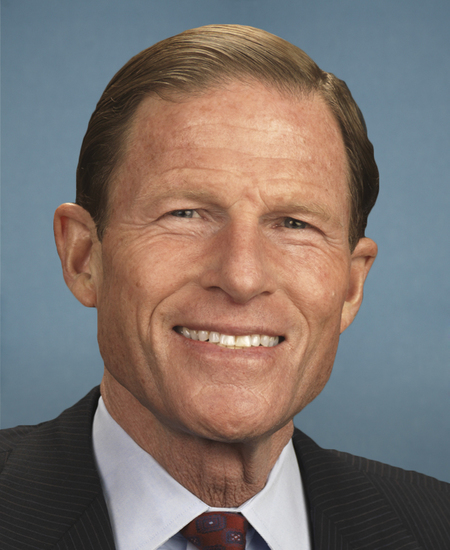
Sen. Richard Blumenthal
Sponsored bills
Veterans' Compensation Cost-of-Living Adjustment Act of 2026 This bill requires the Department of Veterans Affairs (VA) to increase the amounts payable for wartime disability compensation, additional compensation for dependents, the clothing allowance for certain disabled veterans, and dependency and indemnity compensation for surviving spouses and children. Specifically, the VA must increase the amounts by the same percentage as the cost-of-living increase in benefits for Social Security recipients that is effective on December 1, 2026. The act requires the VA to publish the amounts payable, as increased, in the Federal Register. The VA is authorized to make a similar adjustment to the rates of disability compensation payable to persons who have not received compensation for service-connected disability or death.
Maddy summaryThe GUARD Act requires companies providing AI chatbots to verify users' ages using reliable methods (like government IDs, not just self-reported birth dates) and prohibits minors under 18 from accessing "AI companions" designed for emotional interaction. It mandates clear disclosures that chatbots are not human and cannot falsely claim to be licensed professionals (e.g., therapists), while banning features that solicit minors for explicit content or promote violence. Covered entities must implement secure age verification processes for all accounts, including periodic checks, and face civil penalties up to $100,000 per violation for noncompliance. The law directly affects tech companies operating AI chatbots in the U.S. and aims to reduce minors' exposure to harmful AI interactions.
Maddy summaryThis Senate resolution formally recognizes May as Asian American, Native Hawaiian, and Pacific Islander Heritage Month to honor the contributions of these communities to United States history. The document highlights the diversity of the population, cites historical milestones such as the completion of the transcontinental railroad and the passage of immigration laws, and acknowledges specific achievements of individuals like Daniel K. Inouye and Patsy Mink. It also notes the ongoing challenges faced by these groups, including a rise in hate crimes, while celebrating their growing presence in government and society. Ultimately, the bill serves as a symbolic statement of appreciation rather than establishing new legal requirements or funding.
Maddy summaryThis Senate resolution formally supports the goals and ideals of National Nurses Week, which is observed annually from May 6 to May 12, 2026. The measure recognizes the vital contributions of nurses to the healthcare system and encourages the public to acknowledge their role through ceremonies and activities during the designated week. While the bill does not create new laws or funding, it serves to honor the profession and highlight the importance of nursing in patient care and public health.
Maddy summaryThis Senate resolution formally recognizes the week of May 3 through May 9, 2026, as National Small Business Week to honor the contributions of small business owners and entrepreneurs across the United States. The measure expresses appreciation for the economic role these businesses play and acknowledges the resilience of their owners and employees. By adopting this designation, the Senate aims to celebrate the entrepreneurial spirit within every community without imposing any new laws or regulations.
Maddy summaryThe Promoting Access to Broadband Act of 2026 directs the Federal Communications Commission to create two grant programs for states to improve access to the Lifeline broadband subsidy. The first program provides funding to help states inform low-income residents who qualify for the Lifeline benefit but are not yet enrolled about how to apply and what the program offers. The second program funds states to connect their local benefit databases with the National Lifeline Eligibility Verifier, ensuring that receipt of other government assistance is properly recorded for eligibility checks. To receive these grants, states must submit detailed plans outlining their outreach strategies and expected reach, with the FCC prioritizing areas with more eligible individuals and diverse geographic regions. The bill also requires the FCC to report on the programs' effectiveness to Congress within three years and authorizes funding for the first five fiscal years.
Maddy summaryThe Puppy Protection Act of 2026 amends the Animal Welfare Act to impose stricter housing and care standards on dog dealers. It requires dealers to provide dogs with solid flooring, sufficient indoor space based on size, and temperature control between 45 and 85 degrees Fahrenheit. The bill also mandates daily nutritious food, unrestricted outdoor exercise for most dogs over 12 weeks, and at least 30 minutes of daily social interaction with humans. Additionally, it establishes specific rules for breeding, such as limiting the number of litters a female dog can produce and requiring health screenings before breeding. These new requirements must be implemented through final regulations issued by the Secretary within 18 months of the law's enactment.
Maddy summaryThis bill, known as the Protecting Human Rights and Public Health in Foreign Assistance Act, directs federal agencies to ignore three specific final rules issued by the Department of State. It explicitly prohibits any government department from implementing, enforcing, or creating new policies similar to these existing rules, effectively treating them as if they never existed. The targeted regulations concern protecting life, combating discriminatory equity ideology, and addressing gender ideology within foreign aid programs. By nullifying these rules, the legislation removes the current administrative requirements related to these topics from U.S. foreign assistance activities.
Maddy summaryThis bill, known as the Carlton H. Ingram Veterans' Benefits Protection Act, amends the Department of Veterans Affairs' disability rating system to ensure that a veteran's disability level is assessed without considering the positive effects of medication or treatment. The key provision requires the VA to establish a baseline disability rating that reflects the veteran's condition before treatment, ensuring compensation is based on the underlying disability rather than improvements from medical care. Veterans seeking compensation for additional disabilities caused by or worsened by their treatment for service-connected conditions remain eligible for benefits under this change. The legislation aims to provide a more accurate reflection of a veteran's true disability status when determining compensation levels.