

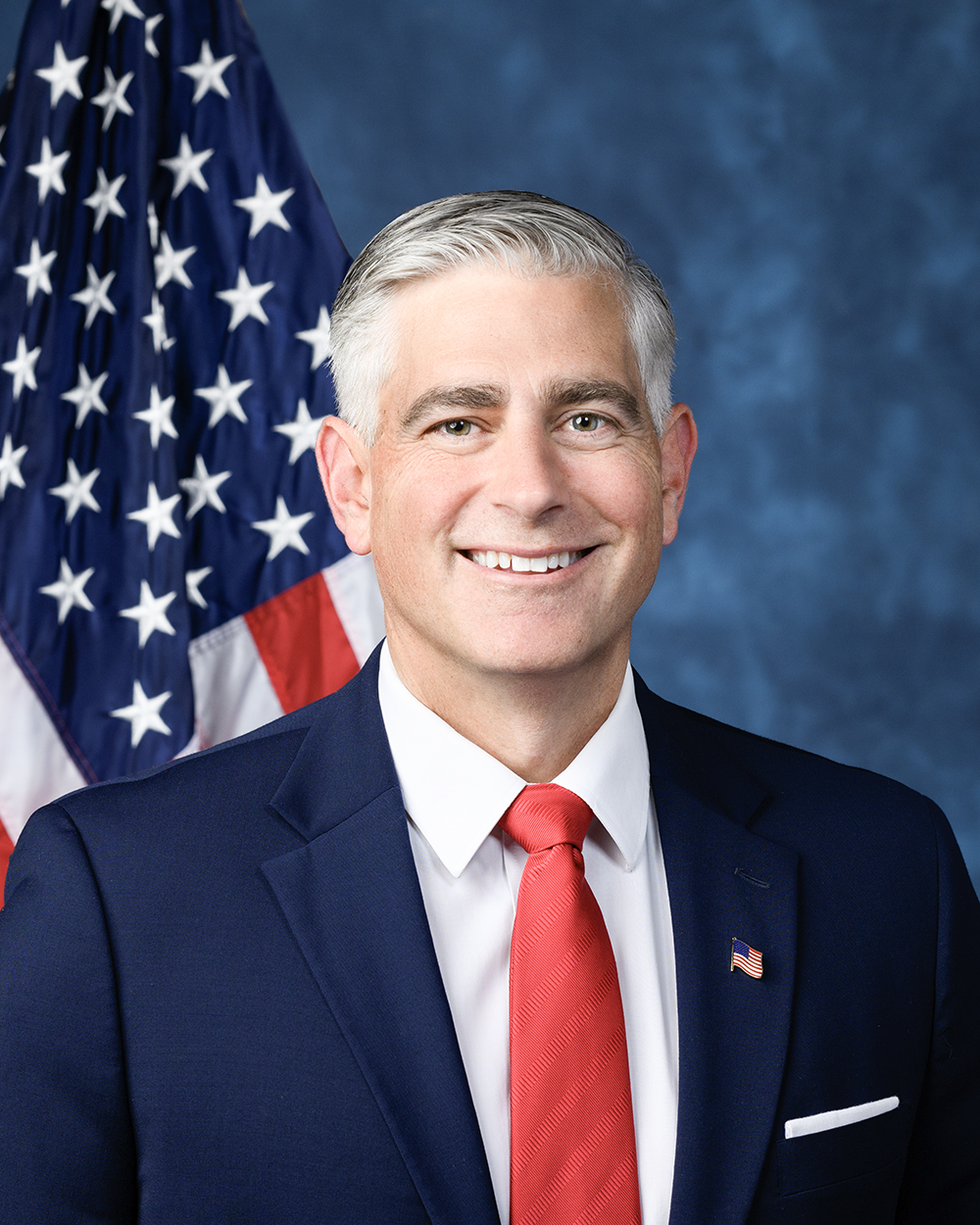
Photo of Michael Baumgartner
R United States House · District 5 · Washington On the 2026 ballot

Rep. Michael Baumgartner

Compare
Total votes
650
all sessions
Attendance
98%
14 missed
Near the chamber average
With party
98%
of cast votes
Higher than 91% of chamber peers
Bipartisan score
1%
crosses aisle rarely
Lower than 92% of chamber peers
Sponsored
210
bills & resolutions
Near the chamber average
Committees
9
assignments
210 bills and resolutions

Sponsored bills

Total
210
Primary
24
Co-sponsor
186
This page
210
matching current filters
Co-sponsor HR 4793
In committee · Ohio House · Co-sponsor
SOS Act

Maddy summaryHR 4793, the SOS Act, requires the government to add a specific graph to annual reports about Social Security trust funds. The graph must compare two different funding assumptions: the amount assumed under current law (based on dedicated funding sources) versus the amount assumed under the Balanced Budget Act of 1985. This bill does not change Social Security payments or benefits; it only modifies how the government reports on trust fund finances. The requirement applies to reports prepared by the Congressional Budget Office and Treasury Department, affecting the transparency of federal budget documentation.

In committee Jul 29, 2025 1 co-sponsor
Co-sponsor HR 4676
In committee · Ohio House · Co-sponsor
Modern Firearm Safety Act

Maddy summaryHR 4676, the Modern Firearm Safety Act, preempts state and local laws that require specific handgun design features not mandated by federal law. It directly affects handgun manufacturers, sellers, and consumers in jurisdictions with such requirements, such as those mandating loaded indicators, magazine safety mechanisms, or identification systems. The bill prohibits any state or local government from enforcing or creating regulations that require handguns to include features like cartridge identification, magazine insertion sensors, or other mechanisms not required by federal statute. This law establishes federal standards as the sole requirement for handgun design, overriding conflicting state or local regulations.

In committee Jul 23, 2025 1 co-sponsor
Co-sponsor HR 4712
In committee · Ohio House · Co-sponsor
Parity for Tribal Law Enforcement Act

Maddy summaryThe Parity for Tribal Law Enforcement Act enables tribal law enforcement officers who have contracted federal law enforcement duties under the Indian Self-Determination Act to enforce federal law on tribal lands. To qualify, officers must complete training comparable to Bureau of Justice Services employees, pass a background check, and receive certification from the Bureau. The bill also designates these officers as federal law enforcement officers for legal protections under the Federal Tort Claims Act and retirement benefits. Additionally, it requires the Attorney General to coordinate Department of Justice efforts to improve public safety in tribal communities through better data collection, training, and reporting.

In committee Jul 23, 2025 1 co-sponsor
Co-sponsor HR 4700
In committee · Ohio House · Co-sponsor
PRIME Act

Maddy summaryThe PRIME Act exempts custom slaughter facilities from federal meat inspection requirements when they follow state laws and sell meat exclusively within the same state. It specifically allows facilities to slaughter animals and prepare meat without federal oversight if the products go only to household consumers or local businesses (like restaurants, hotels, or grocery stores) serving consumers directly in that state. The bill clarifies that this exemption does not override stricter state regulations governing custom slaughter or meat sales. This primarily affects small-scale slaughter operations and local food businesses operating within a single state's borders.

In committee Jul 23, 2025 1 co-sponsor
Co-sponsor HR 4658
In committee · Ohio House · Co-sponsor
STUDENT Act

Maddy summaryHR 4658, the STUDENT Act, would impose new requirements on the National Education Association (NEA) to maintain its federal charter. The bill mandates explicit employee consent for membership dues (ending automatic payroll deductions), prohibits the NEA from engaging in political activities or lobbying, and bans the promotion of specific beliefs (such as claims that the U.S. is fundamentally racist) in schools. It also repeals the NEA's property tax exemption in the District of Columbia and requires the organization to comply with anti-discrimination rules and labor laws. These changes directly affect the NEA and its state/local affiliates, altering how they operate and interact with public schools.

In committee Jul 23, 2025 1 co-sponsor
Co-sponsor HR 740
In committee · Ohio House · Co-sponsor
Veterans’ ACCESS Act of 2025

Veterans' Assuring Critical Care Expansions to Support Servicemembers Act of 2025 or the Veterans' ACCESS Act of 2025 This bill addresses the administration of the Veterans Community Care Program (VCCP) and other Department of Veterans Affairs (VA) health care matters. Among other provisions regarding the VCCP, the bill establishes in statute access standards that determine when a veteran is eligible to receive non-VA care through the VCCP, requires the VA to notify veterans regarding their eligibility for care within two business days after the VA is aware the veteran is seeking care, and extends the deadline for the submittal of claims under the VCCP by health care entities and providers. The VA must address its mental health treatment programs by establishing a standardized screening process to determine whether a veteran satisfies criteria for priority or routine admission to a mental health residential rehabilitation treatment program or a program for residential care for mental health and substance abuse disorders, tracking the performance of medical facilities and Veterans Integrated Service Networks in meeting the requirements for mental health treatment screenings and timely admission to treatment programs under such screenings, and establishing an appeal process for when a veteran is denied admission to a covered treatment program or is accepted into a program but not offered bed placement in a timely manner. Additionally, the VA must establish an online self-service module for veterans to request and manage appointments, track referrals, and appeal and track decisions related to requests for care.

In committee Jul 23, 2025 1 co-sponsor
Co-sponsor HR 4335
In committee · Ohio House · Co-sponsor
Abraham Accords Defense Against Terror Act

Maddy summaryHR 4335, the Abraham Accords Defense Against Terror Act, streamlines U.S. defense exports to countries that have normalized relations with Israel (via the Abraham Accords) and cooperate with the U.S. on countering Iran and Iran-aligned threats in the Middle East and North Africa. The bill authorizes the Secretary of State to identify qualifying countries and fast-tracks approval for military sales, leases, or transfers to them, requiring a 15-day congressional notification with specific safeguards. Key safeguards include ensuring sensitive U.S. technology isn’t shared with China or Russia and mandating regular strategy reports to Congress on implementation, threat assessments, and pending defense deals over $25 million. This directly affects participating Middle Eastern nations and U.S. defense export processes, aiming to accelerate security cooperation without altering Israel’s military edge. The bill focuses on procedural changes to expedite defense cooperation, not on new funding or policy outcomes.

In committee Jul 22, 2025 1 co-sponsor
Co-sponsor HR 3613
In committee · Ohio House · Co-sponsor
Streamlining Foreign Military Sales Act of 2025

Maddy summaryHR 3613, the Streamlining Foreign Military Sales Act of 2025, amends the Arms Export Control Act by raising multiple financial thresholds for foreign military sales. It increases specific dollar limits, such as raising the threshold for certain sales from $250,000 to $500,000 (Section 36(a)(10)), and from $7 million to $30 million (Section 25(a)(1)). These changes affect defense contractors and U.S. government agencies processing foreign military sales under the Arms Export Control Act. The bill directly modifies existing financial caps without creating new programs or altering substantive approval processes.

In committee Jul 22, 2025 1 co-sponsor
Co-sponsor HR 4546
In committee · Ohio House · Co-sponsor
FIRE Act

Maddy summaryHR 4546, the FIRE Act, prohibits federal, state, and local governments from restricting or banning firearm magazines based on their capacity (how many rounds they hold). It bans federal enforcement of such restrictions, nullifies state or local laws imposing capacity-based limits on magazines, and defines "firearm magazine" and "capacity" for clarity. This directly affects firearm owners who use magazines of certain capacities and law enforcement agencies responsible for enforcing firearm regulations. The law takes effect 30+ days after enactment.

In committee Jul 17, 2025 1 co-sponsor
Co-sponsor HR 1919
Passed · Ohio House · Co-sponsor
Anti-CBDC Surveillance State Act

Maddy summaryHR 1919, the "Anti-CBDC Surveillance State Act," prohibits the Federal Reserve from developing, testing, or issuing any central bank digital currency (CBDC) or similar digital assets. It specifically bans the Fed from offering direct financial products to individuals, maintaining individual accounts, or issuing CBDCs directly or indirectly through intermediaries like banks. The bill also blocks the Fed from using any digital asset for monetary policy and clarifies that physical currency's privacy protections remain intact. This policy directly affects the Federal Reserve System's ability to create or manage digital monetary tools.

Passed Jul 17, 2025 1 co-sponsor
Showing 101 to 110 of 210 bills
Previous 1 10 11 12 21 Next