

Maddy summaryThis bill prohibits Members of Congress, their spouses, and dependent children from owning or trading certain investments, including stocks, commodities, and derivatives (referred to as "covered investments"). It requires affected individuals to divest these investments within 90-180 days, with specific exemptions for Treasury bonds, diversified mutual funds, small business interests, and family trusts meeting strict conditions. Violations incur penalties of 10% of the investment's value plus disgorgement of profits, paid directly to the U.S. Treasury. The law applies to all covered individuals during federal service, with exceptions for investments acquired through inheritance or occupational trading (e.g., a spouse’s finance job).
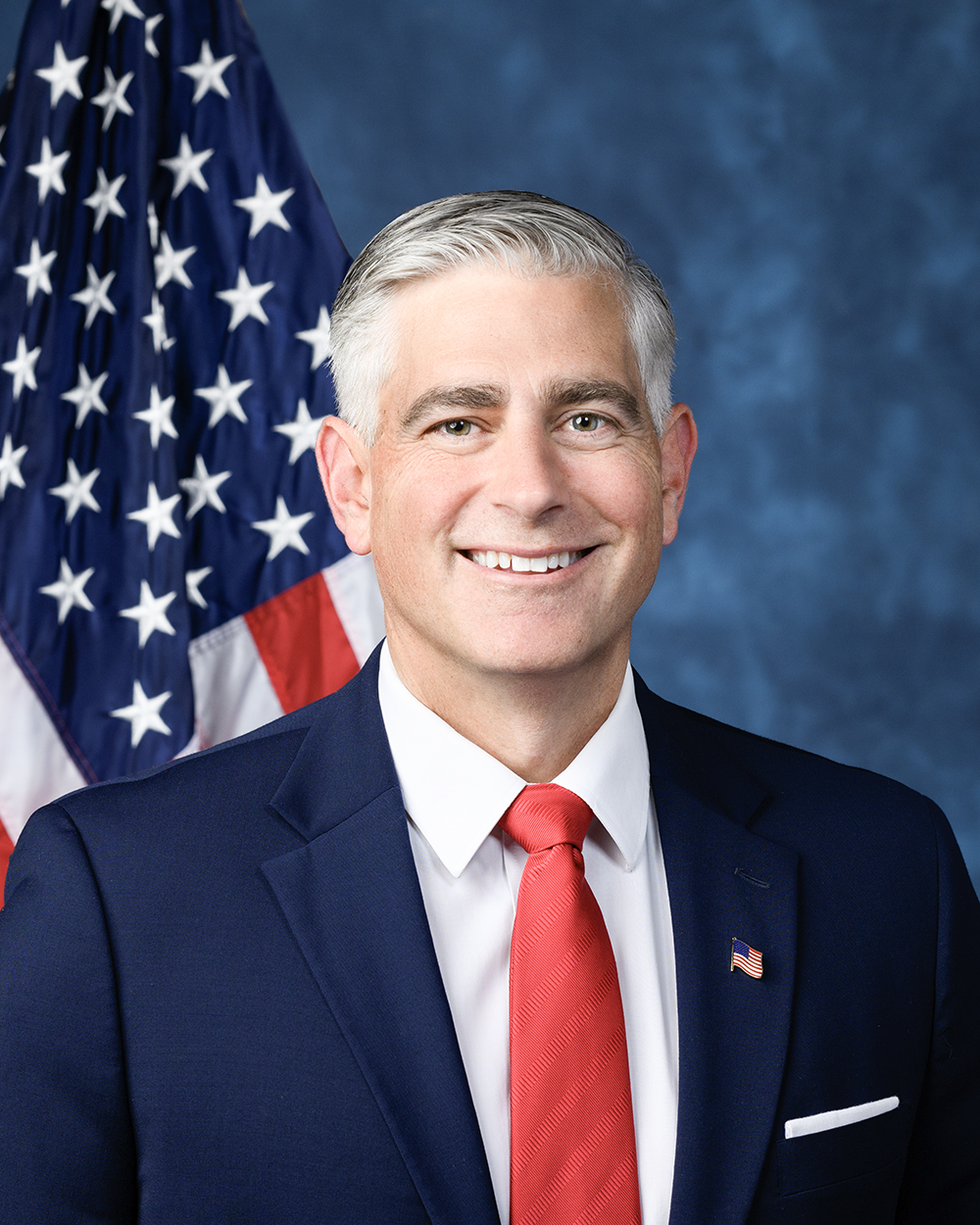
Rep. Michael Baumgartner
Sponsored bills
Maddy summaryThis bill, officially titled the "FMS-Only List Review Act" (not "Made-in-America Defense Act"), requires the State and Defense Secretaries to annually review defense items currently only available via Foreign Military Sales (FMS) but not direct commercial sales. The review must assess transfer times, agency workload impacts, and national security/competitiveness benefits of shifting items to direct sales. It mandates a report to Congress within 30 days of each review, detailing identified items and reasons for changes. The bill directly affects defense contractors, the State Department, and Congress, focusing on streamlining sales processes without altering eligibility rules.
Maddy summaryHR 4215 establishes strict timelines for processing U.S. defense export licenses under the Arms Export Control Act. It requires the State Department to create a priority list of countries and end-users needing expedited approvals (45 days), while setting a 60-day deadline for all other applications. The bill mandates semi-annual reports to Congress detailing any delays in meeting these timelines, including specific reasons and planned resolutions. This directly affects defense exporters, foreign governments purchasing military equipment, and the State and Defense Departments responsible for licensing decisions. The law aims to streamline commercial defense exports without altering the underlying regulatory framework.
Maddy summaryThe ARMOR Act streamlines defense trade processes among the U.S., U.K., and Australia by expanding an expedited review system for military exports and transfers within these nations. It requires the President to submit annual reports detailing licenses issued, applicants, and defense items covered, and mandates an annual review of the "Excluded Technologies List" to ensure only necessary items require licensing. The bill directly affects defense companies, government agencies, and military contractors handling cross-border defense articles and services. Key changes include broadening licensing rules to cover reexports, retransfers, and temporary imports, while clarifying congressional notification requirements for defense transfers. These provisions aim to reduce administrative delays in defense cooperation without altering existing security policies.
Maddy summaryHR 2073, the Defending our Dams Act, prohibits federal funding for any study, planning, or technical assistance related to removing or altering the Lower Snake River dams in Washington State. It specifically blocks the use of federal funds for evaluating dam removal alternatives, including replacements for power, flood control, or navigation. The bill also restricts spillage operations at these dams without explicit approval from the Army Corps of Engineers and Bonneville Power Administration, requiring consideration of all Columbia River System operations. The law directly affects federal agencies' ability to fund or plan for changes to the four specific dams: Ice Harbor, Lower Monumental, Little Goose, and Lower Granite.
Maddy summaryHR 5032, the Nitazene Control Act, permanently classifies all nitazenes and their chemical analogs as Schedule I controlled substances under the Controlled Substances Act. This means these synthetic opioids, which are significantly more potent than fentanyl and linked to overdose deaths, are now federally banned for all non-medical use. The bill creates a broad chemical definition covering substances with specific structural features (a benzimidazole core and mu-opioid receptor activity), preventing new analogs from evading regulation. It includes a temporary 18-month exemption for researchers already studying these substances under active FDA-approved protocols, requiring them to notify the DEA and apply for proper registration within that period. The law directly affects the illicit drug market and ongoing research involving nitazenes, aiming to streamline enforcement and prevent new analogs from entering the supply chain.
Maddy summaryHR 5023, the Fentanyl Kills Act, redefines "trafficked fentanyl" to broadly cover activities like producing, distributing, financing, or transporting illicit fentanyl, its precursors, or related substances - both domestically and internationally with intent to distribute in the U.S. It directly affects individuals involved in fentanyl trafficking by automatically classifying such offenses as "attempted murder" under existing federal law. The bill adds specific definitions for trafficking activities (including manufacturing, distributing, or possessing intent) and mandates that convicted traffickers face penalties under murder statutes. This changes sentencing by treating fentanyl trafficking as an attempted homicide, increasing penalties for those involved in the supply chain.
Maddy summaryThis bill permanently establishes the Coordinator for Afghan Relocation Efforts (CARE) within the State Department, expanding their role to prioritize family reunification for U.S. military personnel and veterans with Afghan allies. It mandates the Coordinator to collect detailed data on Afghan applicants (including special immigrant visa seekers, refugees, and parolees), vetting timelines, and pending family reunification cases into a centralized database. The Coordinator must report this data to Congress every 90 days to ensure transparency and inform policy decisions. The law directly affects Afghan allies and their families seeking U.S. relocation, particularly those connected to U.S. military service.
Maddy summaryHR 1569, the CATCH Fentanyl Act, establishes a 5-year pilot program to test nonintrusive inspection technologies at U.S. border ports of entry. The bill requires U.S. Customs and Border Protection (CBP) to evaluate at least five technology enhancements - including AI, machine learning, and quantum sensing - to improve detection of contraband, drugs, weapons, and threats while reducing inspection wait times. Pilot projects must prioritize cost-effective solutions that integrate with existing systems, adhere to privacy protections, and report findings on performance metrics like detection rates and throughput. The program mandates detailed reports to Congress on effectiveness, implementation plans, and privacy impacts, using existing funding without new appropriations.
Maddy summaryHR 4895, the Afghan Adjustment Act, creates a pathway to conditional permanent resident status for Afghans who supported U.S. military or government efforts in Afghanistan. Eligible individuals include Afghan citizens or nationals who were employed by or on behalf of U.S. forces, worked with U.S. intelligence, or were part of specific Afghan security forces (including members of the Afghanistan National Defense and Security Forces), and who served for at least one year during the relevant period. The bill establishes a 4-year conditional period before full permanent residency is granted, requires security checks similar to refugee processing, prohibits fees for processing applications, and creates a referral system for processing applications from Afghans still in Afghanistan. It also provides eligibility for benefits available to refugees and establishes an Interagency Task Force to oversee implementation.