

Maddy summaryHR 1919, the "Anti-CBDC Surveillance State Act," prohibits the Federal Reserve from developing, testing, or issuing any central bank digital currency (CBDC) or similar digital assets. It specifically bans the Fed from offering direct financial products to individuals, maintaining individual accounts, or issuing CBDCs directly or indirectly through intermediaries like banks. The bill also blocks the Fed from using any digital asset for monetary policy and clarifies that physical currency's privacy protections remain intact. This policy directly affects the Federal Reserve System's ability to create or manage digital monetary tools.
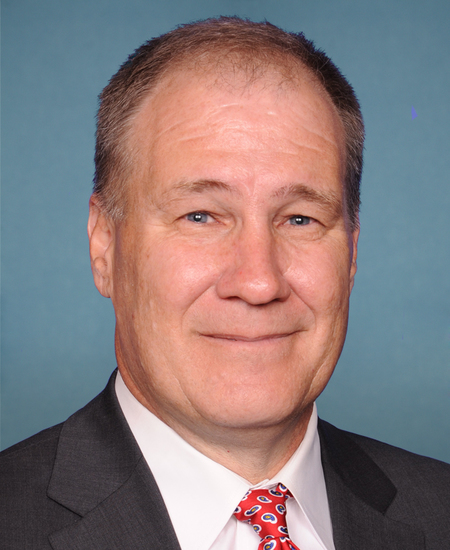
Rep. Trent Kelly
Sponsored bills
Maddy summaryHR 4474, the Equal Shot Act of 2025, prohibits the Small Business Administration (SBA) from denying financial assistance - such as loans or guarantees - to firearm businesses solely because of their industry. It directly affects firearm manufacturers, distributors, trade associations, and affiliated entities like shooting ranges or training providers. The bill requires the SBA to treat these applicants equally under existing law, removing any policy that would block them based on their connection to firearms. This is a concrete policy change ensuring firearm-related businesses have the same access to SBA programs as other eligible applicants.
Maddy summaryHR 4382 authorizes the U.S. Mint to produce commemorative coins for the 2028 Los Angeles Olympics/Paralympics and 2034 Salt Lake City Winter Olympics/Paralympics. It specifies gold, silver, and half-dollar coin designs with defined mintage limits (e.g., up to 100,000 $5 gold coins for each event), all bearing inscriptions like "2028" or "2034" and standard coin features. A surcharge ($5-$50 per coin) is added to sales, with all funds directed to the respective Olympic committees to support event hosting and legacy programs like youth sports. The bill ensures no net cost to the government by requiring surcharge revenues to cover all design, production, and marketing expenses before funds are disbursed.
Maddy summaryHRES 571 is a symbolic resolution passed by the U.S. House of Representatives to commemorate the one-year anniversary of the July 13, 2024, attempted assassination of President Donald J. Trump in Butler, Pennsylvania. It condemns two assassination attempts against the President (in Butler and West Palm Beach), honors victims Corey D. Comperatore (who died shielding his family), David Dutch, and James Copenhaver (who were critically injured), and expresses gratitude to first responders. The resolution also condemns incitement of violence against political officials and calls for unity against political violence. As a non-binding resolution, it does not create new laws or policies but formally states the House’s position on these events.
Maddy summaryThis bill retroactively applies the Indian Reorganization Act (IRA) to the Poarch Band of Creek Indians as of June 18, 1934, clarifying their federal jurisdiction status under existing law. It directly affects the Poarch Band by confirming all lands previously taken into trust by the U.S. for their benefit as valid trust lands. The key provision reaffirms the Secretary of the Interior's past actions in placing these lands into trust under the IRA, making those decisions legally final. This provides legal clarity for the tribe's land holdings and governance under federal law.
Maddy summaryHRES 483 is a House resolution recognizing the 250th anniversary of the U.S. Army's founding on June 14, 1775. It expresses appreciation for the Army's service over 250 years, honors soldiers' valor and core values, and calls for public observance through ceremonies and activities. The resolution has no policy impact or funding provisions - it is purely commemorative. It was introduced by 30 bipartisan House members and referred to the Armed Services Committee.
Maddy summaryThis bill (HR 3830) authorizes a single gold medal to recognize U.S. citizens who volunteered for service in Canadian and British military forces during World War II, before the U.S. entered the war. It directs the Treasury Secretary to strike the medal and transfer it to the Smithsonian Institution for display and research. The medal would honor veterans who served in units like the Royal Canadian Air Force, RAF Eagle Squadrons, and auxiliary groups such as the Air Transport Auxiliary. Duplicate bronze medals may be sold at cost to cover expenses, but the bill creates no new benefits or financial support for recipients.
Maddy summaryHR 649, the Whole Milk for Healthy Kids Act of 2025, amends the National School Lunch Act to allow schools participating in the program to offer students both organic and non-organic whole milk, in addition to reduced-fat, low-fat, and fat-free options. Key provisions include clarifying that milk fat in whole milk should not count toward saturated fat limits for meal compliance, prohibiting schools from purchasing milk from Chinese state-owned enterprises, and ensuring schools cannot be barred from offering the full range of milk types listed. The bill directly affects public and private schools serving the National School Lunch Program by expanding their milk options for students. It focuses on concrete policy changes to dietary offerings and sourcing restrictions within the school nutrition program.
Maddy summaryHR 3585 establishes the Capacity Building for Business Districts Pilot Program to provide targeted support for business districts in low-income, rural, minority, and Native communities. The program awards competitive grants through intermediary organizations ("specified recipients") to deliver technical assistance, training, and capacity-building services directly to local business district organizations ("eligible subrecipients"). These organizations must provide services to business districts in underserved areas, with grants requiring annual reporting on job impacts, geographic reach, and fund usage. The pilot mandates geographic diversity in grant distribution and prioritizes applicants serving distressed communities or multiple regions. Grants must last at least two years, focusing on enhancing local business districts' ability to attract investment and support small businesses.
Maddy summaryHCONRES 30 is a symbolic resolution expressing congressional support for local law enforcement officers. It does not create new laws or policies but formally recognizes their work through four non-binding actions: thanking officers and families for service, honoring those who died in the line of duty, and encouraging community-law enforcement collaboration. The resolution directly addresses Congress's acknowledgment of law enforcement efforts, not any specific group affected by a policy change. It has no legal effect or funding implications, serving solely as a statement of appreciation. This is a procedural resolution, not a legislative bill with concrete policy changes.