

Maddy summaryThe SAVES Act (HR 2605) creates a 5-year pilot program where the Department of Veterans Affairs (VA) awards competitive grants to nonprofit organizations to provide service dogs to veterans with specific disabilities. It directly affects veterans with covered conditions like blindness, mobility impairments, PTSD, traumatic brain injury, or other disabilities deemed appropriate for service dog assistance by the VA. Key provisions include: grants capped at $2 million per nonprofit (with $10 million annually authorized), no fees charged to veterans, VA-provided lifetime veterinary insurance for the dogs, and requirements for nonprofits to train veterans and maintain humane animal standards. The program aims to expand access to service dogs as a support tool for veterans managing qualifying disabilities.
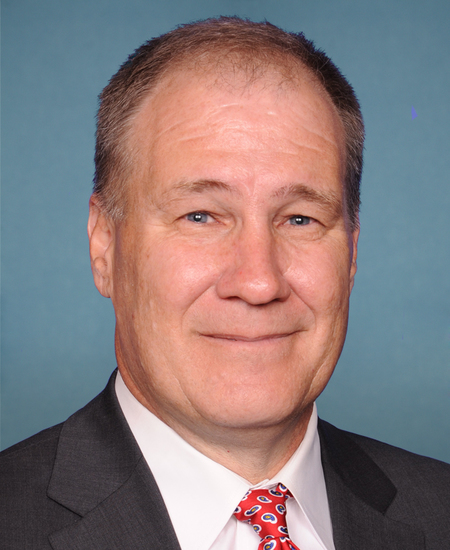
Rep. Trent Kelly
Sponsored bills
Maddy summaryHRES 719 is a House resolution honoring Charles "Charlie" James Kirk, the founder of Turning Point USA who was assassinated on September 10, 2025. The resolution condemns his assassination and all political violence, extends condolences to his family, and calls on Americans to reject violence while promoting civil discourse. It specifically recognizes Kirk's legacy as a defender of constitutional principles and his role in inspiring youth through free speech and faith-based civic engagement. As a commemorative resolution, it does not enact policy changes but formally expresses the House's stance on honoring his life and legacy.
Maddy summaryHRES 742 is a ceremonial resolution recognizing the 250th anniversary of the U.S. Navy's founding on October 13, 1775, when the Continental Congress established the first U.S. naval force. It formally acknowledges the Navy's historical role in protecting American interests and its current global presence (over 290 ships, 3,700 aircraft, and 500,000 personnel). The resolution expresses appreciation for Navy personnel past and present and reaffirms congressional support for the Navy as a key element of national defense and global stability. As a commemorative resolution, it has no policy or funding impact - it serves only to honor the Navy's legacy.
Maddy summaryHRES 723 is a ceremonial resolution recognizing the 180th anniversary of the United States Naval Academy, established on October 10, 2025. It formally commemorates the Academy's founding, historical contributions, and legacy of producing naval and marine leadership. The resolution highlights the Academy's role in educating graduates who have served in major conflicts, earned military honors, and held significant national leadership positions. As a symbolic gesture with no policy changes or direct impact on constituents, it serves solely to honor the institution's history and ongoing mission.
Maddy summaryHR 5401, the Pay Our Troops Act of 2026, ensures military personnel, civilian Defense workers, and supporting contractors receive pay during government funding gaps in fiscal year 2026. It appropriates emergency funds for active-duty service members, reserves, and their supporting personnel (including Coast Guard staff under DHS) if regular appropriations aren't enacted by the end of the fiscal year. The bill provides necessary pay and allowances during any period when full-year funding is unavailable, covering both active service and support roles. Funding expires when regular appropriations are passed, a funding resolution is enacted, or January 1, 2027, whichever comes first. This is a procedural measure to prevent pay delays for military and support staff during fiscal year 2026 funding lapses.
Maddy summaryHR 2808, the Homebuyers Privacy Protection Act, restricts how consumer reporting agencies share credit reports during mortgage applications. It prevents agencies from sending these reports to third parties unless the request is tied to a firm credit offer and the recipient has either the homebuyer’s explicit written consent or is directly involved in the mortgage (like the lender, loan servicer, or the homebuyer’s bank holding an active account). This directly affects homebuyers applying for residential mortgages by limiting unsolicited sharing of their credit information. The law amends the Fair Credit Reporting Act to strengthen privacy protections around mortgage-related credit data.
Maddy summaryHRES 664 is a non-binding resolution observing the 20th anniversary of Hurricanes Katrina and Rita's 2005 Gulf Coast devastation. It recognizes the progress made in rebuilding affected communities across Louisiana, Mississippi, Alabama, Florida, Texas, and Georgia, citing statistics on population recovery and tourism growth. The resolution expresses support for victims, commends recovery efforts, and reaffirms commitment to the Gulf Coast region. It does not create new laws, allocate funding, or change policy - its sole purpose is commemorative recognition.
Maddy summaryThis bill establishes "cottage family homes" as a new foster care placement option under federal law. It defines these homes to require trauma-informed care, prohibit seclusion/restraints (except brief physical restraint for safety), ensure children can participate in normal activities, and maintain family connections. The bill removes time limits on foster care payments for children in these homes and gives states flexibility to classify them as foster family homes if they serve children's best interests. It directly affects foster children placed in cottage homes and the agencies operating them.
Maddy summaryThis bill helps National Guard and Reserve members who make student loan payments while serving by counting their service time toward student loan forgiveness. It allows the government to automatically count each month of qualifying service (based on retirement points) as a qualifying payment for loan forgiveness programs, without requiring members to apply separately. The Department of Defense and Department of Education will jointly match service records with loan payment data to verify eligibility. This directly benefits reserve members who serve full or partial years (measured in retirement points) while making eligible student loan payments.
Maddy summaryHR 4621, the 320th Barrage Balloon Battalion Gold Medal Act, authorizes a single gold medal to honor the 320th Barrage Balloon Battalion - a segregated African-American unit that served during the D-Day invasion in World War II. The medal, struck by the U.S. Mint, will be presented by Congress and displayed at the Smithsonian Institution, with bronze duplicates available for sale to cover costs. The bill recognizes the unit’s role in deploying barrage balloons to protect Allied troops from air attacks on Omaha Beach and their overall contributions to the D-Day success. It does not create new laws or affect any policies, as it is purely a commemorative gesture for historical recognition.