

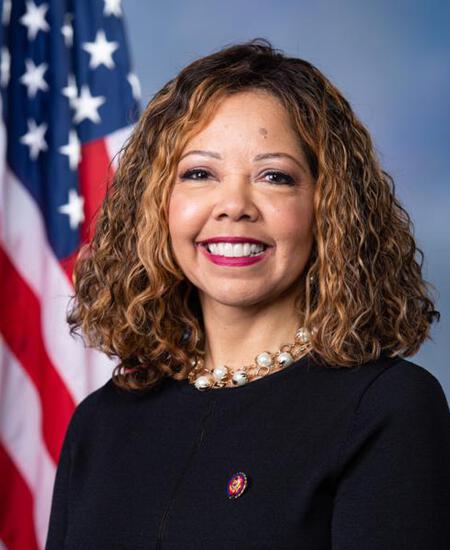
Photo of Lucy McBath
D United States House · District 6 · Georgia On the 2026 ballot

Rep. Lucy McBath

Compare
Total votes
2,818
all sessions
Attendance
98%
66 missed
Lower than 77% of chamber peers
With party
97%
of cast votes
Near the chamber average
Bipartisan score
1%
crosses aisle rarely
Near the chamber average
Sponsored
1,121
bills & resolutions
Near the chamber average
Committees
5
assignments
1,121 bills and resolutions

Sponsored bills

Total
1,121
Primary
58
Co-sponsor
1,063
This page
1,121
matching current filters
Co-sponsor HR 7367
In committee · Ohio House · Co-sponsor
TANF Hygiene Access Act

Maddy summaryHR 7367, the TANF Hygiene Access Act, creates a 5-year federal demonstration program to help low-income households access essential hygiene products. The bill authorizes $25 million in the first year (increasing to $32.5 million by year 5) for competitive grants to states, tribes, or tribal organizations. These entities can use funds to distribute specific hygiene items - like soap, diapers, feminine products, and baby wipes - to low-income households, with no more than 15% of funds allowed for administrative costs. Grantees must report on metrics like geographic reach, families served, and distribution frequency, and the program requires a final report to Congress assessing whether a larger-scale program would be feasible.

In committee Feb 4, 2026 1 co-sponsor
Co-sponsor HR 7352
In committee · Ohio House · Co-sponsor
PASTEUR Act of 2026

Maddy summaryThe PASTEUR Act of 2026 creates a new government contracting program to incentivize development of new antimicrobial drugs for treating drug-resistant infections. The Health and Human Services Secretary would award contracts to pharmaceutical sponsors meeting specific criteria on clinical benefits, innovation, and public health impact, with annual payments ranging from $75 million to $300 million (adjusted for inflation). Contract requirements include ensuring drug availability, tracking resistance data, promoting appropriate use, and maintaining supply chains. The bill also establishes antimicrobial stewardship programs for hospitals and outpatient facilities and improves surveillance of antimicrobial use and resistance. This legislation aims to address antibiotic resistance by creating financial incentives for new treatments and improving how antimicrobials are used and monitored.

In committee Feb 4, 2026 1 co-sponsor
Primary HR 7333
In committee · Ohio House · Lead sponsor
Family Violence Prevention and Services Improvement Act of 2026

Maddy summaryThe Family Violence Prevention and Services Improvement Act of 2026 amends federal law to enhance support for victims of family violence, domestic violence, and dating violence. The bill authorizes $270 million annually for fiscal years 2027-2031 to fund state, tribal, and community programs, with specific funding reserved for tribal programs (12.5%), national hotlines ($20.5 million for general hotline, $4 million for Indian hotline), and services for underserved populations. It requires grantees to provide trauma-informed, culturally appropriate services while prohibiting discrimination and protecting victim confidentiality, and mandates accessibility for people with disabilities and limited English proficiency. The bill also establishes new technical assistance centers, Tribal resource centers, and community-based prevention programs to address the needs of underserved populations including Native Hawaiians, Alaska Natives, and racial and ethnic minorities.

In committee Feb 3, 2026 0 co-sponsors
Co-sponsor HJRES 144
In committee · Ohio House · Co-sponsor
Providing for congressional disapproval under chapter 8 of title 5, United States Code, of the rule submitted by the Department of Veterans Affairs relating to "Reproductive Health Services".

Maddy summaryHJRES 144 is a congressional disapproval resolution targeting a specific rule issued by the Department of Veterans Affairs (VA) on December 31, 2025, which addressed "Reproductive Health Services" (90 Fed. Reg. 61310). This resolution directs Congress to disapprove the VA rule under Chapter 8 of Title 5, U.S. Code, meaning the rule would have no legal effect if passed. The bill directly affects the VA's implementation of reproductive health services for veterans, as it seeks to nullify the agency's existing policy. This is a procedural measure, not a substantive policy change, aimed solely at blocking the VA's rule through congressional action.

In committee Jan 27, 2026 1 co-sponsor
Co-sponsor HR 7230
In committee · Ohio House · Co-sponsor
Buying American Cotton Act of 2026

Maddy summaryThis bill creates a tax credit for businesses selling products made with U.S.-grown cotton. The credit equals 24% of the cotton's market value if processed only in the U.S. or in countries with U.S. trade deals, or 18% for other processing locations. To qualify, cotton must be digitally traced from U.S. farms to finished products and certified by the USDA as meeting origin requirements. It directly affects clothing and textile manufacturers selling qualifying products in the U.S. market.

In committee Jan 22, 2026 1 co-sponsor
Co-sponsor HR 7227
In committee · Ohio House · Co-sponsor
Mental Health and MAMA Act of 2026

Maddy summaryHR 7227, the Mental Health and MAMA Act of 2026, eliminates cost-sharing (like copays or deductibles) for mental health and substance use treatment services during pregnancy and for one year after childbirth. It directly affects pregnant and postpartum individuals covered by group health plans or individual insurance policies, requiring these plans to cover such services with no out-of-pocket costs from pregnancy diagnosis through the 12-month period following birth. The law applies to in-network providers and includes telehealth services, with implementation delayed until two years after enactment. It amends key laws including the Public Health Service Act, ERISA, and the Internal Revenue Code to standardize this coverage requirement across health insurance systems. This policy change aims to improve access to care during a critical health period without altering existing coverage definitions.

In committee Jan 22, 2026 1 co-sponsor
Co-sponsor HR 7171
In committee · Ohio House · Co-sponsor
Fair Legal Access Grants Act

Maddy summaryHR 7171, the Fair Legal Access Grants Act, provides federal grants to states, local governments, and Tribal governments to help individuals seeking extreme risk protection orders (ERPOs) access legal resources. The bill authorizes $50 million annually from 2028 to 2034 to fund legal representation, multilingual legal resource centers, and training for legal and law enforcement staff on ERPO processes. It directly affects people eligible to petition for ERPOs - court orders designed to temporarily restrict firearm access when someone poses a risk of harm to themselves or others. The grants aim to ensure petitioners receive counsel, translation services, and accurate information about the ERPO process, without interfering with state court jurisdiction over such cases.

In committee Jan 21, 2026 1 co-sponsor
Co-sponsor HR 7134
In committee · Ohio House · Co-sponsor
Destroy Zombie Guns Act

Maddy summaryHR 7134, the "Destroy Zombie Guns Act," requires businesses that destroy firearms to dismantle and destroy every component of a firearm during the destruction process. It directly affects licensed firearm destruction companies that handle weapons for disposal, ensuring no parts remain usable. The bill amends federal law to prohibit partial destruction, defines "engaged in the business" for these companies, and adds penalties including fines, up to two years in prison, and license suspension or revocation for violations. This policy change aims to prevent firearms from being reassembled after destruction.

In committee Jan 16, 2026 1 co-sponsor
Co-sponsor HR 7119
In committee · Ohio House · Co-sponsor
DHS Use of Force Oversight Act

Maddy summaryThis bill requires U.S. Department of Homeland Security (DHS) law enforcement officers and agents to follow a new department-wide policy on use of force. It mandates that officers use only objectively reasonable force, prioritize de-escalation, ban chokeholds and carotid restraints, and complete regular training. The policy also requires DHS components to establish internal review teams to analyze incidents and report detailed data every six months - including incidents causing injury, death, or involving deadly force - to the public via the DHS website. Additionally, DHS must brief Congress and inform the public within 24 hours of any incident resulting in hospitalization or death.

In committee Jan 16, 2026 1 co-sponsor
Co-sponsor HRES 1004
In committee · Ohio House · Co-sponsor
Honoring Reverend Dr. Martin Luther King, Jr., by celebrating diversity, promoting tolerance, and condemning hate.

Maddy summaryHRES 1004 is a symbolic House resolution honoring Dr. Martin Luther King, Jr.'s legacy by celebrating diversity and condemning hate. It specifically calls for the House to celebrate his 97th birthday on January 19, 2026, and to condemn harassment, discrimination, or prejudice targeting Black Americans, Indigenous people, Jewish, Asian-American/Pacific Islander, Muslim, Hispanic/Latino communities, and LGBTQ+ individuals. The resolution affirms Dr. King’s teachings on unity and equality but does not create new laws or impose obligations on any entity. As a ceremonial resolution, it has no legal effect and directly affects no individuals or groups.

In committee Jan 15, 2026 1 co-sponsor
Showing 81 to 90 of 1,121 bills
Previous 1 8 9 10 113 Next