

Maddy summaryHRES 996 is a resolution introduced by multiple House members to impeach Kristi Lynn Arnold Noem, the Secretary of Homeland Security, for alleged violations of law and the Constitution. It outlines three articles of impeachment: obstructing congressional oversight by denying access to detention facilities and withholding funds, violating public trust through warrantless arrests and excessive force (including tear gas on children), and self-dealing by awarding federal contracts to associates without competitive bidding. If approved by the House, this resolution would formally charge Noem, triggering a Senate trial to determine her removal from office. The resolution itself does not enact new policy but initiates the constitutional impeachment process against a sitting Cabinet official.
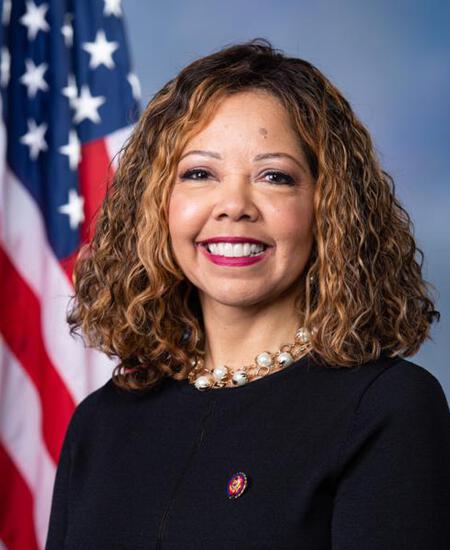
Rep. Lucy McBath
Sponsored bills
Maddy summaryThis bill amends the definition of "adequate consideration" in retirement law to clarify how Employee Stock Ownership Plans (ESOPs) value company stock. It allows ESOP fiduciaries (plan managers) to rely on independent appraisals that follow IRS guidelines (Revenue Ruling 59-60) when determining the fair value of company stock for retirement decisions. The change directly affects ESOPs and the companies that use them to provide employee retirement benefits. It simplifies the valuation process for these plans by establishing a clear standard for acceptable appraisals.
Maddy summaryHRES 990 is a resolution recognizing the 113th anniversary of Delta Sigma Theta Sorority, Incorporated, founded in 1913 at Howard University. It honors the sorority's century of community service and global initiatives, including its focus on education, economic development, and international outreach. The resolution is symbolic and non-binding, celebrating the organization's legacy without creating new policy or affecting specific groups. It was introduced by multiple House members in January 2026.
Maddy summaryHR 6088, the *Restoring Food Security for American Families and Farmers Act of 2025*, repeals specific sections (10101-10108) from a prior reconciliation law. This action revives previous provisions related to food security programs that were modified by those repealed sections. The bill directly affects federal food assistance and agricultural support programs by restoring their prior legal framework. It does not create new policies but reverses recent changes to existing food security measures.
Maddy summaryHR 909, the Crime Victims Fund Stabilization Act of 2025, modifies how funds from the False Claims Act are deposited into the Crime Victims Fund. It specifies that from 2025 through 2029, certain False Claims Act proceeds (specifically those for qui tam plaintiff payments and government damage reimbursements) cannot be deposited into the fund. This change directly affects the composition of the Crime Victims Fund by excluding these specific revenue streams during the specified period. The bill does not create new benefits or alter victim services; it only adjusts fund allocation rules for existing False Claims Act revenues.
Maddy summaryThis bill amends the Higher Education Act to require colleges and universities receiving federal funds to implement evidence-based programs preventing alcohol and substance misuse among students and staff, replacing outdated terms like "drug abuse" with "substance misuse." It establishes a $15 million annual grant program (2027-2031) to fund recovery support services, integrated mental health and substance use care, overdose prevention, and campus-wide crisis response training. Institutions must certify compliance with these programs and report on implementation to Congress. The law directly affects all eligible higher education institutions, mandating updated prevention frameworks and collaboration with health agencies.
Maddy summaryThis concurrent resolution (HCONRES 69) commemorates the 15th anniversary of the January 8, 2011, Tucson shooting that killed six people and injured 13, including former Congresswoman Gabby Giffords. It honors the victims, survivors, and Giffords - now a prominent advocate for gun violence prevention - and recognizes her leadership in promoting civility and reducing gun violence. The resolution also commends Tucson residents and first responders for their resilience and reaffirms Congress’s commitment to respectful dialogue and opposing political violence. As a ceremonial resolution, it does not create new laws or policies.
Maddy summaryThis resolution (HRES 969) expresses support for designating the week beginning September 8, 2025, as "National Hispanic-Serving Institutions Week." It recognizes colleges and universities with at least 25% Hispanic undergraduate enrollment (known as Hispanic-Serving Institutions or HSIs) and their role in serving diverse, low-income students. The resolution does not create new policies or funding but encourages public observance through ceremonies and activities to honor HSIs’ contributions to higher education access and economic mobility. It applies symbolically to all 615+ HSIs across the U.S. and Puerto Rico.
Maddy summaryHRES 972 is a non-binding resolution recognizing Atlanta, Georgia, as the cradle of the civil rights movement by highlighting its historical role in pivotal events and figures. It specifically acknowledges Atlanta's contributions to milestones like the founding of the NAACP, Dr. Martin Luther King Jr.'s leadership, the desegregation of public transit, and Atlanta's instrumental advocacy for the Civil Rights Act of 1964 and Voting Rights Act of 1965. The resolution honors Atlanta's ongoing status as a global leader in diversity, inclusivity, and opportunity, though it has no legal effect or policy changes.
Maddy summaryHR 4611 (EACH Act of 2025) requires all federally funded health programs - including Medicaid, Medicare, military health plans, and the Indian Health Service - to cover abortion services without restrictions, repealing the Hyde Amendment's long-standing ban on federal funding for most abortions. This directly affects millions of people enrolled in these programs, particularly low-income women, women of color (including 25% of Black women and 22% of Hispanic women on Medicaid), and young people. The bill mandates coverage in all federally administered health plans and prohibits state or private insurers from restricting abortion coverage in health insurance. It aims to eliminate current federal and state barriers that deny abortion access to people who rely on government health programs.