

Maddy summaryThis resolution expresses support for designating June 5, 2026, as National Gun Violence Awareness Day and June 2026 as National Gun Violence Awareness Month. The bill calls on the public to wear orange on the designated day to honor victims and promote awareness of gun safety. It highlights statistics on gun-related deaths and injuries to underscore the need for community discussions on making neighborhoods safer.
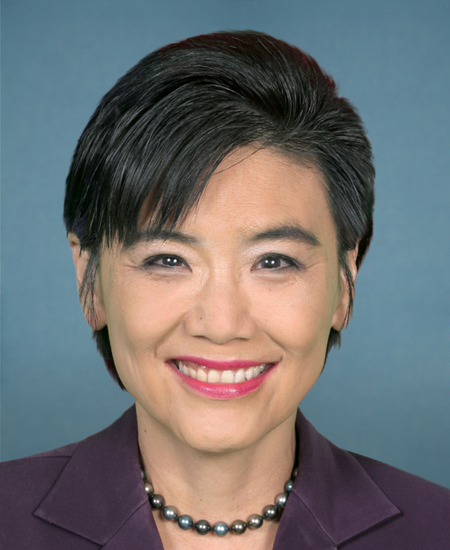
Rep. Judy Chu
Sponsored bills
Maddy summaryH.Con.Res. 107 is a non-binding resolution that formally recognizes the importance of reducing gun violence and strengthening public safety as the United States celebrates its 250th anniversary in 2026. The bill does not create new laws or change existing policies, but instead expresses Congress's commitment to these goals and honors the lives lost to gun violence. It acknowledges the efforts of community leaders, law enforcement, and advocates while calling for continued support of victim services and data collection initiatives.
Maddy summaryThis resolution commemorates the 120th anniversary of the 1906 arrival of Filipino plantation workers, known as Sakadas, in Hawai'i. It honors their historical contributions to the state's economy and culture while acknowledging the difficult working conditions they faced and their role in organizing labor movements. The text highlights how these immigrants and their descendants became a major part of Hawai'i's population and left a lasting impact on the islands' social and cultural fabric. By formally recognizing this milestone, the House of Representatives aims to preserve the legacy of these pioneering workers in the official record.
Maddy summaryThis resolution expresses support for designating May 2026 as Mental Health Awareness Month to highlight the importance of mental well-being and reduce stigma. It does not create new laws or allocate funding but serves as a formal statement acknowledging the rising rates of mental illness, suicide, and disparities in care across the United States. The text cites various statistics regarding anxiety, depression, and access to treatment to underscore the need for public awareness and continued efforts by medical and community organizations. Ultimately, the bill encourages citizens and institutions to use this month to promote mental health resources and support for individuals and families affected by mental illness.
Maddy summaryThis bill, known as the Arlington National Cemetery Viewshed Protection Act, restricts the construction of large triumphal arches in the Washington, D.C. area to preserve visual sightlines. It specifically bans the building of any such arches within Lady Bird Johnson Park and prohibits the use of federal funds for these structures there. Additionally, the law prevents the erection of triumphal arches taller than 50 feet on any land managed by the National Park Service unless Congress explicitly approves them. These measures aim to limit new monumental structures that could obstruct views of the Arlington National Cemetery from the capital region.
Maddy summaryThis resolution formally recognizes the 1885 Rock Springs Chinese Massacre, honoring the memory of the Chinese immigrant workers who were murdered and acknowledging the event as one of the deadliest acts of anti-Asian violence in U.S. history. The bill directs the House of Representatives to condemn the racist mob violence and the historical failure of authorities to protect the victims or hold perpetrators accountable. Additionally, it encourages the documentation and preservation of the massacre site through archaeological research and federal historic programs while promoting education about this event in schools to prevent future erasure of this history.
Maddy summaryThis bill, titled the Ending Fossil Fuel Bailouts Act of 2026, modifies federal bankruptcy laws to specifically target oil, gas, and coal companies. It requires these companies to prioritize paying worker wages and environmental cleanup costs over other debts, including those owed to shareholders. The legislation also prevents fossil fuel firms from abandoning their assets during bankruptcy and extends the time period for investigating fraudulent financial transfers to ten years. Additionally, it prohibits the transfer of certain federal energy leases if the company holding them files for bankruptcy. These changes aim to ensure that environmental liabilities and employee compensation are addressed before other financial claims are settled.
Maddy summaryThis bill establishes new federal standards requiring oil and gas companies operating on the Outer Continental Shelf to be certified as "fit to operate" before they can obtain or maintain leases. To receive this certification, companies must demonstrate a clean safety and environmental record over the past decade, maintain an investment-grade credit rating, and prove they have sufficient funds to cover future decommissioning costs. The legislation also mandates that operators place a significant portion of estimated decommissioning costs into interest-bearing escrow accounts and limits the time a well can be temporarily abandoned to three years, with a possible one-time extension to five years. Additionally, the bill requires the Department of the Interior to conduct annual compliance checks and submit detailed reports to Congress regarding enforcement actions and escrow account balances.
Maddy summaryThis bill directs the Secretary of Defense to study whether the military justice system needs a specific law against hazing. The Department must examine how to add a new section to the Uniform Code of Military Justice and create a clear definition for what counts as hazing. Within 180 days of passing, the Secretary must submit a report with their findings and recommendations to Congress. This action directly impacts the Department of Defense and the legislative committees overseeing military affairs.
Maddy summaryThis resolution formally recognizes the negative effects of menstrual stigma on women, girls, and other menstruating people and expresses support for designating May as National Menstrual Health Awareness Month. It highlights the importance of normalizing menstruation, improving access to products and sanitation facilities, and expanding education and clinical research on menstrual health conditions. The bill does not create new laws or funding but serves as a symbolic statement to promote awareness and gender equity regarding menstrual health.