

Maddy summaryThe Water Access and Affordability Act establishes a federal program, administered by the EPA, to provide financial assistance to low-income households for their drinking water and sanitary sewer bills. States, large water systems, or Indian Tribes can receive grants to implement these programs, offering aid for bill payments, debt relief, and water efficiency improvements. The bill includes provisions to simplify enrollment, such as automatic enrollment and self-attestation, and prohibits service disconnections for participating households. Additionally, it revises federal State Revolving Loan Fund programs for water infrastructure, requiring states to increase transparency, public engagement, and prioritize assistance for disadvantaged communities. This includes public review of funding plans, reporting on the socioeconomic impact of projects, and expediting aid to communities with affordability challenges.
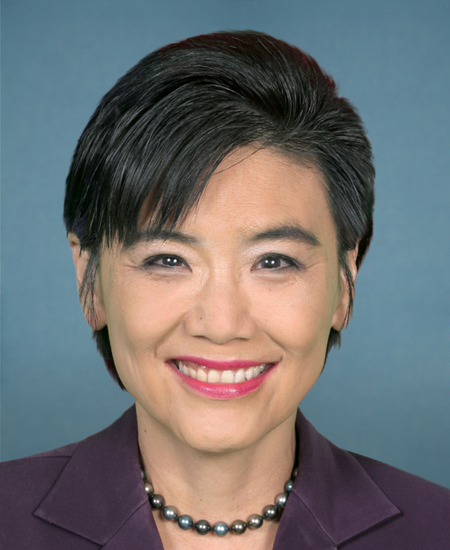
Rep. Judy Chu
Sponsored bills
Maddy summaryThis bill seeks to block a specific rule issued by the Department of Education that affects the William D. Ford Federal Direct Loan Program. If passed, it would prevent the rule from taking effect, meaning the proposed changes to federal student loans would not be implemented. The measure uses a legislative process known as a joint resolution of disapproval to override agency regulations. It directly impacts students, families, and institutions that rely on federal student loans by stopping the Department of Education from enforcing the new policy.
Maddy summaryThis resolution supports the National Day of Silence, an annual event that highlights anti-LGBTQI+ bullying and discrimination in K-12 schools. It calls on communities to demand equal educational opportunities and civil rights protections for all students, with particular focus on LGBTQI+ young people. The bill does not create new laws or regulations but instead expresses official congressional support for awareness efforts and encourages local educational agencies to adopt policies prohibiting discrimination based on sexual orientation, gender identity, or sex characteristics.
Maddy summaryThis bill, known as the OHH SNAP Act of 2026, would expand eligibility for the Supplemental Nutrition Assistance Program to include more college students. It directly affects students who are working while attending college or have no financial aid available. The key changes allow students with zero financial aid and those classified as independent to qualify for SNAP benefits, while also broadening the definition of eligible work activities to include attending school. These provisions would take effect 180 days after the bill is signed into law, but would not apply to certification periods that began before that date.
Maddy summaryThis bill directs the Secretary of Agriculture to create a grant program that provides financial stabilization payments to organizations representing farmworkers, meat processing workers, and grocery workers. The funding is specifically intended to support these workers in the event of natural disasters or other emergencies as determined by the Secretary. The program would be administered through the Agricultural Marketing Service and is authorized for up to $50 million. Additionally, the bill requires a report on the program's outcomes to be submitted to congressional committees within four years of enactment.
Maddy summaryThis resolution formally recognizes and honors Cambodian veterans of the Khmer National Armed Forces for their service during the Vietnam War and their support of U.S. military efforts in Southeast Asia. The bill highlights their contributions, including intelligence gathering, combat operations, and assistance during the 1975 evacuation of U.S. Embassy personnel in Phnom Penh. It acknowledges the sacrifices these veterans made, including facing genocide after the Khmer Rouge takeover and resettling in the United States where they faced significant challenges. The resolution expresses gratitude for their partnership with U.S. forces and acknowledges their ongoing contributions to their communities and the nation.
Maddy summaryThis resolution expresses support for recognizing April as National Language Access Month to highlight the importance of language services for individuals with limited English proficiency. It directly affects millions of Americans who speak languages other than English at home and rely on translation and interpretation services to access public services. The bill does not create new laws or funding but serves as a symbolic gesture to raise awareness about existing federal requirements for language access in areas like healthcare, employment, and voting. It encourages federal agencies, state and local governments, and community organizations to promote awareness of language access rights and resources during the designated month.
Maddy summaryThis concurrent resolution expresses support for International Transgender Day of Visibility, a day established in 2009 to honor the transgender community and raise awareness of the discrimination and violence they face. The bill encourages the House of Representatives and the American public to observe this day with ceremonies and activities while recognizing the accomplishments and leadership of transgender individuals. It acknowledges ongoing challenges such as employment discrimination, healthcare restrictions, and anti-transgender legislation, while also highlighting the community's contributions to politics, culture, and civil rights. As a concurrent resolution, it does not create new laws or regulations but serves as an official statement of congressional support for the day's goals and ideals.
Maddy summaryThis concurrent resolution formally recognizes the ongoing disparity between wages paid to men and women in the United States and reaffirms Congress's commitment to supporting equal pay. It highlights statistical data showing that women earn approximately 81 cents for every dollar earned by men, with significant variations across racial and ethnic groups, and notes that the gender wage gap has widened over the past two years. The document also identifies contributing factors such as occupational segregation, lack of family-friendly workplace policies, and workplace harassment, while emphasizing the economic impact on women's retirement security and family incomes.
Maddy summaryThis joint resolution seeks to overturn a Department of Labor rule that changes how the Adverse Effect Wage Rate is calculated for H-2A temporary agricultural workers. If passed, it would nullify the new methodology, reverting to the previous wage calculation standards. The bill directly affects employers and workers involved in temporary agricultural employment by restoring the prior regulatory framework. It uses the congressional review process to disapprove the specific rule published in October 2025.