

Maddy summaryThis House Resolution expresses support for the staff of public, school, academic, and special libraries across the United States and the essential services they provide to communities. It recognizes libraries as critical infrastructure and supports prioritizing full funding for their services at federal, state, and local levels. The resolution also reaffirms the public's right to access information, the right of library workers to organize and collectively bargain, and their civil rights to perform their duties without intimidation.
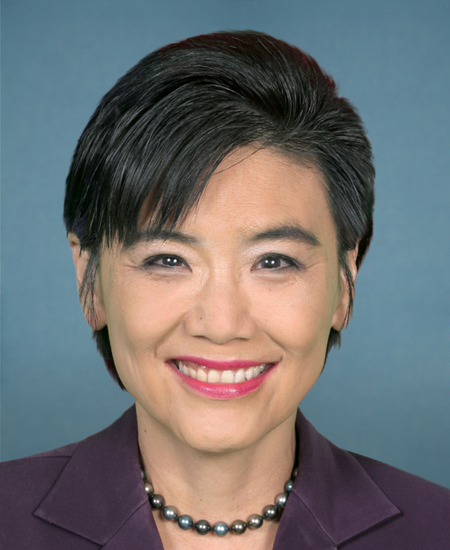
Rep. Judy Chu
Sponsored bills
Maddy summaryThis resolution designates April as "Community College Month" to recognize the significance of community colleges across the United States. It celebrates over 1,000 institutions for their role in providing accessible higher education and workforce training, and for contributing to the nation's economic prosperity.
Maddy summaryThe "Funding Early Childhood is the Right IDEA Act" proposes to increase authorized funding for specific programs under the Individuals with Disabilities Education Act (IDEA). This bill sets new appropriation levels for Part C of IDEA, which provides early intervention services for infants and toddlers with disabilities and their families. It also increases authorized funding for Section 619 of IDEA, which supports preschool special education for children aged three to five. These funding authorizations are scheduled for fiscal years 2027 through 2031, directly affecting children with disabilities and the state and local agencies that provide these services.
Maddy summaryHouse Resolution 1208 expresses the House of Representatives' support for honoring Earth Day and its historical role in promoting environmental protection and action. It encourages American citizens to engage in environmental stewardship and urges the President and the U.S. Government to take immediate action to address climate change, environmental injustices, and rejoin international climate agreements.
Maddy summaryThe Momnibus Act is a comprehensive legislative bill designed to improve maternal health outcomes across the United States by addressing social determinants of health, expanding access to care, and reducing disparities among pregnant and postpartum individuals. The bill establishes a federal task force to coordinate efforts between agencies and stakeholders to eliminate preventable maternal mortality and severe morbidity, while providing sustained funding to community-based organizations to address nonclinical factors like housing, nutrition, and transportation. Key provisions include extending WIC eligibility to 24 months postpartum, creating grants to grow and diversify the perinatal workforce, implementing respectful maternity care training for all healthcare employees, and establishing compliance programs to track and address bias in maternity care settings. The legislation also includes specific measures for incarcerated mothers, veterans, and vulnerable populations affected by climate change, alongside funding for maternal mental health services and technology-enabled care models to expand access in underserved areas.
Maddy summaryThis resolution commemorates the fifth anniversary of the April 15, 2021, mass shooting in Indianapolis that killed eight people, including four members of the Sikh community, and denounces anti-Asian hate and xenophobic rhetoric. It formally condemns violence and discrimination against South Asian Americans, Arabs, Hindus, Muslims, and Sikhs, while also criticizing white supremacist ideology and anti-immigrant policies. The bill calls for expanded federal hate crime data collection and prevention programs, restoration of immigration processing, and reaffirms the government's commitment to protecting civil rights. As a House resolution, it expresses congressional sentiment and recommendations rather than enacting new laws or regulations.
Maddy summaryThis resolution formally impeaches Peter B. Hegseth, the Secretary of Defense, for six articles of high crimes and misdemeanors. The articles allege unauthorized military actions against Iran without congressional approval, violations of international law regarding civilian casualties, mishandling of classified information, obstruction of congressional oversight, politicization of military decisions, and discriminatory conduct toward service members based on gender, race, and sexual orientation. If the House votes to adopt this resolution, the matter would be sent to the Senate for a trial to determine whether Hegseth should be removed from office.
Maddy summaryThe Reforming Disaster Recovery Act establishes a new Long-Term Disaster Recovery Fund to provide grants for housing, infrastructure, and economic revitalization in areas most affected by catastrophic major disasters. This legislation creates a new Office of Disaster Management and Resiliency within the Department of Housing and Urban Development to coordinate recovery efforts and ensures that at least 70 percent of the funding benefits low- and moderate-income households. The bill also introduces a formula-based allocation system that includes a specific portion of funds for mitigation activities designed to reduce future disaster risks and requires strict reporting to prevent the duplication of benefits with other federal aid.
Maddy summaryThis resolution designates the week of April 20 through April 24, 2026, as National Home Visiting Week to raise awareness about home visiting programs that support families. The bill does not create new funding or change existing laws, but instead formally recognizes the importance of these services that help parents, promote healthy child development, and strengthen family relationships. It highlights statistics showing that over 284,000 families received home visiting services in 2024, with more than 20,000 home visitors providing support nationwide. The resolution serves as a commemorative measure to acknowledge the role of home visitors in providing practical, emotional, and educational assistance to families across the United States.
Maddy summaryThis bill establishes a 17-member Commission on Presidential Capacity to Discharge the Powers and Duties of the Office. This commission, composed primarily of medical professionals and former high-ranking executive officials, would be activated by a concurrent resolution of Congress. Its duty would be to conduct a medical examination of the President to determine if they are mentally or physically unable to discharge the powers and duties of the office due to conditions such as illness, disability, or substance use. Following the examination, the commission would report its findings and a declaration on the President's capacity to Congress and the Vice President, with any refusal by the President to undergo examination taken into consideration.