

Maddy summaryThis bill expresses the sense of Congress that medication abortion is a safe medical treatment approved by federal regulators. It asserts that this federal approval overrides any state laws requiring the procedure to be dispensed in person by a healthcare provider. Additionally, the bill states that federal approval preempts state restrictions on prescribing or dispensing medication abortion through telehealth. Essentially, the legislation argues that states cannot enforce rules limiting how medication abortion is delivered if those rules conflict with the federal approval process.
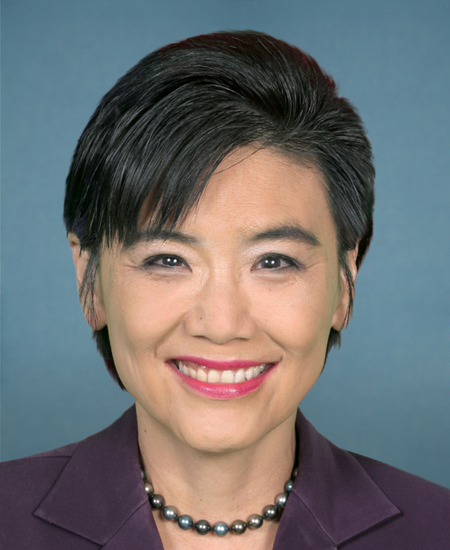
Rep. Judy Chu
Sponsored bills
Maddy summaryThis resolution formally designates May 10, 2026, as National Asian American, Native Hawaiian, and Pacific Islander Mental Health Day to raise awareness about mental health within these communities. The text highlights that many individuals in this diverse group face barriers to care, including high costs, language differences, and cultural stigma, which result in low rates of treatment utilization. While the measure itself is symbolic and does not create new laws or funding, it encourages federal, state, and local agencies to develop policies that improve access to culturally and linguistically appropriate mental health services.
Maddy summaryThis bill increases the maximum annual education voucher amount for foster youth from $5,000 to $12,000 under the Social Security Act. It requires states to improve awareness of these benefits through simplified application forms, electronic access, and coordination with other programs. The bill directly affects foster youth aged 18-26 who are pursuing postsecondary education, providing greater financial support and clearer pathways to access education. States must also develop outreach strategies based on youth input to ensure eligible individuals can access these resources.
Maddy summaryThis resolution formally recognizes the week of May 4 through May 8, 2026, as "Teacher Appreciation Week" to honor the work of public school educators. It highlights the importance of teachers in the education system and notes that a majority of them support various policies, including protections for students and funding for public schools. The document also expresses the view that teachers should have a direct role in education policymaking at federal, state, and local levels. By issuing this designation, the House of Representatives aims to acknowledge the value of teachers and encourage government leaders to engage with them on issues affecting the classroom.
Maddy summaryThis bill is a non-binding resolution that expresses the House of Representatives' sentiment to honor public servants for their dedication to the United States. It specifically acknowledges the work of federal, state, and local government employees, as well as uniformed service members, who deliver essential services and support the economy. The resolution calls on the American public to observe Public Service Recognition Week with ceremonies and activities that recognize these contributions. Because it is a symbolic expression of the House's feelings rather than a law with enforceable rules, it does not create new policies or mandate specific actions.
Maddy summaryH.R. 1243 is a House resolution that formally recognizes May as Asian American, Native Hawaiian, and Pacific Islander Heritage Month to celebrate the contributions of these communities to U.S. history. The bill highlights the diverse populations, historical milestones, and significant achievements of Asian Americans, Native Hawaiians, and Pacific Islanders in government, the military, and society. It also acknowledges the ongoing challenges faced by these groups, including a rise in hate crimes and historical discrimination. As a commemorative resolution, the measure does not create new laws or funding but serves to express official congressional appreciation and awareness.
Maddy summaryThis resolution asks the President to provide the House of Representatives with specific documents regarding how personally identifiable information from the Social Security Administration was accessed and used. The request focuses on records concerning the Numerical Identification System, death data, and other private details allegedly copied by an individual working for the Department of Government Efficiency onto personal devices. Additionally, the bill seeks information about any attempts to share this data with a private employer and any statements made about expecting a presidential pardon for such actions. If the President does not comply within 14 days, the matter may be referred to the House Ways and Means Committee for further review.
Maddy summaryThis resolution commemorates the 51st anniversary of the Fall of Saigon on April 30, 1975, and the subsequent day known as Black April. It formally acknowledges the historical events of that date, including the displacement of millions of Vietnamese people and the U.S. military's evacuation efforts. The document honors the contributions of Vietnamese Americans to the United States and reaffirms support for democracy and human rights in Vietnam. Additionally, it pays tribute to the service and sacrifice of U.S. and South Vietnamese military personnel who fought during the Vietnam War.
Maddy summaryThis bill establishes a new federal entity called the Language Access Board to ensure individuals with limited English proficiency can access government programs and services. The Board will be composed of 32 members, including public appointees and heads of federal agencies, who will develop standards for public-facing resources like websites and forms. Federal departments must comply with these accessibility standards, and the Board has the authority to investigate complaints and issue orders of compliance. Additionally, the Board will review existing language access laws and submit regular reports to Congress on progress and enforcement actions.
Maddy summaryThe No WAR Act prohibits Congress from using budget reconciliation procedures to fund military hostilities against Iran unless such actions are explicitly authorized by a formal declaration of war or a specific authorization for the use of military force. This legislation directly affects the legislative process by establishing a point of order that blocks any reconciliation bill attempting to provide budget authority for offensive military operations, strikes, or covert actions targeting Iranian military forces, territory, or government institutions. The bill also defines proxy forces as any foreign military or irregular groups operating with U.S. direction or material support, ensuring these entities are included in the restrictions on unauthorized funding. By amending the Congressional Budget and Impoundment Control Act, the measure aims to prevent the use of budgetary shortcuts to bypass the constitutional requirement for congressional approval before engaging in armed conflict with Iran.