

Maddy summaryThis bill protects funding and staffing at the Department of Veterans Affairs (VA). It prevents the government from holding back or redirecting VA funds without new law, and requires the VA to notify Congress if funding shortfalls approach. The bill exempts the VA from hiring freezes through 2029, mandates reinstating veterans fired between 2025 and the bill’s enactment, and requires special legal authorization for layoffs (including probationary employees). The VA must also submit annual compliance reports to Congress.
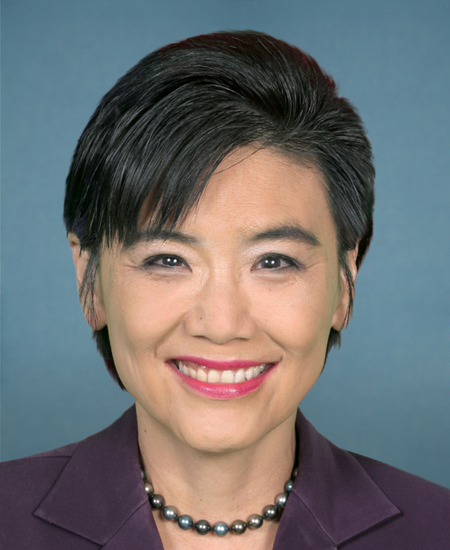
Rep. Judy Chu
Sponsored bills
Dental Care for Veterans Act This bill expands eligibility for veterans for dental care provided by the Department of Veterans Affairs (VA). Specifically, the bill makes all veterans who are enrolled in the VA health care system eligible for VA-provided dental services. Currently, only veterans who have a service-connected dental issue or meet other narrow criteria are eligible for certain dental services. The bill phases in eligibility over four years based upon existing eligibility, degree of service-connected disability or other disability, prisoner of war status, award of a Purple Heart, financial need, or VA health care eligibility.
Maddy summaryThis bill creates a new federal tax on money received by former U.S. presidents, their immediate family members, or their controlled businesses from civil lawsuits against the government. Under the law, any settlement or verdict awarded to these individuals would be subject to a 100 percent tax, and the payments would not be counted as taxable income for other purposes. To enforce this, the bill requires trustees and administrators to file public reports detailing these payments and imposes a $10,000 penalty for failing to do so. These rules would apply to any funds received on or after May 20, 2026.
Maddy summaryThe Restoring Overtime Pay Act of 2026 raises the minimum salary required for certain employees to be exempt from federal overtime pay rules, starting at $45,000 per year and increasing annually until it reaches $75,000 by 2029. The bill also mandates that this threshold automatically updates each year to match the 55th percentile of weekly earnings for full-time salaried workers nationwide, with adjustments taking effect based on Bureau of Labor Statistics data. Additionally, the law modifies the duties test for exemption, requiring that at least 20 percent of an employee's time be spent on executive or administrative tasks rather than the current 40 percent standard. These changes directly affect employers and workers covered by the Fair Labor Standards Act by redefining eligibility for overtime exemptions and establishing a new mechanism for adjusting salary requirements over time.
Maddy summaryH.Res. 1291 is a non-binding resolution that formally recognizes May 3 through May 9, 2026, as Wildfire Preparedness Week. The bill aims to raise public awareness about wildfire risks and promote educational initiatives regarding fire safety and evacuation planning. It highlights the dangers of smoke exposure for both the general public and firefighters while noting that human activity causes the majority of wildland fires. This measure does not change laws or allocate funding, but rather expresses the House of Representatives' support for these preparedness goals.
Maddy summaryThis non-binding resolution expresses the House of Representatives' view that the FDA should regulate mifepristone, a medication used for abortion, based on scientific evidence rather than political pressure. It highlights over 25 years of data showing the drug is safe and effective when prescribed via telemedicine or dispensed by mail and pharmacy. The bill advocates for policies that ensure equitable access to this care, particularly for marginalized communities facing barriers due to state-level restrictions. By citing numerous studies and medical organizations, the resolution calls for transparent, science-based decisions to maintain current access methods.
Maddy summaryThe Protecting Our Democracy Act is a comprehensive legislative bill designed to prevent abuses of presidential power, restore checks and balances, and defend elections against foreign interference. Key provisions include prohibiting the President from granting self-pardons, requiring congressional oversight for pardons involving the President or their family, and banning the President from accepting payments from individuals who have received clemency. The bill also strengthens enforcement of the Hatch Act and ethics rules for political appointees, mandates greater transparency in presidential tax returns and campaign finances, and restricts the use of federal property for political conventions. Additionally, it expands reporting requirements for foreign contacts in federal campaigns and imposes stricter penalties for violations of election laws.
Maddy summaryThis bill establishes a compensation fund to provide financial support to law enforcement officers who actively defended the U.S. Capitol on January 6, 2021, and suffered injuries, emotional distress, or death as a result. The program is administered by a Special Master appointed by the Attorney General, who will review individual claims for economic and non-economic losses while ignoring any questions of negligence. Eligible officers can receive specific payments for their injuries or the death of a colleague, with a guaranteed minimum of $4.975 million for death claims, plus an additional equal distribution to all qualifying officers regardless of injury status. The legislation also includes provisions to reduce payouts by any other compensation the claimant has already received and grants the federal government the right to recover funds if they are later paid out in related legal settlements.
Maddy summaryThe Universal School Meals Program Act of 2026 mandates that all public schools provide free breakfast and lunch to every enrolled student, regardless of income. It establishes specific funding rates for these meals, adjusts payments based on the use of locally sourced food, and eliminates the ability of schools to collect debt for unpaid charges. Additionally, the bill expands free meal access to summer programs, afterschool care, and incarcerated juveniles while updating poverty measurement standards across various federal education and nutrition laws.
Maddy summaryThe Respect Tribal IDs Act requires the Department of Homeland Security to create and enforce annual training for immigration officers on how to properly identify and accept Native American tribal documents as proof of U.S. citizenship. This legislation directly affects federal immigration officials by mandating that they complete specific curricula developed in collaboration with the Bureau of Indian Affairs and Indian tribes. Key provisions include establishing a database of tribal document examples, incorporating scenario-based exercises, and ensuring officers understand the historical trust responsibility between the U.S. government and American Indians. Additionally, the bill defines which tribal documents, such as enrollment cards and certificates of degree of Indian blood, are considered valid proof of citizenship.