

Maddy summaryThis bill establishes a grant program to help vulnerable mothers and babies in areas with high climate-related health risks, such as extreme heat and air pollution. It directs the Department of Health and Human Services to award up to $105 million over four years to community groups, healthcare providers, and local organizations for initiatives that provide cooling resources, health education, and support services. The program prioritizes areas with high rates of maternal and infant health disparities and requires grantees to address racial and ethnic inequities. Additionally, the bill creates a research consortium at the National Institutes of Health to study climate impacts on birth outcomes and funds training programs for health profession schools to better prepare providers for these risks.
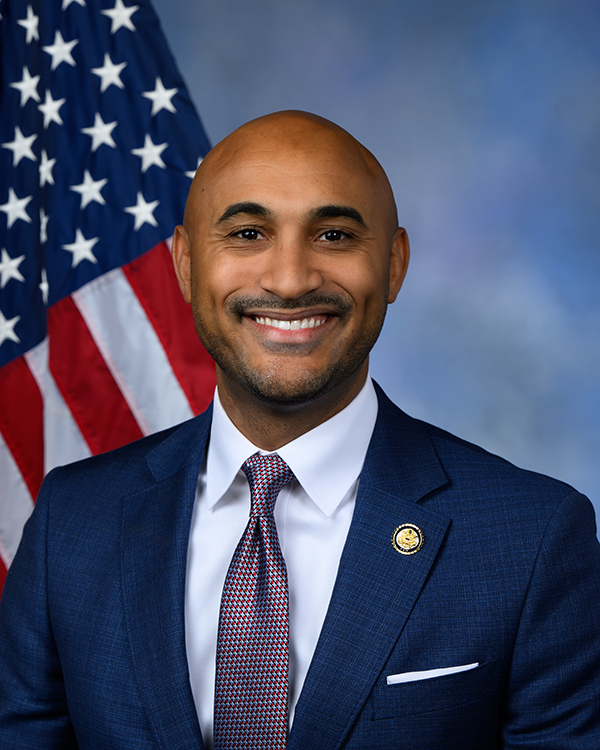
Rep. Shomari Figures
Sponsored bills
Maddy summaryThis resolution expresses the House of Representatives' strong support for designating April 19 through April 25, 2026, as "National Crime Victims' Rights Week." It recognizes the impact of crime on victims and survivors, appreciates organizations that assist them, and encourages continued efforts to support victims' rights and services.
Maddy summaryThe Momnibus Act is a comprehensive legislative bill designed to improve maternal health outcomes across the United States by addressing social determinants of health, expanding access to care, and reducing disparities among pregnant and postpartum individuals. The bill establishes a federal task force to coordinate efforts between agencies and stakeholders to eliminate preventable maternal mortality and severe morbidity, while providing sustained funding to community-based organizations to address nonclinical factors like housing, nutrition, and transportation. Key provisions include extending WIC eligibility to 24 months postpartum, creating grants to grow and diversify the perinatal workforce, implementing respectful maternity care training for all healthcare employees, and establishing compliance programs to track and address bias in maternity care settings. The legislation also includes specific measures for incarcerated mothers, veterans, and vulnerable populations affected by climate change, alongside funding for maternal mental health services and technology-enabled care models to expand access in underserved areas.
Maddy summaryThis House Resolution supports designating the week of April 11 through April 17, 2026, as "Black Maternal Health Week." The resolution aims to bring national attention to the maternal and reproductive health crisis in the United States, specifically highlighting the importance of reducing maternal mortality and morbidity among Black women and birthing people.
Maddy summaryThe Transit Workforce Development Act expands how federal grants for buses and bus facilities can be used for workforce training. It increases the portion of these grants that transit agencies can dedicate to workforce development from 5% to 10% of the allocated funds. Additionally, the bill broadens the types of training eligible for these funds, allowing them to cover all buses, related equipment, and facility construction,
Maddy summaryThe Tech to Save Moms Act aims to improve maternal health outcomes for pregnant and postpartum individuals by increasing access to technology-enabled care. It allows states to adopt and use telehealth tools under Medicaid for screening, monitoring, and managing health complications during pregnancy and up to one year postpartum. The bill also establishes two grant programs: one to fund technology-enabled collaborative learning models for training maternal healthcare providers, especially in underserved areas, and another to increase access to digital tools that reduce maternal health disparities. Finally, it directs the National Academies to study the use of technology and patient monitoring devices in maternity care, focusing on racial and ethnic biases.
Maddy summaryThe Supporting VA Families Act grants unpaid parental leave to Department of Veterans Affairs employees. This provision allows employees to take four weeks of unpaid leave within a 12-month period for the birth of a child or for adoption and foster care placements. The leave is designed to supplement existing leave policies rather than replace them, ensuring employees can balance family needs with their work responsibilities. The act defines eligible employees and children according to existing federal definitions found in Title 5 of the United States Code.
Maddy summaryThe ALERT Act (HR 7613) requires the Federal Aviation Administration to improve aviation safety through several key measures. It mandates the evaluation and potential implementation of enhanced collision avoidance systems (ACAS-Xa) for commercial aircraft and ACAS-Xr for rotorcraft, with specific deadlines for rulemaking and installation. The bill establishes committees to develop recommendations for safety technology requirements, requires safety risk assessments for air traffic controllers, and addresses operational procedures at high-traffic airports like Ronald Reagan Washington National. These provisions affect air carriers, air traffic controllers, rotorcraft operators, and Department of Defense aircraft operations. The act aims to enhance situational awareness and reduce midair collision risks through technology upgrades and improved safety protocols.
Maddy summaryThe HBCU Research Capacity Act establishes a Federal Clearinghouse within the Department of Education, in coordination with several other federal agencies, to provide Historically Black Colleges and Universities (HBCUs) with comprehensive information on federal grant opportunities. This Clearinghouse will identify grants supporting research and development and institutional capacity building at HBCUs, while also sharing best practices for securing federal funding. The Department of Education will notify HBCUs and Congress about the Clearinghouse and offer quarterly updates to participating institutions. Additionally, several federal agencies, including Defense, Energy, and the National Science Foundation, are mandated to review their grant programs to align with the Clearinghouse's recommendations and report any identified funding gaps to Congress annually.
Maddy summaryThe Next Gen Road Safety Act amends federal funding provisions to allow law enforcement agencies to purchase specialized equipment for managing high-speed vehicle pursuits. This legislation specifically authorizes the procurement of technologies such as vehicle-disabling systems, police bumper systems, and drones to help prevent and de-escalate dangerous chase situations. The changes apply to federal crime control grants under the Omnibus Crime Control and Safe Streets Act of 1968, enabling agencies to use these funds for the specified safety equipment. The bill focuses on updating existing grant categories to include modern tools that support officer safety and public safety during vehicular pursuits.