

Maddy summarySB 234 appropriates $690,000 from North Carolina's General Fund to the City of Greenville for a new fire truck. The funds are a one-time grant specifically for the Greenville Fire Department to purchase equipment, effective July 1, 2025. This bill directly affects Greenville's fire department operations by providing dedicated funding for vehicle acquisition. It does not create new policies or alter existing laws, but allocates existing state resources for a specific municipal need.
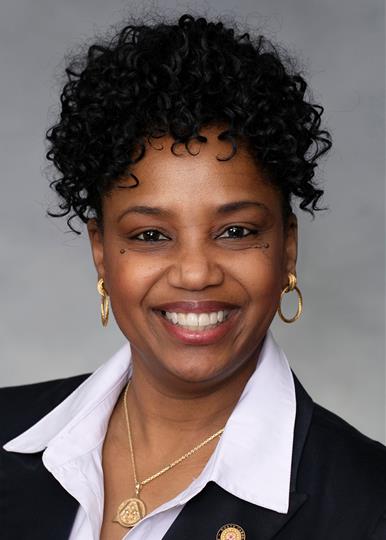
Sen. Kandie Smith
Sponsored bills
Maddy summarySB 211 reenacts North Carolina's state Earned Income Tax Credit (EITC), providing a cash refund to low-to-moderate income workers. It allows eligible residents to claim a credit equal to 5% of the federal EITC amount they qualify for, which is refundable (meaning they receive a cash payment even if they owe no state tax). The credit applies to taxable years beginning on or after January 1, 2025, and directly benefits working individuals and families with low earnings. The bill reinstates a previously sunsetted provision, ensuring continued state-level support aligned with the federal EITC.
Maddy summarySB 216 removes a legal limit on satellite annexations for the Town of Sharpsburg, North Carolina. Currently, satellite annexed areas (noncontiguous lands) cannot exceed 10% of the town's main area; this bill eliminates that specific cap for Sharpsburg. The change directly affects Sharpsburg's ability to annex additional non-connected lands without the previous percentage restriction. The bill modifies state law to exempt Sharpsburg from the 10% satellite annexation limit applicable to most other cities and towns.
Maddy summaryThis bill consolidates and updates the existing charter of Pinetops, North Carolina, to clarify its governance structure. It affects the Town of Pinetops by revising how its mayor, board of commissioners, and election procedures are organized under the charter document. The bill does not create new policies or change the town's powers - it only reorganizes and clarifies the existing legal framework for local governance. This is a procedural update to the town's foundational document.
Maddy summaryThis bill creates a new tax deduction for North Carolina taxpayers who pay labor organization membership dues. It allows individuals to deduct dues, fees, or assessments required for membership in a labor organization (as defined by state law) from their state taxable income. The deduction applies to payments made during taxable years beginning on or after January 1, 2026. This directly affects workers who are members of labor organizations and pay dues as a condition of membership.
Maddy summarySB 154, the North Carolina CROWN Act, prohibits employment discrimination based on hair texture or protective hairstyles. It explicitly defines "protective hairstyles" (including braids, locks, twists, and bantu knots) as protected under existing anti-discrimination law, stating that race discrimination includes hair texture and type. The bill amends Chapter 95 to add Section 95-28.1B, making it illegal for employers to deny jobs, fire, or otherwise discriminate against employees because of these hair characteristics. This applies to all employers, employees, and job applicants in North Carolina starting from the law's effective date.
Maddy summarySB 134 allows North Carolina local governments to require new residential developments to include affordable housing units through inclusionary zoning policies. It directly affects local zoning authorities, developers building new housing, and low-to-moderate income residents who would benefit from increased affordable housing options. The bill also appropriates $10 million in recurring funds to the North Carolina Housing Finance Agency for its Workforce Housing Loan Program starting in 2025. These provisions aim to supplement affordable housing availability by giving local governments tools to mandate inclusionary requirements and providing dedicated funding for housing loans. The bill takes effect on July 1, 2025.
Maddy summarySB 116 restores local government authority to initiate down-zoning in Pitt County and its municipalities. It amends zoning law to allow county or city governments to propose down-zoning changes without requiring written consent from all affected property owners (previously required under S.L. 2024-57). The bill defines "down-zoning" as reducing development density, limiting permitted land uses, or creating nonconformities. This change applies only to Pitt County and takes effect retroactively to December 11, 2024.
Maddy summarySB 114 appropriates $500,000 from the state General Fund for the 2025-2026 fiscal year to provide a directed grant to the Boys & Girls Clubs of the Coastal Plain Foundation. This funding specifically supports operational expenses and program expansion for the Boys & Girls Clubs located in Pitt County only. The bill directs all funds to these local clubs, with no restrictions on how the money is spent beyond the stated purpose. It becomes effective July 1, 2025.
Maddy summarySB 107 reestablishes nonpartisan elections for North Carolina's appellate, superior, and district court judges, directly affecting candidates running for these judicial positions. The bill mandates that candidates run without party labels on ballots, requires a primary to narrow candidates to two when more file, and sets specific filing deadlines (December 1-17) for notices of candidacy. It also requires candidates to be registered voters in their county and prohibits filing for multiple judicial offices simultaneously. The law aims to restore public confidence in an independent judiciary, as stated in the bill's preamble honoring Judge Joe John's advocacy for nonpartisan judicial elections.