

Maddy summarySB 386 establishes same-day voter registration on election day in North Carolina, allowing eligible individuals to register and vote immediately at their county's election office or early voting site. It also permits 16- and 17-year-olds to preregister to vote for upcoming elections they will qualify for upon turning 18. To register under this bill, voters must provide proof of residence (e.g., utility bill, bank statement) and photo ID, and submit a completed registration form. The bill modifies existing deadlines and primary election rules to align with these new registration provisions. This changes how voters can register and participate, focusing on expanding access while maintaining verification requirements.
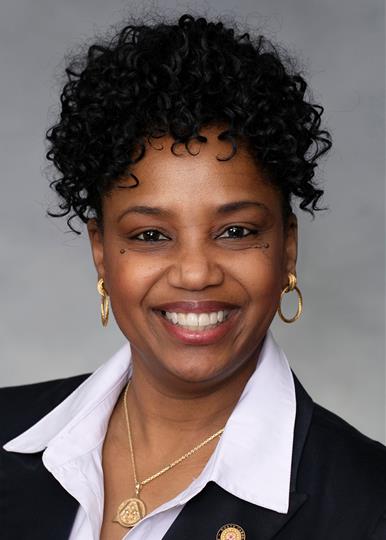
Sen. Kandie Smith
Sponsored bills
Maddy summarySB 367 allocates $8 million from the Education Lottery Fund to four North Carolina Historically Black Colleges and Universities (HBCUs) - Bennett College, Johnson C. Smith University, Livingstone College, and Shaw University - for campus capital improvement projects like building repairs or new facilities. Funding is distributed proportionally based on each HBCU’s number of North Carolina resident undergraduate students receiving federal Pell Grants. The bill, effective July 1, 2025, provides nonrecurring funds specifically for physical campus upgrades at these institutions. It directly affects the listed HBCUs and their enrolled students who qualify for Pell Grants.
Maddy summarySB 379, the Senior Care Assurance Act, expands healthcare access for North Carolina seniors (65+) by enhancing Medicaid coverage for preventive screenings and chronic care services. It creates two new programs: a $2.5 million annual grant program to fund free health screenings and geriatric care for low-income seniors (at or below the federal poverty level), prioritizing rural and underserved areas, and a $2 million annual program to help seniors purchase telehealth equipment and internet access, with priority for rural seniors. The bill also updates telehealth infrastructure funding to support rural healthcare providers in establishing telehealth services. These provisions directly benefit seniors facing financial or geographic barriers to care, focusing on preventive health and independent aging.
Maddy summarySB 381 expands North Carolina's anti-discrimination protections to cover housing and employment. It adds sexual orientation, gender identity, military/veteran status, and genetic information to the list of protected characteristics in housing (e.g., rentals, sales, loans) and employment (for employers with 15+ staff). The bill prohibits specific discriminatory actions like refusing housing based on protected status, denying employment opportunities, or making biased land-use decisions. It directly affects residents, renters, job seekers, and businesses operating in these sectors across the state.
Maddy summarySB 366 increases Medicaid payment rates for personal care services to $7.50 per 15-minute increment and private duty nursing to $16.25 per 15-minute increment. It directly affects healthcare providers who deliver these services to Medicaid beneficiaries through programs like personal care services and private duty nursing. The bill allocates $119.2 million annually in state funds (with matching federal funds) to cover the rate increases for the 2025-2027 fiscal biennium. The changes take effect July 1, 2025.
Maddy summarySB 358, the "Hate Crimes Prevention Act," expands North Carolina's hate crime laws by increasing penalties for offenses motivated by the victim's actual or perceived race, ethnicity, religion, nationality, gender identity, sexual orientation, disability, or gender expression. It upgrades certain misdemeanors to higher classifications (like Class H felonies) and adds civil remedies for victims, including compensation for emotional distress and attorney fees. The bill also mandates the State Bureau of Investigation to create a hate crimes database, requires law enforcement officers to receive specialized training on identifying and reporting hate crimes, and directs prosecutors to develop hate crime prosecution training. These changes directly affect victims of hate crimes, law enforcement agencies, and prosecutors by strengthening legal responses and data collection.
Maddy summarySB 384 requires North Carolina's Commission for Public Health to establish safe limits for specific toxic chemicals in drinking water by October 2025. It targets chemicals like PFAS, PFOA, PFOS, hexavalent chromium, and 1,4-Dioxane - known or suspected carcinogens - mandating limits based on scientific evidence and ensuring they do not exceed federal EPA standards. The law also requires annual reviews of new research to update these limits as needed. This directly affects all North Carolina residents who rely on public water systems, with special consideration for children, infants, and pregnant people.
Maddy summarySB 360 requires every public school in North Carolina (including traditional, charter, regional, and laboratory schools) to have at least one full-time, permanent school nurse starting in the 2025-2026 school year. The bill appropriates $95 million in recurring state funds to the Department of Public Instruction to cover the cost of adding these nurse positions, ensuring funding supplements existing resources without replacing them. This policy directly affects all K-12 public schools across the state by mandating nurse staffing levels and providing dedicated funding to meet that requirement. The law becomes effective July 1, 2025, with implementation beginning for the 2025-2026 school year.
Maddy summarySB 382 prohibits licensed mental health professionals from providing conversion therapy to minors or adults with disabilities. The bill bans attempts to change a person’s sexual orientation, gender identity, or gender expression. It directly affects vulnerable individuals, including minors and adults with disabilities, who might otherwise be subjected to these practices. The law aligns with medical consensus from major health organizations stating such therapies are ineffective and harmful. Licensed practitioners would be barred from offering these services under this legislation.
Maddy summarySB 383, titled "Right to IVF," protects patients' access to assisted reproductive technology (ART) like in vitro fertilization (IVF), gamete intrafallopian transfer, and zygote intrafallopian transfer. It prohibits North Carolina or its subdivisions from restricting or interfering with patients' access to ART or healthcare providers' ability to offer or perform these services. The bill also clarifies that fertilized eggs or embryos outside the uterus are not legally considered "human beings" under state law. Additionally, it allocates $500,000 annually from 2025-2027 to expand Medicaid maternal support services (the Baby Love Program), matching federal funds for this purpose. The bill directly affects patients seeking ART and healthcare providers offering these services in North Carolina.