

Maddy summarySB 492 allows single-exit stairways in certain multifamily residential buildings (5-32 units, under 75 feet tall, on one lot) that meet strict fire safety standards. It applies to qualifying "Group R-2" buildings, requiring either 2-hour fire-rated construction with sprinklers (mid-rise) or 1-hour fire-rated construction/sprinklers (low-rise), plus specific egress requirements like 20-foot travel distance to the stairway and pressurized stairwells. The bill temporarily permits this change until the Building Code Council adopts permanent rules, which must align with these provisions. It directly affects developers and builders constructing qualifying mid-rise or low-rise apartment buildings in North Carolina. The law does not apply to three- or four-family homes or buildings exceeding the specified height or unit limits.
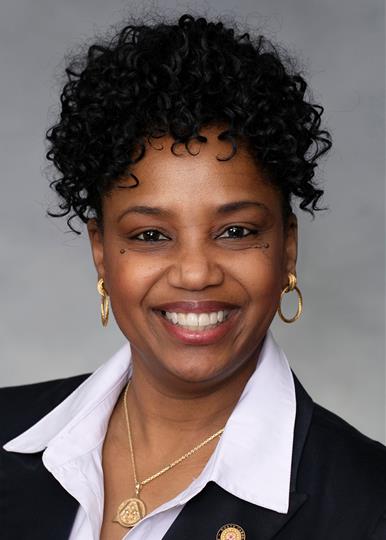
Sen. Kandie Smith
Sponsored bills
Maddy summarySB 607, the North Carolina Equal Pay Act, prohibits employers from paying employees differently based on gender for work requiring similar skill, effort, and responsibility under comparable conditions. It defines "comparable work" broadly (excluding job titles alone) and allows pay differences only for factors like seniority, merit, geographic location, or job-related education/experience. The bill also bans employers from asking about salary history before making a job offer, protects employees who discuss pay or file complaints from retaliation, and requires employers to post notices about these rights. The law takes effect January 1, 2026, and would allow employees to seek back pay for violations.
Maddy summarySB 546 establishes a statewide Clean Energy Workforce Development Program under North Carolina's Department of Commerce to build a skilled workforce for nuclear energy, specifically targeting small modular reactors. It provides grants to colleges for training programs in energy sector skilled trades (like welding, grid integration, and reactor maintenance), subsidizes employer-paid apprenticeships (prioritizing economically disadvantaged students), and offers scholarships for relevant degrees - including for workers displaced by coal plant closures. The bill requires prioritizing funding for communities affected by fossil fuel plant closures, economically distressed areas, and underrepresented groups in the energy sector. It directly affects North Carolina residents seeking clean energy careers, community colleges, and nuclear industry employers through concrete training and financial support mechanisms.
Maddy summarySB 480 establishes North Carolina's first state-run paid family leave program, effective January 1, 2026. It provides eligible workers - such as employees meeting wage criteria or self-employed individuals who opt in - with up to 26 weeks of paid leave per year to care for a newborn, adoptive child, or family member with a serious health condition, or for military family leave needs. Benefits are capped at 12 weeks for most family-related reasons (like newborn care), 18 weeks for personal serious health conditions, and 26 weeks for military family leave. The program is funded through employee payroll contributions and administered by the Division of Employment Security, with specific eligibility requirements defined in the bill.
Maddy summarySB 571 (MOMnibus 3.0) establishes a North Carolina grant program to address racial disparities in maternal health outcomes, specifically targeting Black women. The bill requires the Department of Health and Human Services to award competitive grants (between $10,000 and $50,000) to community-based organizations serving Black women in areas with high maternal health disparities. Grants prioritize organizations led by Black women that provide evidence-based services, including culturally respectful care, mental health support, assistance with social determinants like housing and transportation, and doula support. The program mandates technical assistance for grantees and annual reports to the legislature on funding and outcomes. This bill directly affects Black women in North Carolina and community health organizations providing maternal care services.
Maddy summarySB 545 requires the North Carolina State Auditor to regularly review the financial operations of the state legislature (General Assembly). This procedural bill directly affects the General Assembly by mandating periodic financial audits of its own spending and administration. The key provision amends state law to explicitly add "auditing the General Assembly" to the Auditor's responsibilities under G.S. 147-64.6(c). It does not change laws for citizens or create new policies, only establishing a routine financial review process for the legislature itself. The bill is currently pending in the Senate Rules committee.
Maddy summarySB 495 requires North Carolina local governments to permit at least one accessory dwelling unit (ADU) per single-family residential lot, defined as a smaller secondary home (under 800 sq ft) attached or detached from the main house. It prohibits local governments from banning long-term rentals of ADUs, imposing extra parking requirements, charging higher fees than standard permits, or restricting utility connections. Local governments must adopt implementing regulations by January 1, 2027, or ADUs will be allowed without restrictions. The bill excludes historic districts, National Historic Landmarks, and properties with private covenants restricting dwelling types.
Maddy summarySB 543 requires the North Carolina State Auditor to periodically audit private schools that enroll students receiving state-funded scholarship grants under specific education programs. This bill directly affects nonpublic schools participating in state scholarship initiatives, mandating regular financial reviews of their use of public funds. The key provision adds this audit responsibility to the State Auditor's duties under existing law, ensuring transparency for taxpayer dollars spent on private education. The bill focuses on concrete financial oversight without altering scholarship eligibility or program structure. (Note: The bill is currently in early legislative stages as of March 2025.)
Maddy summarySB 529, the Second Chance Success Act, eliminates the ability to extend probation solely due to failure to pay a $40 monthly supervision fee. It directly affects individuals on supervised probation in North Carolina who might have faced extended probation terms for nonpayment. The bill modifies probation rules to state that a probation term cannot be extended if nonpayment of the fee is the only reason, though the fee itself remains required (with court exemptions possible for good cause). Fees collected still go to the county clerk and then the state's General Fund, but probation officers can no longer use nonpayment as grounds for extending probation.
Maddy summarySB 541, the Train Infrastructure Acceleration Act, allocates $1 million in additional state funding for each of seven specific train routes in North Carolina to support engineering studies and feasibility work. The bill directly affects the North Carolina Department of Transportation (NCDOT), which must use these funds for projects like the Asheville-Salisbury line and the Charlotte-Washington, D.C. corridor, alongside existing routes. Key provisions include requiring annual reports on fund usage and progress by December 1 each year, and appropriating $7 million total from the General Fund. The act focuses on advancing preliminary planning, not construction, to strengthen federal partnerships and secure future rail development. It becomes effective July 1, 2025.