

Maddy summarySB 259, the School Psychologist Omnibus, aims to improve the number and quality of school psychologists in North Carolina public schools. It provides $8.1 million for 2025-2026 to increase school psychologists' salaries by $650 monthly plus 12% for those with NCSP credentials, and allocates $5 million for a grant program offering signing bonuses (up to $5,000) to recruit psychologists, requiring a one-year commitment. Another $5 million funds an internship program with stipends for psychology students and supervisor bonuses, while $5 million supports a virtual training program at Appalachian State University. These provisions directly affect school psychologists, school districts, and psychology training programs across North Carolina.
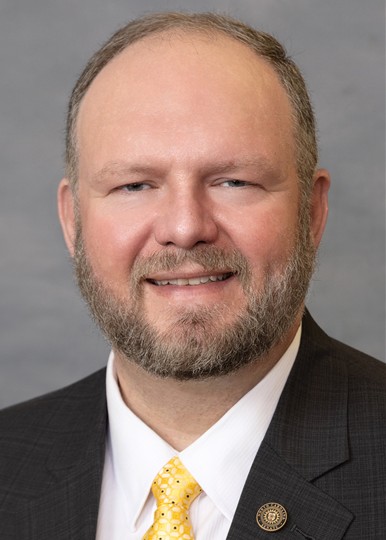
Sen. Ralph Hise
Sponsored bills
Maddy summaryThis bill allocates funding for North Carolina's state agencies and departments to cover their current operations during the 2025-2027 fiscal biennium. It provides base budget appropriations from the General Fund, Highway Fund, and federal block grants to maintain existing services without creating new programs. The funding is set at maximum necessary levels, with unused amounts reverting to their respective funds at year-end. The bill applies solely to the 2025-2027 period and becomes effective July 1, 2025.
Maddy summarySB 263 is a routine budget bill that allocates funding for North Carolina state agencies' operations during the 2025-2027 fiscal biennium. It provides appropriations from the General Fund, Highway Fund, Highway Trust Fund, and federal block grants (DHHS and NER) as required by existing budget law. The bill formalizes funding levels for ongoing state services without creating new programs or changing eligibility rules. It applies only to the 2025-2027 period and becomes effective July 1, 2025.
Maddy summaryThis bill rescinds all previous requests made by North Carolina's legislature to Congress for a constitutional convention to propose amendments to the U.S. Constitution. It specifically cancels every application ratified by North Carolina's General Assembly before December 1, 2024, regardless of whether those requests were for a limited convention (on specific topics) or a general convention. The bill directly affects North Carolina's own historical applications to Congress under Article V of the U.S. Constitution, voiding them without creating new policy. This is a procedural action with no direct impact on citizens, other states, or current legislative processes.
Maddy summaryThis bill permits the sale, possession, and use of specific consumer fireworks (like sparklers, party poppers, and novelty items) in North Carolina, while maintaining restrictions on most pyrotechnics. It directly affects consumers and retailers by allowing limited fireworks that comply with strict weight limits (e.g., no more than 16 milligrams for party poppers) and requires compliance with new regulations under Part 2 of Chapter 58. The bill establishes an excise tax on consumer fireworks sales and amends existing laws to define permitted items, such as wire sparklers (under 100 grams) and sparklers emitting showers of sparks. It does not change prohibitions on most fireworks, including indoor displays or sales to minors under 18.
Maddy summaryThis Senate Resolution (SR 150) formally asks the North Carolina Senate to confirm Governor Joey R. Hopkins' appointment of Joey R. Hopkins as Secretary of the Department of Transportation. It follows state law requiring Senate approval for heads of major state departments, as the Governor had previously nominated Hopkins for the role. The resolution does not change transportation policies or create new programs; it only initiates the Senate's formal confirmation process for a specific appointment. The bill is procedural, focusing solely on the confirmation step, not the duties or policies of the Department of Transportation.
Maddy summarySB 195, the "Protect Campus Survivors Act," exempts personally identifiable student disciplinary records at North Carolina's public colleges and universities from being disclosed as public records under state law. It defines these records as any materials containing student identifiers (like names, addresses, or social security numbers) related to disciplinary investigations, making them confidential even if federal law (FERPA) might permit disclosure. This applies to all UNC system institutions, community colleges, and their disciplinary processes. The bill takes effect upon enactment, affecting how schools handle and share such records with the public. It does not change federal privacy rules but ensures these specific records remain private under North Carolina's public records law.
Maddy summarySB 147, titled "Teacher License Reciprocity," changes North Carolina's teacher licensing rules to make it easier for out-of-state educators to work in the state. It prohibits the State Board of Education from requiring teachers licensed in other states to pass a standardized exam for a North Carolina continuing professional teaching license (CPL), provided they have at least three years of teaching experience and are in good standing with their home state. This directly affects educators seeking to move their teaching careers to North Carolina without retaking exams. The bill applies to license applications submitted on or after its effective date.
Maddy summarySB 126 requires North Carolina state agencies to create zero-based budget plans every eight years on a rotating schedule, starting in 2025. Agencies must justify all activities from a "zero" funding baseline (not building on past budgets), detailing current services, minimum service levels, potential impacts of cuts, and program outcomes. The bill specifically excludes statutory appropriations (legally mandated funds) from these plans. It affects all executive branch agencies, with the Department of Health and Human Services divisions first required to submit plans in 2025. This policy mandates agencies to justify each program's necessity and cost-effectiveness before requesting funding.
Maddy summarySB 123 requires all North Carolina public schools - including traditional, charter, regional, and university-operated schools - to display U.S. and North Carolina flags in every classroom and near school entrances, and to schedule daily Pledge of Allegiance recitation with age-appropriate historical instruction. The law explicitly states that no student or staff member may be compelled to stand, salute, or recite the pledge. It allocates $1 million (nonrecurring) for flag purchases in 2025-2026 and $100,000 annually starting in 2026-2027. This applies to all public schools beginning with the 2025-2026 school year.