

Maddy summarySB 362 appropriates $1 million annually from 2025-2027 to strengthen North Carolina's Long-Term Care Ombudsman Program. It funds $855,000-$893,250 yearly for nine new regional ombudsman positions targeting areas with the greatest need, plus $145,000-$106,750 for operational costs like equipment and transportation. The bill also mandates a study by the Department of Health and Human Services to recommend statutory changes improving the ombudsman program and its volunteer Community Advisory Committees. These changes directly support long-term care residents and their advocates by increasing staffing and program capacity, effective July 1, 2025.
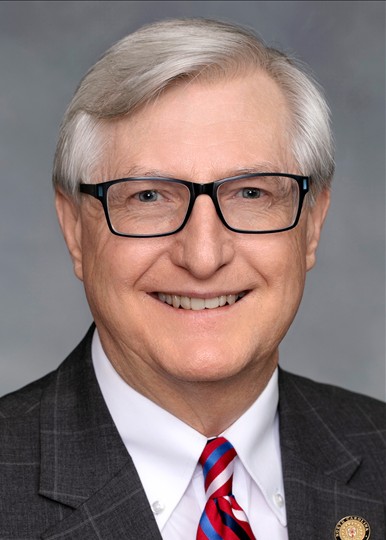
Sen. Ted Alexander
Sponsored bills
Maddy summarySB 91 allows qualified emergency facilities (like hospitals, police stations, and fire departments) to install secure "newborn safety devices" where parents can safely leave infants under 30 days old without legal consequences. The bill requires these devices to be temperature-controlled, equipped with dual alarms, inspected weekly, and located visibly on the facility exterior. Facilities must cover installation costs, develop emergency response plans, and undergo annual inspections by the Department of Health and Human Services. This law directly affects parents seeking to surrender infants safely and the 24-hour emergency facilities that install these devices, effective October 1, 2025.
Maddy summarySB 320 creates an additional retirement allowance for North Carolina state and local law enforcement officers who retire after meeting specific service and age requirements. Eligible officers with at least 30 years of service (or 55+ with 5+ years) under age 62 can choose between two calculation methods for their annual allowance: one based on their current pay rate and service, or one based on their pay rate at 30 years of service. The allowance, paid monthly from state funds, stops upon the officer’s death, reaching age 62 (for the first method), or meeting a time-based condition (for the second method). This change supplements retirement income without affecting other retirement benefits or salary increases.
Maddy summarySB 315 improves transparency and efficiency in insurance reviews of medical services by setting strict timeframes for insurers to make decisions. For urgent care, insurers must decide within 24 hours; for non-urgent care, within three business days after receiving all necessary information. The bill also requires insurers to clearly explain review processes in patient handbooks, on websites, and on membership cards, and to notify both patients and providers of outcomes. Additionally, it mandates that appeal reviews be conducted by qualified medical professionals without conflicts of interest, ensuring fairer assessments of coverage disputes.
Maddy summarySB 261, the Energy Security and Affordability Act, removes a mandated interim timeline for carbon reduction by North Carolina's major electric utilities (those serving 150,000+ customers) and introduces an alternative cost recovery method for ongoing construction of base load power plants. The bill requires these utilities to achieve a 70% reduction in carbon dioxide emissions by 2030 (from 2005 levels) and carbon neutrality by 2050, with the Utilities Commission developing a Carbon Plan by 2026 for achieving these goals. It specifies that new solar energy must come from 45% third-party power purchase agreements for small solar facilities (80 MW or less) and 55% utility-owned or purchased sources, including for solar paired with storage. This bill directly affects North Carolina's largest electric utilities and the Utilities Commission, altering their regulatory framework for emissions and infrastructure costs.
Maddy summarySB 155 establishes the Social Work Interstate Licensure Compact to allow licensed social workers in North Carolina to practice in other participating states without obtaining separate licenses. It directly affects licensed social workers, particularly those serving military families or providing telehealth services, by removing barriers to cross-state practice. The bill creates a system where a "home state" license permits practice in all member states (called "remote states") through mutual recognition, reducing duplicate licensing requirements. Key provisions include standardized disciplinary information sharing between states and ensuring social workers comply with the laws of the state where the client is located during service.
Maddy summarySB 259, the School Psychologist Omnibus, aims to improve the number and quality of school psychologists in North Carolina public schools. It provides $8.1 million for 2025-2026 to increase school psychologists' salaries by $650 monthly plus 12% for those with NCSP credentials, and allocates $5 million for a grant program offering signing bonuses (up to $5,000) to recruit psychologists, requiring a one-year commitment. Another $5 million funds an internship program with stipends for psychology students and supervisor bonuses, while $5 million supports a virtual training program at Appalachian State University. These provisions directly affect school psychologists, school districts, and psychology training programs across North Carolina.
Maddy summaryThis bill increases North Carolina's income limit for the property tax homestead exclusion for elderly or disabled homeowners from $25,000 to $48,000, effective for taxes due in 2025. It applies to qualifying homeowners whose income would otherwise disqualify them from the exclusion. The new limit will automatically adjust annually based on Social Security cost-of-living adjustments, rounded to the nearest $100. This change directly affects low-to-moderate-income elderly or disabled homeowners seeking property tax relief.
Maddy summarySB 147, titled "Teacher License Reciprocity," changes North Carolina's teacher licensing rules to make it easier for out-of-state educators to work in the state. It prohibits the State Board of Education from requiring teachers licensed in other states to pass a standardized exam for a North Carolina continuing professional teaching license (CPL), provided they have at least three years of teaching experience and are in good standing with their home state. This directly affects educators seeking to move their teaching careers to North Carolina without retaking exams. The bill applies to license applications submitted on or after its effective date.
Maddy summarySB 143 expands North Carolina's property tax exemption for disabled veterans by increasing the excluded value from the previous amount to $45,000 of a home's appraised value. It applies to veterans who own and occupy their permanent residence as their primary home, excluding this amount from property taxes. The bill prohibits qualifying veterans from using this exemption alongside other property tax relief programs. This change takes effect for property taxes due on or after July 1, 2025.