

Maddy summarySB 226 expands eligibility for death benefits under North Carolina's Public Safety Employees' Death Benefits Act to include firefighters who die from specific cancers. It adds any cancer diagnosed after January 1, 2022, that qualified a firefighter for benefits under the Firefighters' Cancer Insurance Program (or its predecessor, the Health Benefits Pilot Program) to the list of cancers presumed to be "killed in the line of duty." This means firefighters receiving cancer benefits under the program will automatically qualify for death benefits if they later die from that cancer. The bill also permanently establishes the Cancer Insurance Program as the successor to the pilot program and allocates $2 million annually for related death benefits starting July 1, 2025.
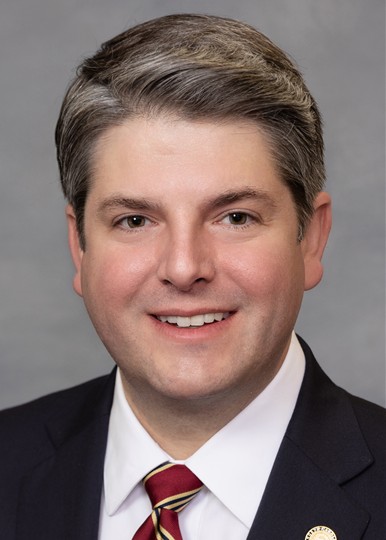
Sen. Brad Overcash
Sponsored bills
Maddy summarySB 264 requires all North Carolina public schools - including traditional, charter, regional, and laboratory schools - to display the U.S. and North Carolina flags in every classroom and near each school's main entrance, while scheduling daily recitation of the Pledge of Allegiance. The bill also mandates age-appropriate instruction about the flags' historical significance and the pledge's meaning. Schools may not compel students or staff to stand, salute, or recite the pledge. Funding of $1 million (one-time) and $100,000 annually is provided to purchase flags, with displays only required if flags are available through donations or purchase.
Maddy summarySB 259, the School Psychologist Omnibus, aims to improve the number and quality of school psychologists in North Carolina public schools. It provides $8.1 million for 2025-2026 to increase school psychologists' salaries by $650 monthly plus 12% for those with NCSP credentials, and allocates $5 million for a grant program offering signing bonuses (up to $5,000) to recruit psychologists, requiring a one-year commitment. Another $5 million funds an internship program with stipends for psychology students and supervisor bonuses, while $5 million supports a virtual training program at Appalachian State University. These provisions directly affect school psychologists, school districts, and psychology training programs across North Carolina.
Maddy summarySB 195, the "Protect Campus Survivors Act," exempts personally identifiable student disciplinary records at North Carolina's public colleges and universities from being disclosed as public records under state law. It defines these records as any materials containing student identifiers (like names, addresses, or social security numbers) related to disciplinary investigations, making them confidential even if federal law (FERPA) might permit disclosure. This applies to all UNC system institutions, community colleges, and their disciplinary processes. The bill takes effect upon enactment, affecting how schools handle and share such records with the public. It does not change federal privacy rules but ensures these specific records remain private under North Carolina's public records law.
Maddy summarySB 126 requires North Carolina state agencies to create zero-based budget plans every eight years on a rotating schedule, starting in 2025. Agencies must justify all activities from a "zero" funding baseline (not building on past budgets), detailing current services, minimum service levels, potential impacts of cuts, and program outcomes. The bill specifically excludes statutory appropriations (legally mandated funds) from these plans. It affects all executive branch agencies, with the Department of Health and Human Services divisions first required to submit plans in 2025. This policy mandates agencies to justify each program's necessity and cost-effectiveness before requesting funding.
Maddy summarySB 24 requires that any new state health insurance mandate must be paired with the repeal of an existing mandate and include funding to cover the new cost. It directly affects North Carolina employers (especially small businesses) and taxpayers by targeting mandates that increase insurance premiums and state health plan expenses. Key provisions mandate that new health benefit requirements (like coverage for specific treatments or drugs) must include both a repeal of an equivalent existing mandate and recurring state funding for the new cost. The bill applies to all health insurance plans, including the State Health Plan for Teachers and State Employees, and takes effect 30 days after enactment.
Maddy summarySB 86 increases North Carolina firefighters' monthly pension payments from $175 to $180 starting January 1, 2025, for eligible members who reach age 55 with 20 years of service. It updates disability benefit rules, clarifies death benefits for firefighters killed on duty (including monthly payments to surviving spouses or beneficiaries), and adds protections for members displaced by city annexations or department takeovers. These changes directly affect current and future firefighters, rescue squad workers, their families, and members whose departments are absorbed by municipalities. The bill modifies existing pension fund statutes without creating new programs or altering contribution requirements.
Maddy summarySB 71 creates a new process for North Carolina property owners or their authorized representatives to expedite the removal of unauthorized occupants from residential properties. To use this process, the property owner must file a sworn affidavit (with a $25 fee) with a court clerk or magistrate, confirming the occupant meets strict criteria like having no lease, no rent paid, and the owner having previously requested their departure. Law enforcement must remove the occupant within 24 hours of receiving the affidavit, and the bill grants immunity to law enforcement and property owners acting in good faith. It also allows civil lawsuits against property owners for wrongful removal, with potential damages including triple the fair market rent.
Maddy summaryThis bill is a procedural local act that solely references the 43rd Senatorial District without implementing any new policies or affecting residents. It contains no substantive provisions, mechanisms, or changes to laws or regulations. The bill’s sole purpose is administrative, stating it relates only to the 43rd District and becoming effective upon enactment. No specific policies, programs, or affected groups are defined in the text.
Maddy summarySB 56, the Disaster Recovery Act of 2025 - Part I, authorizes the transfer of funds from North Carolina's State Emergency Response and Disaster Relief Fund (SERDRF) to the Hurricane Helene Disaster Recovery Fund. It applies to counties designated as part of the "affected area" under a federal disaster declaration for Hurricane Helene. The bill directs the General Assembly to use existing SERDRF funds for Helene recovery efforts, without creating new programs or changing eligibility. This procedural bill focuses solely on redirecting existing disaster relief funding to support recovery in Helene-impacted counties.