

Maddy summaryThis bill (SB 488) changes North Carolina's process for establishing paternity for children born to unmarried parents. It requires unmarried mothers and fathers to complete a specific affidavit to have the father's name added to a birth certificate, including sworn statements, plain-language explanations of parental rights, and social security numbers. The affidavit must be filed with the state registrar, but it does not automatically grant inheritance rights - those require separate filing with the court under G.S. 29-19. The bill directly affects unmarried parents seeking to establish paternity on birth certificates and state officials processing birth records. It clarifies that the birth certificate process and inheritance rights are separate legal matters.
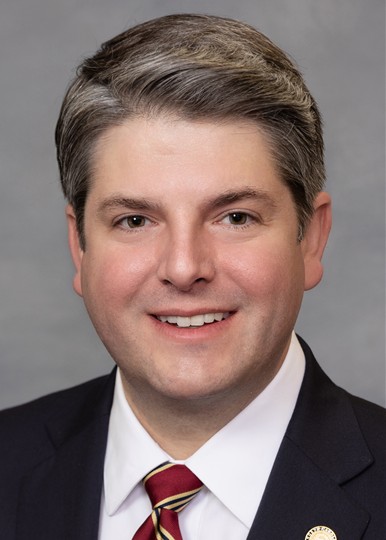
Sen. Brad Overcash
Sponsored bills
Maddy summarySB 474, the DAVE Act, creates a new Division of Accountability, Value, and Efficiency within North Carolina's State Auditor's office. It requires all state agencies to report by October 2025 on how they spend public funds and list vacant positions held for six months or longer, including reasons for vacancies. The Division will assess whether agencies or specific positions remain necessary, using AI tools to analyze spending effectiveness, duplication, and budget use. By December 2025, the Division must recommend to the legislature which agencies or positions should be eliminated based on this review.
Maddy summaryThis bill establishes a new chapter in North Carolina law to modernize and simplify the state's human resources system for employees in state agencies and universities. It creates a decentralized system under the Governor's direction where agency heads are responsible for managing their own personnel, while the Office of State Human Resources provides oversight. The legislation sets core principles for the workforce, including equal opportunity, fair compensation, and clear accountability, and it defines specific categories of employees such as career and temporary staff. Additionally, the bill appropriates funds to support these modernization efforts and clarifies the roles of various government bodies within the new framework.
Maddy summaryThis bill, titled "Truth in Taxation," requires local taxing authorities in North Carolina to follow a specific process before raising property tax rates above a revenue-neutral level during years when a general reappraisal of real property occurs. To implement this change, the governing body must publish public notices in newspapers and online, send direct mail to taxpayers detailing the proposed tax increase, and hold a dedicated public hearing where a majority vote is required to approve the higher rate. If a local government fails to comply with these procedures and collects excess taxes, the bill mandates that they refund the overage to affected property owners. Additionally, the legislation increases the late reinstatement fee for expired real estate appraiser trainee registrations, licenses, and certificates to $12 per month, up from $10.
Maddy summarySB 675 sets a 2% maximum fee limit for second or junior lien mortgages in North Carolina, aligning state rules with federal Qualified Mortgage standards. It allows up to 3% total fees across all lenders for such loans, referencing federal guidelines (12 C.F.R. §1026.43(e)(3)). The bill directly affects borrowers taking second mortgages and lenders who charge fees on these loans. It requires lenders to comply with these fee limits on loans secured by real property, effective upon enactment.
Maddy summaryThis bill requires proxy advisory firms in North Carolina to clearly disclose when their voting recommendations are not based on a written financial analysis of how the vote affects shareholder value. The law defines a "written financial analysis" as a document that evaluates both short-term and long-term financial impacts and explains the methods used to reach a conclusion. If a firm recommends against company management or uses default policies that oppose management without such an analysis, it must inform clients that the recommendation was not grounded in these financial evaluations. Additionally, the bill mandates that proxy advisors provide these disclosures to both shareholders and company directors to ensure transparency in the voting guidance process.
Maddy summarySB 227 prohibits North Carolina public schools from teaching or promoting 12 specific "divisive concepts" defined in the bill, such as claims that one race is inherently superior or that individuals bear responsibility for past actions of their race. The bill directly affects K-12 students, teachers, and school employees by banning instruction on these concepts and restricting professional development that includes them. Key provisions include requiring schools to avoid "discriminatory practices" and preventing staff from being compelled to affirm divisive concepts. The bill does not ban all diversity initiatives but targets specific teachings it deems contrary to "equality and rights of all persons." This is a proposed bill (not yet law) currently under review in the North Carolina Senate.
Maddy summarySB 558 (North Carolina Senate Bill 558) requires public universities and community colleges to adopt diversity, equity, and inclusion policies that comply with state law while prohibiting the promotion of specific "divisive concepts." It defines 12 concepts as "divisive," including claims that one race or sex is inherently superior, individuals bear guilt for past actions of their race, or meritocracy is inherently racist. The bill mandates that institutions avoid teaching these concepts and bars community colleges from investigating protected speech (like satire) labeled as "microaggressions." It directly affects all public higher education employees, faculty, and students in North Carolina's university system and community colleges.
Maddy summarySB 153, the North Carolina Border Protection Act, requires state law enforcement and correctional facilities to cooperate with federal immigration authorities. It mandates that state employees determine the immigration status of people in custody, report non-citizens to ICE, and enter into 287(g) agreements with Immigration and Customs Enforcement (ICE) to allow designated officers to enforce immigration laws under ICE supervision. The bill also prohibits UNC constituent institutions from adopting sanctuary policies. These provisions directly affect state departments of Public Safety and Adult Correction, as well as UNC universities. The bill does not change existing federal immigration law but requires state agencies to align their practices with federal enforcement priorities.
Maddy summarySenate Bill 280, the "Private School Security Act," allows certain individuals to carry weapons on specific educational properties under defined conditions. It permits employees and volunteers of private schools to carry firearms or stun guns on school property if authorized by the school's board or director, provided they hold a concealed handgun permit and complete annual advanced gun safety training. Private schools must also adopt and annually distribute written standard operating procedures for weapon possession to parents. Additionally, the bill allows individuals with concealed handgun permits to carry their weapons in places of religious worship located on educational property while attending worship services or other religious functions.