

Maddy summaryThis bill allocates state funds to enhance workforce training for individuals with intellectual and developmental disabilities in North Carolina community colleges. It establishes a program to offer micro-credentials and on-the-job training, while funding specific roles to connect colleges with business partners and expand career pathways for high school students. Additionally, the legislation directs money toward a study on creating faster routes for apprentices to become teachers and provides resources to implement a secure digital wallet system for managing academic credentials.
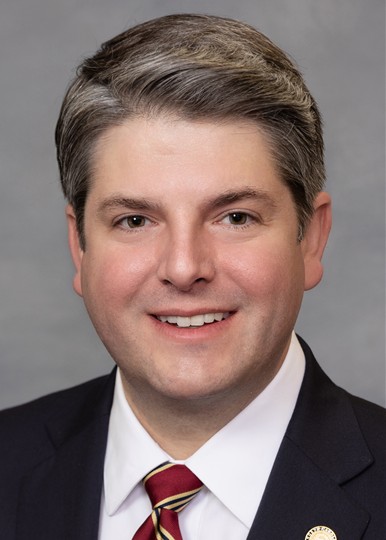
Sen. Brad Overcash
Sponsored bills
Maddy summarySB 316 requires North Carolina hospitals and ambulatory surgical facilities to publicly disclose detailed pricing information for common medical services, including full charges, negotiated rates, and reimbursements from Medicaid, Medicare, and major insurers. Beginning in 2015, these facilities must submit quarterly reports to the state health department on the 100 most frequent inpatient diagnoses (DRGs) and common surgical/imaging procedures. The data will be made publicly available online, enabling patients and employers to compare costs and make informed healthcare decisions. This bill directly affects healthcare providers by mandating transparency but does not alter insurance coverage or set price limits. Its key mechanism is standardized reporting of pricing data to foster competition and affordability in the healthcare market.
Maddy summaryThis bill establishes the North Carolina-Ireland Trade Commission, a new body designed to strengthen economic and cultural ties between the two regions. The commission will consist of seven members appointed by state leaders, including legislators, business experts, and representatives from Irish-American and higher education communities, with terms lasting three years. Its primary duties include encouraging trade and investment, promoting exchanges in business and culture, and submitting an annual report to the state legislature. The commission will be funded with $10,000 for administrative support starting in the 2026-2027 fiscal year and is required to hold at least two meetings per year.
Maddy summaryThis bill requires county election boards in North Carolina to implement specific safety and logistical measures when using fire stations as early voting locations. The law mandates that these sites provide traffic control, physical security for staff and voters, phone assistance, clear signage, and legal protection against damage claims. Additionally, the bill ensures that the fire station's normal operations and accessibility remain unaffected during voting hours. These provisions apply to all elections occurring on or after the date the law is enacted.
Maddy summarySB 1037, known as the DIGITAL NC Act, creates a new nine-member Board of Governors to oversee North Carolina's state information technology enterprise. This board will develop a comprehensive twenty-year plan to modernize the state's IT infrastructure, consolidate technical staff, and enhance cybersecurity defenses. The bill designates the Board's members through appointments by the Governor, House Speaker, and Senate President Pro Tempore, requiring specific expertise in technology leadership, cybersecurity, and digital transformation. The resulting plan will recommend significant changes, such as transitioning the state to a 'cloud-first' approach and potentially reorganizing the Department of Information Technology into a new Digital Sovereignty Authority.
Maddy summaryThis bill allows adults aged 18 and older to carry self-defense devices, such as pepper spray, tasers, and ordinary pocket knives, on the property of North Carolina colleges and universities. It creates an exception to state laws that typically restrict carrying concealed weapons on school grounds, explicitly permitting students, staff, and visitors to possess these items for self-defense. Additionally, the legislation allocates $10,000 to fund public awareness campaigns informing the campus community about this new permission. The changes will take effect in July 2026, with the advertising funds available for the 2026-2027 fiscal year.
Maddy summaryThis bill authorizes the North Carolina General Assembly to allocate funding for state agencies and departments for the 2026-2027 fiscal year. It distributes money from the General Fund, Highway Fund, and federal block grants to cover current operations and maintenance costs. Unused funds are required to revert to the state treasury at the end of the fiscal year unless otherwise specified by law. The act becomes effective on July 1, 2026, and applies specifically to the 2026-2027 budget period.
Maddy summaryThis bill appropriates $3 million from the state's General Fund to provide free hyperbaric oxygen therapy to North Carolina veterans diagnosed with traumatic brain injury or posttraumatic stress disorder. The funding is directed to a nonprofit organization called HBOT 4 HEROES, which will administer the treatment, manage the program, and conduct outcome assessments for an estimated 350 veterans. The act requires the organization to submit a detailed report to state oversight committees by June 30, 2027, covering the number of patients served, their locations, and how the funds were spent. These changes are set to take effect on July 1, 2026.
Maddy summaryThis bill authorizes the North Carolina Division of Motor Vehicles to create a special license plate called the 'America's Semiquincentennial' plate. The plate will feature the phrase 'America 250' and other designs to celebrate the 250th anniversary of the United States. Any registered vehicle owner in the state will be eligible to purchase this plate starting on July 1, 2026.
Maddy summarySB 50, "Freedom to Carry NC," allows most North Carolina residents aged 18 or older (who are U.S. citizens) to carry concealed handguns without a permit, while maintaining existing permit options for reciprocity. The bill prohibits concealed carry for individuals with certain felony convictions, domestic violence misdemeanors, active warrants, or specific mental health or substance use conditions. It also requires carrying valid ID and disclosing concealed weapons to law enforcement upon request. Additional provisions include increased penalties for assaults on first responders, new offenses for felons discharging firearms during crimes, and expanded benefits for law enforcement families. The bill does not change current restrictions on carrying firearms in sensitive locations like schools or government buildings.