

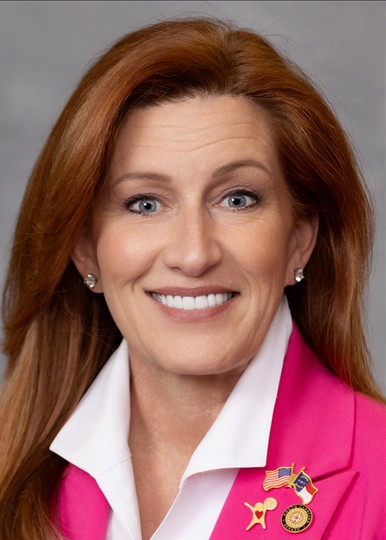
Photo of Woodson Bradley
D North Carolina Senate · District 42 On the 2026 ballot

Sen. Woodson Bradley

Compare
Total votes
293
all sessions
Attendance
86%
42 missed
Near the chamber average
With party
98%
of cast votes
Near the chamber average
Bipartisan score
1%
crosses aisle rarely
Near the chamber average
Sponsored
195
bills & resolutions
Higher than 86% of chamber peers
Committees
6
assignments
195 bills and resolutions

Sponsored bills

Total
195
Primary
38
Co-sponsor
157
This page
195
matching current filters
Co-sponsor SB 511
In committee · North Carolina Senate · Co-sponsor
Informational Literacy in Schools.

Maddy summarySB 511 requires all North Carolina public schools (K-12) to teach informational literacy, defined as skills to find, evaluate, and use information effectively - including digital, media, and technological literacy. The bill mandates the State Board of Education to create age-appropriate standards covering research processes, source evaluation (primary vs. secondary), fact vs. opinion, ethical information use, and access to library resources. Schools must develop curriculum in consultation with library/media staff and implement it starting in the 2025-2026 school year. This policy directly affects every public school student and educator in North Carolina through mandated curriculum changes.

In committee Mar 26, 2025 1 co-sponsor
Co-sponsor SB 524
In committee · North Carolina Senate · Co-sponsor
Community Safety Partnership Act.

Maddy summarySB 524, the Community Safety Partnership Act, establishes a state fund and grant program to support community-led safety initiatives in North Carolina. It provides grants (up to $100,000 per project) to counties, municipalities, and nonprofits for specific safety projects like improved street lighting, security cameras, or community alert systems, prioritizing high-crime and underserved areas. The bill also creates a digital tracking system to verify attendance at approved neighborhood watch meetings and mandates a state-mandated bonus for law enforcement officers engaged in community outreach. Eligible participants include residents in certified neighborhood watch programs and participating officers, with grantees required to report on project use and outcomes annually. The legislation directly affects local governments, community organizations, and law enforcement through funding and new administrative requirements.

In committee Mar 26, 2025 1 co-sponsor
Co-sponsor SB 499
In committee · North Carolina Senate · Co-sponsor
Allow Housing Near Jobs.

Maddy summarySB 499, "Allow Housing Near Jobs," requires North Carolina local governments to automatically permit residential development - including converting existing commercial buildings - anywhere areas are currently zoned for commercial, office, or retail use. It eliminates the need for special permits or zoning amendments in these zones, directly affecting developers and local planning departments. The bill does not override building or fire codes but takes effect October 1, 2025, aiming to increase housing options near job centers.

In committee Mar 26, 2025 1 co-sponsor
Co-sponsor SB 497
In committee · North Carolina Senate · Co-sponsor
Expand Middle Housing.

Maddy summarySB 497 requires all North Carolina local governments to allow "middle housing" types - including duplexes, fourplexes, townhouses, and similar multi-unit structures - in every residentially zoned area, including zones currently permitting only single-family homes. It prohibits local governments from blocking these housing types through excessive regulations, such as requiring public hearings, restricting building height to less than three stories, or mandating commercial building codes or fire sprinklers. The law also prevents restrictions on long-term rentals and private parking arrangements, while exempting historic districts and requiring existing municipal infrastructure (water/sewer systems) to be available. Local governments must use the same permitting processes for middle housing as for single-family homes, with an 18-month implementation deadline. This bill aims to increase housing options and affordability by expanding where multi-unit housing can be developed without changing zoning maps.

In committee Mar 26, 2025 1 co-sponsor
Primary SB 633
In committee · North Carolina Senate · Lead sponsor
Guarding Freedoms and Public Safety Act.

Maddy summarySB 633 prohibits individuals convicted of a misdemeanor domestic violence offense from buying or owning firearms. It requires universal background checks for all firearm sales (including private transactions) and mandates that parents/guardians certify safe firearm storage for students in public schools. The bill also reinstates North Carolina’s pistol permit law. These provisions directly affect firearm sellers, private sellers, and people with domestic violence misdemeanor convictions, aiming to restrict firearm access for specific high-risk groups. The law takes effect December 1, 2025, for new offenses.

In committee Mar 26, 2025 0 co-sponsors
Primary SB 623
In committee · North Carolina Senate · Lead sponsor
First Responders' Right to Assemble.

Maddy summarySB 623 would allow firefighters, police officers, and EMTs (first responders) in North Carolina to collectively bargain with local governments or state agencies over wages, benefits, and working conditions. It amends a current law that prohibits such negotiations for first responders, making it the first time they could formally negotiate as a group. The bill maintains the existing ban on strikes by public employees. If passed, it would directly affect all first responders statewide, changing their labor rights under state law.

In committee Mar 26, 2025 0 co-sponsors
Co-sponsor SB 537
In committee · North Carolina Senate · Co-sponsor
APRN Definitions.

Maddy summarySB 537 defines the scope of practice for Advanced Practice Registered Nurses (APRNs) in North Carolina, specifically for nurse practitioners (NPs), certified nurse midwives (CNMs), certified registered nurse anesthetists (CRNAs), and clinical nurse specialists (CNSs). The bill provides statutory definitions for each role, detailing permitted activities like diagnosing conditions, prescribing medications, ordering diagnostic tests, and managing patient care within their specialized focus areas. By codifying these definitions in state law, the bill removes longstanding ambiguity about APRN practice that has persisted for decades, as noted by North Carolina courts and the executive branch. This change directly affects over 20,000 APRNs in the state by legally clarifying their scope of practice.

In committee Mar 26, 2025 1 co-sponsor
Primary SB 631
died · North Carolina Senate · Lead sponsor
Juvenile Justice Workforce Fix/Funds.

Maddy summarySB 631 allocates $10.4 million for the 2025-2026 fiscal year and $14.1 million for 2026-2027 to increase salaries for juvenile justice staff in North Carolina. It directly affects Youth Counselor Technicians, Youth Services Behavioral Specialists, Youth Counselors, and Juvenile Court Counselors within the Division of Juvenile Justice and Delinquency Prevention. The bill establishes new annual salary schedules for these roles, including specific pay rates based on experience levels for the 2025-2027 biennium. Additionally, $3.9 million is specifically designated to address existing pay gaps ("salary compression") among these staff members. The funding is intended to support workforce retention and recruitment within the juvenile justice system.

died Mar 26, 2025 0 co-sponsors
Primary SB 620
died · North Carolina Senate · Lead sponsor
The STRONG Act of 2025.

Maddy summarySB 620, the STRONG Act of 2025, targets North Carolina's fentanyl crisis through several key measures. It significantly increases prison terms and fines for drug trafficking, especially for fentanyl, heroin, or carfentanil (e.g., 28+ grams carries a minimum 225-month sentence), and adds 60 months to sentences for offenses near schools or parks (Section 3.3). The bill appropriates $10 million for the State Bureau of Investigation's Drug Task Force (Section 4.1) and expands the Controlled Substances Reporting System. It also funds opioid prevention/treatment programs and creates a tax credit for businesses hiring staff trained in substance use disorder (Section 4.2). These provisions directly affect traffickers, law enforcement, healthcare providers, and eligible businesses.

died Mar 26, 2025 0 co-sponsors
Co-sponsor SB 549
In committee · North Carolina Senate · Co-sponsor
State Emp. Leave/Bereavement/Pregnancy Loss.

Maddy summarySB 549 creates two new paid leave programs for North Carolina state employees, public school staff, and community college workers. It provides at least 56 hours of paid leave for pregnancy loss (including miscarriage, failed adoption, or surrogacy) and up to three consecutive workdays of paid bereavement leave for the death of an immediate family member (spouse, parent, child, etc.). The leave is in addition to existing sick/vacation time, requires a minimum service period that can be aggregated across state agencies and schools, and has no cash value upon termination. Funding of $1.8 million for pregnancy loss and $2 million for bereavement is appropriated from the General Fund for fiscal years 2025-2027, effective July 1, 2025.

In committee Mar 26, 2025 1 co-sponsor
Showing 81 to 90 of 195 bills
Previous 1 … 8 9 10 … 20 Next