

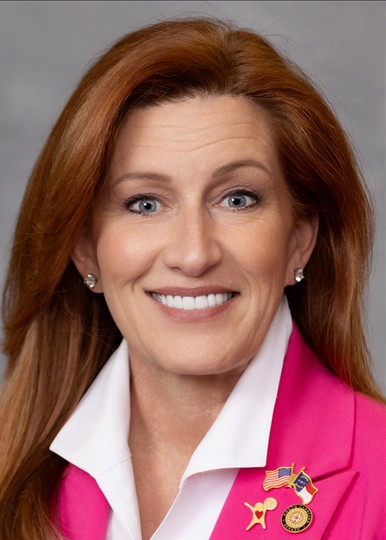
Photo of Woodson Bradley
D North Carolina Senate · District 42 On the 2026 ballot

Sen. Woodson Bradley

Compare
Total votes
293
all sessions
Attendance
86%
42 missed
Near the chamber average
With party
98%
of cast votes
Near the chamber average
Bipartisan score
1%
crosses aisle rarely
Near the chamber average
Sponsored
195
bills & resolutions
Higher than 86% of chamber peers
Committees
6
assignments
195 bills and resolutions

Sponsored bills

Total
195
Primary
38
Co-sponsor
157
This page
195
matching current filters
Co-sponsor SB 437
In committee · North Carolina Senate · Co-sponsor
Middle Class Momentum Act.

Maddy summarySB 437, the "Middle Class Momentum Act," increases North Carolina's standard income tax deduction for individual filers starting in 2026. It raises the standard deduction to $26,000 for married couples filing jointly (from $25,500), $19,500 for heads of household (from $19,125), and $13,000 for single filers (from $12,750). This change directly affects most North Carolina individual taxpayers who claim the standard deduction instead of itemizing deductions. The bill takes effect for taxable years beginning January 1, 2026.

In committee Mar 25, 2025 1 co-sponsor
Primary SB 431
In committee · North Carolina Senate · Lead sponsor
Protect Whistleblower LEOs from Retaliation.

Maddy summarySB 431 protects law enforcement officers (including criminal justice and justice officers) who report excessive force or misconduct by colleagues. It requires officers to report such incidents within 72 hours to a supervisor not involved, and prohibits retaliation like termination or discipline for making a good-faith report. The bill explicitly allows agencies to still discipline officers for misconduct that occurred *before* the report was made. It also allocates $50,000 each to two training commissions for implementing these changes, effective December 2025.

In committee Mar 25, 2025 0 co-sponsors
Co-sponsor SB 433
In committee · North Carolina Senate · Co-sponsor
Restore Educator Longevity.

Maddy summarySB 433 reinstates longevity pay for North Carolina educators, directly affecting teachers, instructional support staff, principals, and assistant principals in public schools. It sets specific annual payment rates based on years of state service: 1.5% for 10-14 years, 2.25% for 15-19 years, 3.25% for 20-24 years, and 4.5% for 25+ years, paid as a lump sum each year. The bill appropriates $140.3 million from the General Fund for the 2025-2026 fiscal year to fund these payments. It becomes effective July 1, 2025, restoring previously cut longevity benefits.

In committee Mar 25, 2025 1 co-sponsor
Co-sponsor SB 452
In committee · North Carolina Senate · Co-sponsor
End Child Marriage.

Maddy summarySB 452 raises North Carolina's minimum marriage age to 18 for all individuals, eliminating exceptions that previously allowed 16- and 17-year-olds to marry with court approval or parental consent. The bill repeals existing provisions (G.S. 51-2(a1) and G.S. 51-2.1) that permitted judicial authorization for marriages involving minors under 18, including requirements for court orders, guardian ad litem appointments, and best-interest determinations. This change directly affects minors under 18 who would have sought marriage under the previous law, removing all pathways for underage marriage except for those 18 or older. The policy shift standardizes the marriage age without exceptions, aligning North Carolina with states that prohibit marriage for individuals under 18.

In committee Mar 25, 2025 1 co-sponsor
Primary SB 453
In committee · North Carolina Senate · Lead sponsor
Homebuyer Fairness and Protection Act.

Maddy summarySB 453 limits nonrefundable "due diligence" fees in home sales to 1% of the purchase price, preventing sellers from requiring higher amounts as a condition of accepting offers. Any contract clause exceeding this amount is void, and sellers who enforce it may face legal costs and attorney fees. The bill also allocates $10 million to the North Carolina Housing Coalition to fund homebuyer education programs statewide. These provisions directly affect homebuyers and sellers in residential transactions, aiming to reduce upfront financial barriers and improve buyer preparedness. The law takes effect for new offers on or after October 1, 2025, with the funding provision beginning July 1, 2025.

In committee Mar 25, 2025 0 co-sponsors
Co-sponsor SB 435
In committee · North Carolina Senate · Co-sponsor
Restore Master's Pay for Teachers and ISP.

Maddy summarySB 435 restores education-based salary supplements for North Carolina teachers and instructional support personnel (ISP) that were previously eliminated. It directs the State Board of Education to use the 2013 policy (TCP-A-006) to determine eligibility for the "M" salary schedule and degree-based pay increases (e.g., for master's or doctoral degrees). The bill appropriates $8 million from the General Fund for the 2025-2026 fiscal year to fund these reinstated supplements. The law takes effect on July 1, 2025, directly affecting eligible educators' pay through revised salary calculations.

In committee Mar 25, 2025 1 co-sponsor
Co-sponsor SB 454
In committee · North Carolina Senate · Co-sponsor
Community Safety Act.

Maddy summarySB 454, the Community Safety Act, allocates $5.5 million in state funds for North Carolina law enforcement agencies over the 2025-2026 fiscal year. It provides grants for community policing programs ($1 million), officer incentives for exemplary service or diversity efforts ($1.5 million), and additional detective funding for severe crimes ($2 million). The bill also revises use-of-force policies to ban strangleholds and neck restraints as acceptable tactics, requiring officers to use minimum force and prioritize de-escalation. Additionally, it sets a minimum hiring age of 21 for officers and allows denial of certification based on certain felony or misdemeanor convictions, regardless of expungement. These provisions directly affect all law enforcement agencies and officers in North Carolina.

In committee Mar 25, 2025 1 co-sponsor
Co-sponsor SB 360
In committee · North Carolina Senate · Co-sponsor
Healthy Students - A Nurse in Every School.

Maddy summarySB 360 requires every public school in North Carolina (including traditional, charter, regional, and laboratory schools) to have at least one full-time, permanent school nurse starting in the 2025-2026 school year. The bill appropriates $95 million in recurring state funds to the Department of Public Instruction to cover the cost of adding these nurse positions, ensuring funding supplements existing resources without replacing them. This policy directly affects all K-12 public schools across the state by mandating nurse staffing levels and providing dedicated funding to meet that requirement. The law becomes effective July 1, 2025, with implementation beginning for the 2025-2026 school year.

In committee Mar 24, 2025 1 co-sponsor
Primary SB 383
In committee · North Carolina Senate · Lead sponsor
Right to IVF.

Maddy summarySB 383, titled "Right to IVF," protects patients' access to assisted reproductive technology (ART) like in vitro fertilization (IVF), gamete intrafallopian transfer, and zygote intrafallopian transfer. It prohibits North Carolina or its subdivisions from restricting or interfering with patients' access to ART or healthcare providers' ability to offer or perform these services. The bill also clarifies that fertilized eggs or embryos outside the uterus are not legally considered "human beings" under state law. Additionally, it allocates $500,000 annually from 2025-2027 to expand Medicaid maternal support services (the Baby Love Program), matching federal funds for this purpose. The bill directly affects patients seeking ART and healthcare providers offering these services in North Carolina.

In committee Mar 24, 2025 0 co-sponsors
Primary SB 305
died · North Carolina Senate · Lead sponsor
Community Emergency Response Training.

Maddy summarySB 305 allocates $3 million in recurring state funds to North Carolina's Department of Public Safety for the Community Emergency Response Team (CERT) program during the 2025-2026 fiscal year. The bill directs the Division of Emergency Management to use these funds to expand CERT training and actively promote community participation through partnerships with local organizations. Key provisions include establishing new training sessions and developing outreach strategies to encourage broader community engagement in emergency preparedness. This funding directly supports residents and local groups participating in CERT programs, focusing on practical disaster response skills. The bill becomes effective July 1, 2025.

died Mar 20, 2025 0 co-sponsors
Showing 161 to 170 of 195 bills
Previous 1 … 16 17 18 … 20 Next