

Maddy summaryThis North Carolina bill establishes the COVID-19 Small Business Recovery Program to provide financial assistance to small businesses that suffered significant economic losses due to the pandemic. To qualify, a business must have had annual receipts of $8 million or less in 2019 and experienced at least a 25% drop in sales tax collections in 2020 compared to 2019. The program offers one-time grants of up to $250,000, with the total funding capped at $250 million, and requires recipients to keep their operations running for six months to avoid having to repay a portion of the grant.
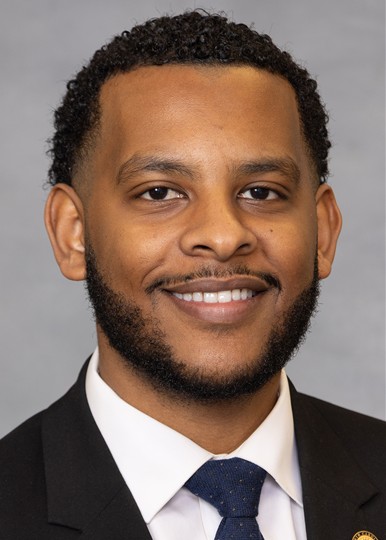
Sen. Caleb Theodros
Sponsored bills
Maddy summaryThis bill, titled the Dr. Janell Green Smith Maternal Health Accountability Act, aims to improve maternal health outcomes in North Carolina by formally recognizing and regulating Certified Professional Midwives alongside other licensed midwives. It requires hospitals to implement specific safety protocols, such as standardized emergency response plans and annual bias training for staff, while prohibiting care denial based on the type of provider or birth setting. To ensure transparency, the legislation mandates that healthcare facilities annually report detailed data on maternal mortality, morbidity, and other key metrics to the state Department of Health and Human Services, with this data made publicly available and broken down by race and geography. Additionally, the bill establishes a statewide reporting and navigation system to help patients access grievance processes, legal resources, and mental health support.
Maddy summaryThe Safe Camps Act establishes a new permitting and safety program for youth camps in North Carolina, requiring operators to obtain annual permits from the Department of Health unless they are religiously sponsored day camps. Key provisions include a ban on placing cabins in floodplains, mandates for emergency planning and warning communication systems, and the creation of minimum safety standards for campgrounds covering sanitation, water, and aquatic safety. The bill also defines specific terms like "youth camp" and "cabin" to clarify which facilities are regulated and outlines a process for updating permits after significant changes to camp structures or boundaries. Implementation of these rules will be overseen by the Department of Health, which will provide technical assistance and conduct inspections to ensure compliance.
Maddy summaryThis bill repeals a previous law that expanded cooperation between local jails and federal immigration enforcement and instead requires federal agents to obtain a judicial warrant based on probable cause before making immigration arrests or conducting searches within North Carolina. It also prohibits state and local facilities from holding individuals solely on federal immigration detainers past their normal release date and directs $4 million in funding to four nonprofit organizations to provide legal services for immigrants facing removal proceedings, asylum claims, and status stabilization. By mandating judicial oversight for enforcement actions and supporting community-based legal aid, the legislation aims to limit warrantless civil immigration operations while maintaining cooperation for valid criminal warrants.
Maddy summaryThis North Carolina legislation reinstates a state tax credit for individuals who claim the federal Earned Income Tax Credit. Eligible taxpayers would receive a credit equal to five percent of their federal EITC amount, which is refundable if it exceeds their state tax liability. The bill takes effect for tax years beginning in 2026 and includes a sunset provision that repeals the credit for tax years starting on or after January 1, 2029.
Maddy summaryThis bill establishes two main programs to improve mental health support in North Carolina public schools. First, it creates a grant program that provides $50 million to school districts to hire mental health professionals, prioritizing areas with students who have limited access to care. Second, it launches a loan repayment program offering $50 million to encourage mental health workers who graduated from UNC system schools to work in high-need areas by paying off up to 20% of their student debt over five years. The legislation includes reporting requirements to track how funds are used and to recommend future improvements.
Maddy summarySB 907, known as the Ciji Graham Act, establishes a new High-Risk Pregnancy Care Navigation Program in North Carolina to assist patients with high-risk pregnancies by providing licensed nurse consultants who help coordinate care and address barriers like transportation and insurance. The bill also creates a statewide pregnancy consultation hotline for healthcare providers and community organizations to offer immediate clinical guidance and referrals, alongside a centralized digital hub containing clinical guidelines and a directory of specialists and facilities. Funded through the state General Fund, these measures aim to improve maternal health outcomes and reduce disparities by ensuring timely access to appropriate medical resources and services.
Maddy summaryThis bill, known as the Save SNAP Act, provides state funding to North Carolina's Department of Health and Human Services and its county partners to offset financial losses caused by recent federal changes to the Supplemental Nutrition Assistance Program. The legislation appropriates $16 million for state administrative costs and $69 million for county-level operations, ensuring these programs can continue despite reduced federal reimbursements. Additionally, the bill allocates $10 million to create a grant program that encourages innovative projects aimed at reducing errors in SNAP benefit payments. All funding is set to begin in the 2026-2027 fiscal year, with spending strictly limited to the actual amount of lost federal receipts.
Maddy summaryThis bill repeals a North Carolina law that currently bans public employees from collectively bargaining with their employers. By removing this prohibition, the legislation allows government workers to negotiate contracts with unions or labor organizations representing them. The act also allocates $100,000 from the state General Fund to educate public employees about these new rights starting July 1, 2026.
Maddy summaryThe BUMP Act directs North Carolina's Department of Health and Human Services to provide free, evidence-based education on stillbirth prevention to pregnant patients and train prenatal care providers on monitoring fetal movement and managing related risks. Funded by $400,000 in recurring state money, the bill requires educational materials in English and Spanish to be given to all pregnant women, while also offering training for medical staff on recognizing warning signs like decreased fetal movement. Additionally, the legislation allocates $200,000 to launch a statewide "Count the Kicks" public awareness campaign that prioritizes outreach in areas with higher stillbirth rates to encourage expectant parents to track fetal movements. These measures aim to improve maternal and fetal outcomes by promoting awareness of risk factors and ensuring consistent clinical responses to potential complications.