

Maddy summarySB 369 aims to ensure that certain telehealth providers can enroll as Medicaid providers in North Carolina. The bill specifies that individual health care providers, licensed by the state and offering services exclusively through telemedicine, do not need a physical presence in the state to be eligible for Medicaid enrollment. Additionally, medical provider groups that exclusively offer telemedicine services will not be required to have an in-state service address to enroll as Medicaid provider groups. This measure directly affects telehealth providers and Medicaid recipients by clarifying requirements for remote healthcare services.
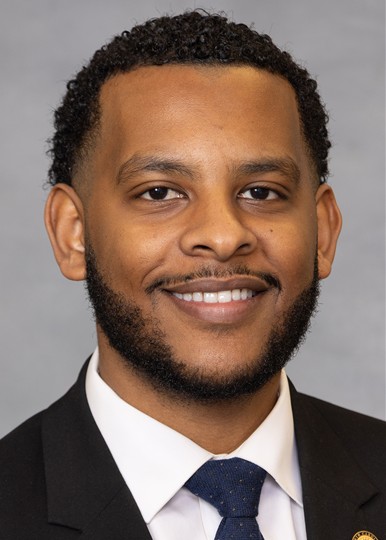
Sen. Caleb Theodros
Sponsored bills
Maddy summarySenate Resolution 372 is a procedural bill that addresses the confirmation of McKinley Wooten, Jr. as the Secretary of the Department of Revenue. It outlines that the Senate will consider whether to approve the Governor's appointment for this principal State department head position.
Maddy summarySB 507 requires North Carolina public schools to automatically enroll students who score at the highest level on standardized math or English Language Arts (ELA) tests in advanced courses for the next grade level. This applies to students in grades 3-5 for math and grades 6+ for both subjects, with parents able to opt out via written consent after being informed of the placement basis. The bill expands an existing policy (previously only for math) to include ELA courses and mandates annual demographic reporting to the legislature on enrollment patterns. It takes effect for the 2025-2026 school year.
Maddy summarySB 508 creates a pathway for North Carolina teachers with expiring limited licenses to convert to continuing professional licenses. It requires teachers to have a positive average growth score in the state's education growth data system (EVAAS) for two of their last three years. Teachers with negative growth but who still meet expected growth standards may also qualify if their local school board requests a limited license renewal. The bill applies to licenses expiring on or after the law's effective date and focuses on using measurable student growth data to support teacher career progression.
Maddy summarySB 145 proposes authorizing Mecklenburg County to levy an additional 0.5% sales tax for transportation funding, subject to voter approval. The bill requires that these funds supplement, not replace, existing transportation budgets and must be used exclusively for financing, building, operating, and maintaining public transportation systems within the county. It specifies that tax revenue must be distributed to Mecklenburg County and its public transportation authorities on a per capita basis, with strict rules against using funds for non-transportation purposes. The measure is currently pending in committee and would require a county referendum before implementation.
Maddy summarySB 584 authorizes counties to use specific sales tax revenue to fund local public transportation systems - including buses, light rail, bike lanes, and transit facilities - while requiring these funds to supplement (not replace) existing transportation budgets. It defines "public transportation system" broadly to include infrastructure like bus lanes, shared-ride services, and integrated fare systems. The bill also creates a new metropolitan public transportation authority for counties with over 1 million residents that border another state and operate light rail systems, giving them regional planning powers under specific rules. This authority would manage funding and coordination for transportation projects within its jurisdiction.
Maddy summaryThis Senate Resolution (SR 224) seeks confirmation of Gabriel J. Esparza as Secretary of the Department of Administration, following Governor's appointment. It directs the North Carolina Senate to formally consider and vote on his appointment, as required by state law (G.S. 143B-9(a) and Constitution Article III, Section 5(8)). The resolution does not create new policy but follows standard procedure for confirming executive appointments. It directly affects the Senate (as the body required to provide consent) and Gabriel Esparza (as the appointee seeking confirmation).
Maddy summarySB 361, the "Protecting First Responders Act," increases criminal penalties for assaulting or exposing emergency medical technicians, firefighters, and other first responders to fentanyl or harmful substances. It criminalizes intentionally exposing these responders to fentanyl (a Class H felony) or causing serious injury through such exposure (Class G felony), and imposes a Class I felony for failing to warn responders about fentanyl at a scene. The bill appropriates $10.35 million in nonrecurring funds for the 2025-2026 fiscal year to provide bulletproof vests ($8.1 million) and bulletproof backpack plates ($2.25 million) to paramedics and EMTs through grants. These provisions apply to first responders registered with North Carolina’s Office of Emergency Medical Services, with funding effective July 1, 2025, and criminal provisions effective December 1, 2025.
Maddy summarySB 521 creates a 35% nonrefundable income tax credit for investment entities (like partnerships or S-corps) that fund small, newly formed businesses focused on community infrastructure and resilience. Eligible businesses must be under five years old, employ 25 or fewer people in North Carolina, generate $2 million or less in annual revenue, and primarily work on projects like improving roads, utilities, disaster preparedness, or sustainable energy. The credit limits total annual state spending to $5 million and caps individual credits at $100,000 per year, with unused credits carryable for up to 10 years. This policy aims to incentivize private investment in community-focused small businesses through tax benefits, not direct government funding.
Maddy summarySB 550, the Coaches Care Act, requires all middle and high school coaches and athletic directors in North Carolina to complete approved youth mental health first aid training by July 1, 2026. The training teaches coaches to recognize mental health challenges, assist youth experiencing them, and connect them to professional resources. Schools must maintain records of coach certification, and local governments must deny public facility access to youth sports organizations whose coaches lack this certification. The State Board of Education will approve specific training programs, initially including the National Council for Mental Wellbeing's courses, and publish them annually. This law directly affects all public school coaches and youth sports organizations using county or city facilities.