

Maddy summarySB 358, the "Hate Crimes Prevention Act," expands North Carolina's hate crime laws by increasing penalties for offenses motivated by the victim's actual or perceived race, ethnicity, religion, nationality, gender identity, sexual orientation, disability, or gender expression. It upgrades certain misdemeanors to higher classifications (like Class H felonies) and adds civil remedies for victims, including compensation for emotional distress and attorney fees. The bill also mandates the State Bureau of Investigation to create a hate crimes database, requires law enforcement officers to receive specialized training on identifying and reporting hate crimes, and directs prosecutors to develop hate crime prosecution training. These changes directly affect victims of hate crimes, law enforcement agencies, and prosecutors by strengthening legal responses and data collection.
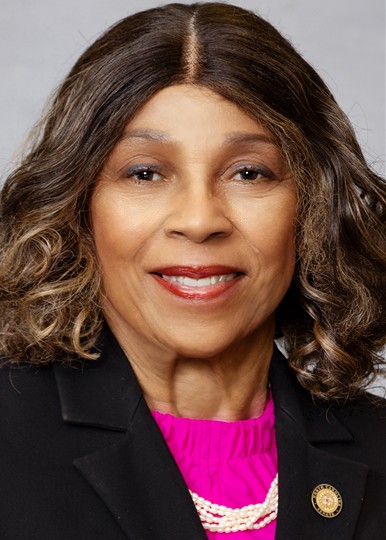
Sen. Joyce Waddell
Sponsored bills
Maddy summarySB 384 requires North Carolina's Commission for Public Health to establish safe limits for specific toxic chemicals in drinking water by October 2025. It targets chemicals like PFAS, PFOA, PFOS, hexavalent chromium, and 1,4-Dioxane - known or suspected carcinogens - mandating limits based on scientific evidence and ensuring they do not exceed federal EPA standards. The law also requires annual reviews of new research to update these limits as needed. This directly affects all North Carolina residents who rely on public water systems, with special consideration for children, infants, and pregnant people.
Maddy summarySB 360 requires every public school in North Carolina (including traditional, charter, regional, and laboratory schools) to have at least one full-time, permanent school nurse starting in the 2025-2026 school year. The bill appropriates $95 million in recurring state funds to the Department of Public Instruction to cover the cost of adding these nurse positions, ensuring funding supplements existing resources without replacing them. This policy directly affects all K-12 public schools across the state by mandating nurse staffing levels and providing dedicated funding to meet that requirement. The law becomes effective July 1, 2025, with implementation beginning for the 2025-2026 school year.
Maddy summarySB 362 appropriates $1 million annually from 2025-2027 to strengthen North Carolina's Long-Term Care Ombudsman Program. It funds $855,000-$893,250 yearly for nine new regional ombudsman positions targeting areas with the greatest need, plus $145,000-$106,750 for operational costs like equipment and transportation. The bill also mandates a study by the Department of Health and Human Services to recommend statutory changes improving the ombudsman program and its volunteer Community Advisory Committees. These changes directly support long-term care residents and their advocates by increasing staffing and program capacity, effective July 1, 2025.
Maddy summarySB 382 prohibits licensed mental health professionals from providing conversion therapy to minors or adults with disabilities. The bill bans attempts to change a person’s sexual orientation, gender identity, or gender expression. It directly affects vulnerable individuals, including minors and adults with disabilities, who might otherwise be subjected to these practices. The law aligns with medical consensus from major health organizations stating such therapies are ineffective and harmful. Licensed practitioners would be barred from offering these services under this legislation.
Maddy summarySB 383, titled "Right to IVF," protects patients' access to assisted reproductive technology (ART) like in vitro fertilization (IVF), gamete intrafallopian transfer, and zygote intrafallopian transfer. It prohibits North Carolina or its subdivisions from restricting or interfering with patients' access to ART or healthcare providers' ability to offer or perform these services. The bill also clarifies that fertilized eggs or embryos outside the uterus are not legally considered "human beings" under state law. Additionally, it allocates $500,000 annually from 2025-2027 to expand Medicaid maternal support services (the Baby Love Program), matching federal funds for this purpose. The bill directly affects patients seeking ART and healthcare providers offering these services in North Carolina.
Maddy summarySB 371 would require North Carolina charter schools with four consecutive years of low academic performance (grades D/F with insufficient growth) to have their charters revoked. It directly affects charter schools identified as "continually low-performing," including the 14,400 students currently enrolled in such schools, and restricts their enrollment expansion until performance improves. Key provisions include mandating that charter schools display their annual performance grade on enrollment applications, limiting remote charter academies to three-year terms, and requiring the state board to identify consistently failing schools annually. The bill aims to address chronically underperforming schools by creating a clear pathway for charter cancellation while allowing limited exceptions for schools showing improvement. It takes effect for the 2025-2026 school year.
Maddy summarySB 353, the Second Chance Coding Act, requires North Carolina's Division of Juvenile Justice to create a program teaching coding and computer skills to juveniles in youth development centers. The program must include specialized courses, industry certification opportunities, and workforce connections like mentorship and job placement to help these youth transition into careers after release. Implemented by January 1, 2026, with $250,000 in funding for 2025-2026, the bill aims to reduce recidivism by improving job prospects. It directly affects youth committed to juvenile facilities, focusing on concrete skill-building rather than speculative outcomes.
Maddy summarySB 324, the 2025 Safe Drinking Water Act, requires North Carolina's Commission for Public Health to establish safe limits for harmful chemicals in drinking water by October 2025. It directly affects all North Carolina residents by mandating maximum contaminant levels (MCLs) for specific toxins like PFAS, PFOA, PFOS, hexavalent chromium, and 1,4-Dioxane - chemicals linked to cancer or serious health risks. The bill directs the Commission to base these limits on scientific evidence from other states and federal agencies, ensuring protections for vulnerable groups like children and pregnant people, while aligning with U.S. Environmental Protection Agency standards. The law also requires annual reviews to update these limits as new health science becomes available.
Maddy summarySB 259, the School Psychologist Omnibus, aims to improve the number and quality of school psychologists in North Carolina public schools. It provides $8.1 million for 2025-2026 to increase school psychologists' salaries by $650 monthly plus 12% for those with NCSP credentials, and allocates $5 million for a grant program offering signing bonuses (up to $5,000) to recruit psychologists, requiring a one-year commitment. Another $5 million funds an internship program with stipends for psychology students and supervisor bonuses, while $5 million supports a virtual training program at Appalachian State University. These provisions directly affect school psychologists, school districts, and psychology training programs across North Carolina.