

Maddy summarySB 199 prohibits business entities (like corporations or rental companies) from owning 100 or more single-family homes in qualifying North Carolina counties (population >150,000) for rental purposes. It targets large-scale investors whose buying practices may reduce home availability and increase prices for owner-occupants. Violators face daily fines up to $100 per home and potential civil lawsuits with damages, including up to $50,000 in penalties. The law specifically applies to rental properties, not owner-occupied homes, and excludes government entities.
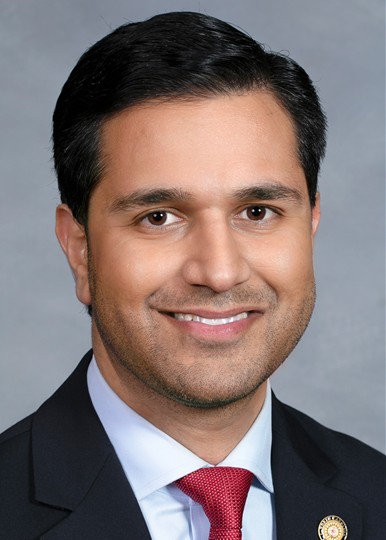
Sen. Mujtaba Mohammed
Sponsored bills
Maddy summarySB 202 allows law enforcement officers contracted by the Park South Station Master Association to enforce traffic laws on streets, roadways, and alleys within the Park South Station community in Charlotte. It specifies that these areas will follow Charlotte’s current speed limits, and any changes to speed limits require approval from the Charlotte City Council. The bill does not alter ownership of the community’s roads or create new traffic regulations - only authorizes enforcement under existing state laws. This applies exclusively to the Park South Station community and Charlotte.
Maddy summarySB 211 reenacts North Carolina's state Earned Income Tax Credit (EITC), providing a cash refund to low-to-moderate income workers. It allows eligible residents to claim a credit equal to 5% of the federal EITC amount they qualify for, which is refundable (meaning they receive a cash payment even if they owe no state tax). The credit applies to taxable years beginning on or after January 1, 2025, and directly benefits working individuals and families with low earnings. The bill reinstates a previously sunsetted provision, ensuring continued state-level support aligned with the federal EITC.
Maddy summaryThis bill creates a new tax deduction for North Carolina taxpayers who pay labor organization membership dues. It allows individuals to deduct dues, fees, or assessments required for membership in a labor organization (as defined by state law) from their state taxable income. The deduction applies to payments made during taxable years beginning on or after January 1, 2026. This directly affects workers who are members of labor organizations and pay dues as a condition of membership.
Maddy summaryThis bill allows North Carolina local governments to borrow money to accelerate transportation projects already identified for funding under the State Transportation Improvement Program (STIP). Local governments can issue "grant anticipation notes" to cover project costs before receiving state funds, but notes must mature within 12 months after the project's scheduled completion year (no renewals allowed). Borrowing is capped at the full project cost, requires a special agreement with the DOT outlining project details and repayment plans, and must be repaid solely from state grant funds - without using local tax revenue or pledging the government's credit. The bill also ensures STIP program changes won't delay repayment of these notes.
Maddy summarySB 140 appropriates $75,000 in one-time state funds for the 2025-2026 fiscal year to provide a directed grant to My Brother's Keeper of Charlotte, a nonprofit organization. The funds are intended to support programs specifically designed to improve outcomes for boys and young men of color in Charlotte. This bill directs state resources to a targeted community initiative through a nonrecurring grant, without creating new state regulations or altering existing laws. The legislation becomes effective July 1, 2025, if enacted.
Maddy summarySB 139 prevents the elimination of medical benefits for North Carolina state teachers and employees who first earned retirement service on or after January 1, 2021. It reverses a prior change that would have cut these benefits by repealing specific sections of law, effective retroactively to December 31, 2020. The bill appropriates $500,000 annually for 2025-2026 and $2 million annually for 2026-2027 to cover increased costs for the state health plan. This restores medical coverage for affected retirees under several retirement systems, effective July 1, 2025.
Maddy summarySB 138 restores local government authority to initiate down-zoning in Mecklenburg County and its municipalities without requiring written consent from all affected property owners. The bill amends state law to remove a prior requirement that down-zoning (reducing development density or permitted land uses) needed all property owner agreements, allowing counties or cities to implement such changes directly. It applies specifically to Mecklenburg County and its municipalities, taking effect retroactively to December 11, 2024, to revert affected ordinances to their pre-December 11 state. This change directly affects property owners in the region by altering how local governments can modify zoning regulations impacting their land.
Maddy summarySB 143 expands North Carolina's property tax exemption for disabled veterans by increasing the excluded value from the previous amount to $45,000 of a home's appraised value. It applies to veterans who own and occupy their permanent residence as their primary home, excluding this amount from property taxes. The bill prohibits qualifying veterans from using this exemption alongside other property tax relief programs. This change takes effect for property taxes due on or after July 1, 2025.
Maddy summarySB 142 allocates $75,000 in nonrecurring funds from the General Fund for the 2025-2026 fiscal year to provide a directed grant to Mecklenburg Council of Elders, Inc., a nonprofit organization. The grant supports the organization in hosting seminars and events to raise awareness of citizens' rights and options in Mecklenburg County, regardless of past legal involvement, and assists with its Juvenile Court Intervention program. This funding directly affects Mecklenburg County residents, particularly those with prior interactions with the legal system, by expanding access to civic education and support services.