

Maddy summarySB 77 allows parents of students with disabilities to choose their preferred nurse for school-based nursing services required by an Individualized Education Program (IEP), provided specific conditions are met. The bill requires schools to assign the parent's chosen nurse if that nurse previously provided care to the student, the nursing agency agrees to contract under standard terms, and the rate matches other contracted nurses. This directly affects families of students needing nursing services under IEPs and ensures schools honor parent preferences without altering their obligation to provide a free appropriate public education. The policy applies starting the 2025-2026 school year.
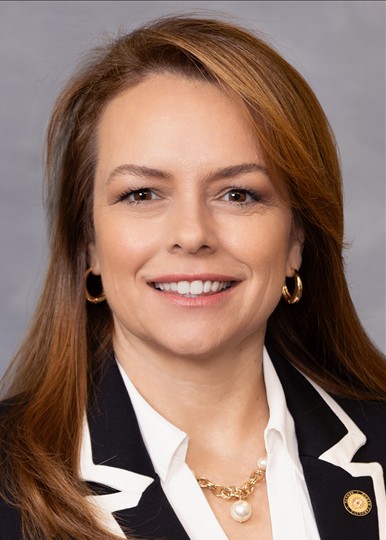
Sen. Vickie Sawyer
Sponsored bills
Maddy summarySB 295 clarifies North Carolina's motor vehicle dealer laws to prevent unfair franchise terminations and protect dealers' transfer rights. It prohibits manufacturers from conditioning approval of dealership transfers, sales, or management changes on requirements like building new facilities, acquiring specific vehicle lines, or signing "right of first refusal" agreements. The bill also requires manufacturers to reimburse dealers' legal fees if they unreasonably deny a transfer and a court later overturns that decision. This directly affects car dealers seeking to sell their businesses or change ownership, and manufacturers who control dealership franchises.
Maddy summarySB 391 revises North Carolina's Department of Transportation (DOT) laws with four key changes. It requires commercial driver training schools to follow public school standards for learner's permit courses (affecting driving schools and students), clarifies that a co-owner's death doesn't trigger auto dealer license renewal issues (affecting dealers), and revises DOT cash balance requirements to maintain 7.5% monthly cash reserves while targeting 15-20% long-term (affecting DOT fund management). It also removes reporting obligations for the North Carolina Turnpike Authority (affecting the Turnpike Authority). The bill bundles these administrative and regulatory updates without new funding or major program changes.
Maddy summarySB 697 establishes the Lake Norman Marine Commission to oversee recreational and environmental management of Lake Norman. The bill would create a formal body responsible for coordinating activities related to the lake's waterways, boating access, and conservation efforts. Currently, the bill is pending in the State and Local Government committee after being withdrawn from Rules and Operations. It has passed its first reading but has not advanced further in the legislative process.
Maddy summaryThis bill provides local boards of education with a new alternative for setting their school calendars, directly affecting public schools and students. It allows schools to start as early as the Monday closest to August 19, provided fall and spring semesters have an equal number of instructional days, and end no later than the Friday before the last Monday in May. The bill also establishes stricter enforcement mechanisms, enabling the State Board of Education to investigate non-compliance and withhold central office administration funds from local boards that fail to follow calendar requirements. Additionally, it permits residents or businesses to file civil actions against non-compliant local boards, potentially leading to court-ordered remedies, attorney's fees, and civil penalties.
Maddy summarySB 579 aims to transform the high school experience in North Carolina. It establishes the North Carolina High School Redesign Commission, tasked with exploring and recommending changes to high school and higher education policies to better prepare students for college or the workforce. The Commission will examine areas like flexible diploma requirements, work-based learning, industry credentials, and personalized, competency-based learning pathways. The bill also creates the Competency-Based High School and Healthcare and High-Tech Pathways Program. This program, initially involving the Mooresville Graded School District and Mitchell Community College, will develop competency-based pathways for students to earn associate degrees or industry credentials, with an initial emphasis on healthcare.
Maddy summarySB 145 proposes authorizing Mecklenburg County to levy an additional 0.5% sales tax for transportation funding, subject to voter approval. The bill requires that these funds supplement, not replace, existing transportation budgets and must be used exclusively for financing, building, operating, and maintaining public transportation systems within the county. It specifies that tax revenue must be distributed to Mecklenburg County and its public transportation authorities on a per capita basis, with strict rules against using funds for non-transportation purposes. The measure is currently pending in committee and would require a county referendum before implementation.
Maddy summarySB 63 establishes a nine-member Board of Motor Vehicles to oversee North Carolina's Division of Motor Vehicles, replacing the current structure where the Commissioner is appointed by the Transportation Secretary. The Board will appoint the Motor Vehicles Commissioner and include members from the Transportation Secretary, Information Technology Secretary, Highway Patrol, and appointments by the Governor and General Assembly. The bill also mandates a study by the Department of Transportation to evaluate creating a separate Motor Vehicle Authority (replacing the current Division), including feasibility, required legal changes, a timeline, and implementation steps. The study must be completed and reported to the General Assembly by January 1, 2026, but does not create the Authority itself.
Maddy summarySB 584 authorizes counties to use specific sales tax revenue to fund local public transportation systems - including buses, light rail, bike lanes, and transit facilities - while requiring these funds to supplement (not replace) existing transportation budgets. It defines "public transportation system" broadly to include infrastructure like bus lanes, shared-ride services, and integrated fare systems. The bill also creates a new metropolitan public transportation authority for counties with over 1 million residents that border another state and operate light rail systems, giving them regional planning powers under specific rules. This authority would manage funding and coordination for transportation projects within its jurisdiction.
Maddy summarySB 598 modifies North Carolina's criteria for identifying low-performing schools. It requires schools with an overall performance grade of D or F *and* a growth score of "met expected growth" or "not met expected growth" to be designated as low-performing. The bill also mandates that schools notify parents and guardians in writing within 30 days of this designation, explaining the performance grades and growth scores. This change applies to school designations based on 2025-2026 data. The bill focuses on clarifying identification standards and improving parental communication about school performance.