

Maddy summarySB 63 establishes a nine-member Board of Motor Vehicles to oversee North Carolina's Division of Motor Vehicles, replacing the current structure where the Commissioner is appointed by the Transportation Secretary. The Board will appoint the Motor Vehicles Commissioner and include members from the Transportation Secretary, Information Technology Secretary, Highway Patrol, and appointments by the Governor and General Assembly. The bill also mandates a study by the Department of Transportation to evaluate creating a separate Motor Vehicle Authority (replacing the current Division), including feasibility, required legal changes, a timeline, and implementation steps. The study must be completed and reported to the General Assembly by January 1, 2026, but does not create the Authority itself.
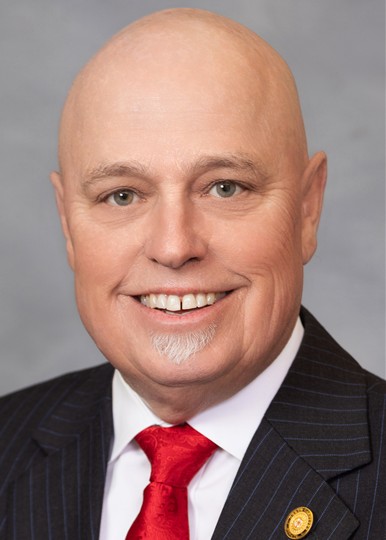
Sen. Eddie Settle
Sponsored bills
Maddy summarySB 97 adds stomach cancer (gastric cancer) to the list of cancers presumed to be work-related for firefighters under North Carolina's Public Safety Employees' Death Benefits Act. This means firefighters who die from stomach cancer will automatically qualify for line-of-duty death benefits without needing to prove occupational connection. The bill appropriates $500,000 annually from 2025-2027 to cover these new benefits. It takes effect July 1, 2025, applying to qualifying deaths occurring on or after that date.
Maddy summarySB 485 prohibits the intentional release of weather-altering techniques like stratospheric aerosol injection (SAI), cloud seeding, or electromagnetic emissions within North Carolina to change temperature, weather, or sunlight. It directly affects entities or individuals conducting such activities within the state, excluding licensed pesticide applications via aircraft. The bill defines "atmospheric modification" broadly to cover these methods and adds a specific prohibition against their intentional use for altering weather or climate. The Environmental Management Commission must create implementing rules, and the law becomes effective upon enactment.
Maddy summarySB 481 defines key terms for "advanced recycling" in North Carolina, specifically targeting manufacturers using chemical recycling processes. It establishes "mass balance attribution" (a trackable system for counting recycled materials) and "recycled products" (products made via this method), while requiring "third-party certification" for these processes. Crucially, the bill clarifies that products labeled as "recycled" under these definitions still must comply with all existing air, water, and hazardous waste laws. This bill directly affects chemical recycling manufacturers and the regulatory framework governing their products, without creating new environmental requirements. The definitions aim to standardize how recycled content is measured and reported under current environmental statutes.
Maddy summarySB 478 allows banks in North Carolina to deduct income tax on interest, fees, and penalties from loans secured by agricultural land, as defined by state law. This tax deduction applies to loans specifically backed by farmland, directly benefiting banks that provide such financing. The policy change takes effect for tax years beginning on or after January 1, 2025. The bill does not directly affect farmers or landowners but alters tax treatment for financial institutions offering agricultural loans.
Maddy summarySB 657, the "Keeping Our Coaches Act," allocates $11 million annually from sports betting tax revenue to provide salary supplements for athletic coaches in North Carolina public schools. It directly affects eligible public school athletic coaches who currently receive non-state funds totaling less than $3,000 per year for coaching duties. The bill requires school units to maintain prior non-state funding levels for coaches, prohibits using state funds to replace those non-state contributions, and directs unspent funds to YMCA youth sports programs. This policy change becomes effective for the 2025-2026 school year.
Maddy summarySB 428 (Water Transfer Regulations) requires permits for large-scale transfers of surface water between North Carolina's river basins. It mandates a certificate from the state commission for transfers exceeding 2 million gallons per day (or increases of 25%+ for existing transfers), with exceptions for facilities operational by July 1993. The bill establishes public hearing requirements, including meetings in source and receiving basins, and requires applicants to evaluate alternatives to transfers. It directly affects water users, local governments, and utilities planning cross-basin water transfers. The law aims to regulate water movement between drainage areas while maintaining existing infrastructure.
Maddy summarySB 300 (the NC REACH Act) would require all students graduating with a bachelor's degree from a University of North Carolina institution or an associate degree from a North Carolina community college to complete at least three credit hours of instruction in American history or government. The bill mandates that courses cover specific foundational documents - including the U.S. Constitution, Declaration of Independence, Emancipation Proclamation, Federalist Papers, Dr. Martin Luther King Jr.'s Letter from Birmingham Jail, Gettysburg Address, and the North Carolina State Constitution - and include a final exam worth at least 20% of the course grade. Students may be exempted through prior coursework (e.g., AP/IB exams, dual enrollment) that meets the same requirements. The bill explicitly states it will not increase total credit hour requirements for degrees and requires annual reporting on compliance by 2026. This is a proposed bill currently in committee review.
Maddy summarySB 312, the "Stars and Stripes Commitment Act," requires all North Carolina public schools (including charter, regional, and laboratory schools) to schedule daily recitation of the Pledge of Allegiance within one hour of the start of the school day, display U.S. and North Carolina flags in classrooms when available, and provide age-appropriate instruction about the flag and pledge. It also mandates that State Board of Education and local school governing body meetings begin with the Pledge of Allegiance. The bill explicitly states these requirements do not compel any student, staff, or attendee to stand, salute, or recite the Pledge. The law applies beginning with the 2025-2026 school year.
Maddy summarySB 320 creates an additional retirement allowance for North Carolina state and local law enforcement officers who retire after meeting specific service and age requirements. Eligible officers with at least 30 years of service (or 55+ with 5+ years) under age 62 can choose between two calculation methods for their annual allowance: one based on their current pay rate and service, or one based on their pay rate at 30 years of service. The allowance, paid monthly from state funds, stops upon the officer’s death, reaching age 62 (for the first method), or meeting a time-based condition (for the second method). This change supplements retirement income without affecting other retirement benefits or salary increases.