

Maddy summaryThis bill allocates state funds to enhance workforce training for individuals with intellectual and developmental disabilities in North Carolina community colleges. It establishes a program to offer micro-credentials and on-the-job training, while funding specific roles to connect colleges with business partners and expand career pathways for high school students. Additionally, the legislation directs money toward a study on creating faster routes for apprentices to become teachers and provides resources to implement a secure digital wallet system for managing academic credentials.
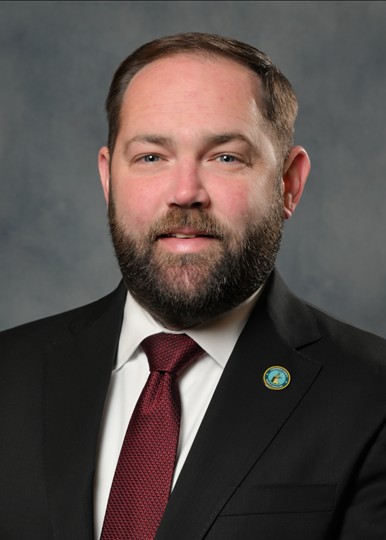
Sen. Chris Measmer
Sponsored bills
Maddy summaryThis bill authorizes Cabarrus County in North Carolina to publish legal notices for public hearings electronically instead of in newspapers. Under the new rule, the county can post these notices on its website or use other digital methods to inform the public about upcoming meetings. The legislation explicitly states that using electronic notices does not replace state laws requiring mail delivery to specific individuals or the posting of signs on certain properties. Consequently, the county must still follow all existing state requirements for notice schedules and specific delivery methods where mandated.
Maddy summaryThis bill directs the North Carolina State University Board of Trustees to study the feasibility of creating a new college of veterinary medicine at a different institution within the state. The study must evaluate the need for veterinarians, particularly those specializing in large animals, and analyze the costs and benefits of establishing the program. The board is required to submit its findings to the Joint Legislative Education Oversight Committee by March 15, 2027, and the state will provide $300,000 to fund this research. The legislation becomes effective on July 1, 2026.
Maddy summaryThis bill creates the Midwifery Education Grant Program to increase the number of midwives in North Carolina by funding training programs at specific University of North Carolina institutions. It provides up to $20 million in state funds to support eligible universities that offer advanced nursing degrees but currently lack certified nurse-midwife training programs. To receive grants, institutions must partner with a hospital, submit a budget, and commit to graduating at least 20 midwives within five years, with priority given to historically black colleges and universities. The legislation appropriates $4 million per institution and requires the university system to report on grant usage and program timelines to state oversight committees.
Maddy summaryThe Workforce Act of 2026 allocates state funding to modernize education-to-workforce pathways and improve credit transfer for students in North Carolina. A primary provision directs $3.1 million to the ApprenticeshipNC program to support work-based learning and increase employer participation in apprenticeships. The bill also provides $350,000 to the Department of Commerce to create a list of industry-valued credentials and link them to labor market data such as wages and job placement. Additionally, it increases funding for short-term workforce development grants and requires private colleges to be included in the state's common digital transcript system by March 2027.
Maddy summaryThis bill establishes strict deadlines for issuing permits for new or expanded wastewater treatment systems in North Carolina's fastest-growing counties. It directly affects developers and environmental agencies by requiring the state Commission to review applications within 90 days, or 120 days if a public hearing is held. The law mandates that the agency must clearly list all missing information upfront and cannot ask for new items later, while also providing a specific timeline for applicants to submit corrections. To support these faster processing times, the bill appropriates $10,000 to the Department of Environmental Quality for the 2026-2027 fiscal year.
Maddy summaryThis bill allows adults aged 18 and older to carry self-defense devices, such as pepper spray, tasers, and ordinary pocket knives, on the property of North Carolina colleges and universities. It creates an exception to state laws that typically restrict carrying concealed weapons on school grounds, explicitly permitting students, staff, and visitors to possess these items for self-defense. Additionally, the legislation allocates $10,000 to fund public awareness campaigns informing the campus community about this new permission. The changes will take effect in July 2026, with the advertising funds available for the 2026-2027 fiscal year.
Maddy summaryThis bill appropriates $3 million from the state's General Fund to provide free hyperbaric oxygen therapy to North Carolina veterans diagnosed with traumatic brain injury or posttraumatic stress disorder. The funding is directed to a nonprofit organization called HBOT 4 HEROES, which will administer the treatment, manage the program, and conduct outcome assessments for an estimated 350 veterans. The act requires the organization to submit a detailed report to state oversight committees by June 30, 2027, covering the number of patients served, their locations, and how the funds were spent. These changes are set to take effect on July 1, 2026.
Maddy summaryThis North Carolina bill requires state agencies to eliminate job positions that have remained vacant for at least 24 consecutive months, with the goal of reducing government spending on unfilled roles. Starting in July 2026, the Office of State Budget and Management will transfer unused salary funds associated with these long-term vacancies into a budget reserve, which cannot be spent unless the General Assembly approves it. The law includes specific exceptions, such as positions held open due to court orders, roles funded entirely by federal money, and critical jobs in 24-hour operations like public safety and inmate care. Additionally, the bill mandates that state agencies report details about eliminated or excluded positions to the General Assembly by December 2026 and establishes a permanent rule for abolishing such vacancies in future fiscal years.
Maddy summaryThis bill authorizes the North Carolina Division of Motor Vehicles to create a special license plate called the 'America's Semiquincentennial' plate. The plate will feature the phrase 'America 250' and other designs to celebrate the 250th anniversary of the United States. Any registered vehicle owner in the state will be eligible to purchase this plate starting on July 1, 2026.