

Maddy summarySB 24 requires that any new state health insurance mandate must be paired with the repeal of an existing mandate and include funding to cover the new cost. It directly affects North Carolina employers (especially small businesses) and taxpayers by targeting mandates that increase insurance premiums and state health plan expenses. Key provisions mandate that new health benefit requirements (like coverage for specific treatments or drugs) must include both a repeal of an equivalent existing mandate and recurring state funding for the new cost. The bill applies to all health insurance plans, including the State Health Plan for Teachers and State Employees, and takes effect 30 days after enactment.
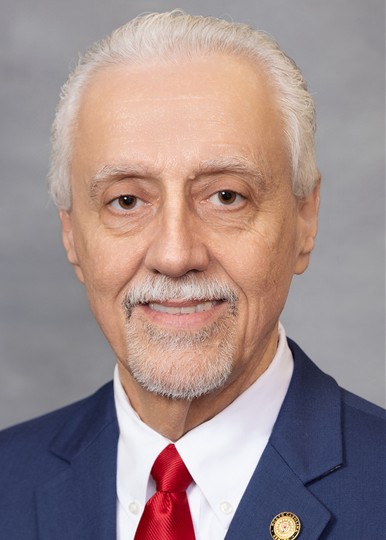
Sen. Carl Ford
Sponsored bills
Maddy summarySB 92 allows North Carolina public school students to leave class during the school day for religious moral instruction courses, with parental consent required. The bill permits up to five hours per week for these courses, prohibits public funds from covering course costs (beyond minimal administrative fees), and requires religious organizations to provide transportation and maintain attendance records. Students may earn up to two elective credits for successful completion, but courses must be evaluated using secular criteria (like class hours and syllabus) without considering religious content. The law applies to all public school units starting in the 2025-2026 school year and prohibits holding such courses on school property unless under a neutral equal-access policy.
Maddy summarySB 93 allows charter school employees in North Carolina to transfer their accrued sick and vacation leave to a local school district if they move between a charter school and a local school administrative unit. The bill requires the State Board to create rules ensuring transferred leave cannot accrue at a faster rate than the local district’s standard. It directly affects charter school staff and local school districts by enabling this leave portability, which was previously unavailable. The policy change applies to employees hired on or after the bill's effective date.
Maddy summarySB 71 creates a new process for North Carolina property owners or their authorized representatives to expedite the removal of unauthorized occupants from residential properties. To use this process, the property owner must file a sworn affidavit (with a $25 fee) with a court clerk or magistrate, confirming the occupant meets strict criteria like having no lease, no rent paid, and the owner having previously requested their departure. Law enforcement must remove the occupant within 24 hours of receiving the affidavit, and the bill grants immunity to law enforcement and property owners acting in good faith. It also allows civil lawsuits against property owners for wrongful removal, with potential damages including triple the fair market rent.
Maddy summarySB 31, "The Wells Act," requires North Carolina's Legislative Library to request documentation (like membership lists, meeting minutes, and bylaws) from state boards, committees, and commissions that haven't met in the past year or failed to respond within 120 days. If inactive, these bodies are added to a list for the Joint Legislative Administrative Procedure Oversight Committee, which must recommend their repeal in the 2026 legislative session. The bill directly affects inactive state advisory bodies, aiming to eliminate those not functioning as intended. It creates a formal process to identify and eliminate redundant government structures without altering their operational rules.
Maddy summarySB 56, the Disaster Recovery Act of 2025 - Part I, authorizes the transfer of funds from North Carolina's State Emergency Response and Disaster Relief Fund (SERDRF) to the Hurricane Helene Disaster Recovery Fund. It applies to counties designated as part of the "affected area" under a federal disaster declaration for Hurricane Helene. The bill directs the General Assembly to use existing SERDRF funds for Helene recovery efforts, without creating new programs or changing eligibility. This procedural bill focuses solely on redirecting existing disaster relief funding to support recovery in Helene-impacted counties.
Maddy summarySB 47 would eliminate the ability for North Carolina state employees, local government workers, and public school staff to have dues paid through automatic payroll deductions to their employee associations. Currently, employees could authorize such deductions if their association met specific membership thresholds (e.g., 2,000 members with 500 state/local employees). The bill repeals this provision, meaning employees would no longer be able to set up automatic payroll deductions for association dues. This change directly affects all covered state and public sector employees who previously used this method to pay dues.
Maddy summaryThis bill allows students attending public, private, or homeschools without a specific sport or extracurricular program to participate at the nearest public high school offering that activity. It requires public schools to permit such participation under the same terms as enrolled students, with schools able to charge a reasonable, board-approved fee for non-enrolled students. The law mandates that school districts publish all approved participation fees online by October 15 each year. It applies beginning with the 2025-2026 school year.
Maddy summarySB 22 is a procedural local act that specifically references the 33rd Senatorial District in North Carolina. It contains no substantive policy provisions or changes to laws, regulations, or services. The bill solely relates to the district's administrative designation and has no direct impact on constituents or policy outcomes. As a local act, it serves only to formally identify the district and requires no further action beyond its passage.
Maddy summarySenate Bill 607, known as the Regulatory Reform Act of 2024, modifies licensing rules in North Carolina to reduce barriers for certain professionals and adjust training standards. The bill exempts specific individuals, such as medical staff and inmates, from needing barber or cosmetologist licenses while performing their duties, and it removes the state residency requirement for electrologists wishing to obtain a license. Additionally, the legislation increases the minimum training hours for massage and bodywork therapists from 500 to 650 hours before they can be licensed. These changes directly affect barbers, cosmetologists, electrologists, and massage therapists by altering the qualifications and exemptions required to practice legally in the state.