

Maddy summarySB 58 prohibits the North Carolina Attorney General from advancing arguments in court that would invalidate any executive order issued by the U.S. President. It directly affects the state's Attorney General's office, restricting their role in litigation involving presidential executive orders. The bill requires the AG to avoid participating as a party, amicus, or in any capacity in lawsuits challenging such orders. This policy change applies to all pending or future court cases filed on or after the law's effective date. The bill is currently pending in the Senate Judiciary Committee as of February 2025.
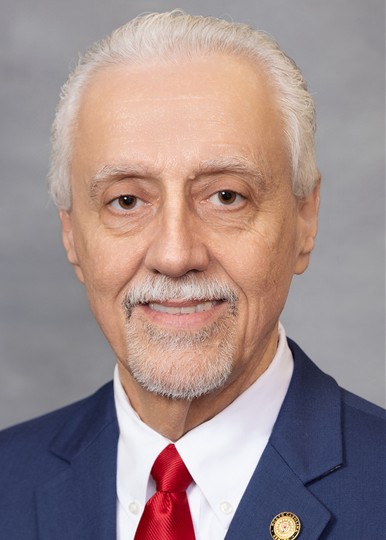
Sen. Carl Ford
Sponsored bills
Maddy summarySB 264 requires all North Carolina public schools - including traditional, charter, regional, and laboratory schools - to display the U.S. and North Carolina flags in every classroom and near each school's main entrance, while scheduling daily recitation of the Pledge of Allegiance. The bill also mandates age-appropriate instruction about the flags' historical significance and the pledge's meaning. Schools may not compel students or staff to stand, salute, or recite the pledge. Funding of $1 million (one-time) and $100,000 annually is provided to purchase flags, with displays only required if flags are available through donations or purchase.
Maddy summaryThis bill permits the sale, possession, and use of specific consumer fireworks (like sparklers, party poppers, and novelty items) in North Carolina, while maintaining restrictions on most pyrotechnics. It directly affects consumers and retailers by allowing limited fireworks that comply with strict weight limits (e.g., no more than 16 milligrams for party poppers) and requires compliance with new regulations under Part 2 of Chapter 58. The bill establishes an excise tax on consumer fireworks sales and amends existing laws to define permitted items, such as wire sparklers (under 100 grams) and sparklers emitting showers of sparks. It does not change prohibitions on most fireworks, including indoor displays or sales to minors under 18.
Maddy summarySB 230 increases the income limit for North Carolina's Elderly or Disabled Property Tax Homestead Exclusion from $25,000 to $48,000 for taxable years beginning July 1, 2025, and adjusts this limit annually based on Social Security cost-of-living adjustments. It directly affects elderly or disabled homeowners whose property tax bills are reduced under this exclusion, expanding eligibility to those with higher incomes. The bill establishes that the Department of Revenue must annually calculate and notify counties of the updated income limit, rounded to the nearest $100, starting July 1, 2025. This change aims to better align the exclusion with inflation and support more low-to-moderate income senior or disabled homeowners.
Maddy summarySB 240 establishes the NCSTARS Grant Program to fund community colleges partnering with public schools and local businesses to create work-based learning programs for students aged 16+ in apprenticeships or preapprenticeships. It provides matching grants of up to $500,000 per year per community college, requiring a 3:1 state-to-local funding match for program costs like student stipends, travel, and staff. The program prioritizes applications modeling the Surry-Yadkin Works FLEET program and mandates annual reports on participation and outcomes. Total funding of $4.75 million is allocated for the 2025-2026 fiscal year, supporting the program through 2028-2029.
Maddy summarySB 193 updates North Carolina's pension system for retired Registers of Deeds by replacing the current variable payment calculation with a fixed $1,500 monthly benefit for all eligible retirees. It directly affects retired county Registers of Deeds who meet service requirements (at least 10 years of eligible service), changing how their supplemental pension is calculated. The bill modifies statutes to set this flat rate effective October 1, 2025, ending the previous method that adjusted payments based on fund availability and years of service. This change simplifies disbursement while maintaining the existing eligibility criteria for retirees.
Maddy summaryThis bill increases North Carolina's income limit for the property tax homestead exclusion for elderly or disabled homeowners from $25,000 to $48,000, effective for taxes due in 2025. It applies to qualifying homeowners whose income would otherwise disqualify them from the exclusion. The new limit will automatically adjust annually based on Social Security cost-of-living adjustments, rounded to the nearest $100. This change directly affects low-to-moderate-income elderly or disabled homeowners seeking property tax relief.
Maddy summarySB 123 requires all North Carolina public schools - including traditional, charter, regional, and university-operated schools - to display U.S. and North Carolina flags in every classroom and near school entrances, and to schedule daily Pledge of Allegiance recitation with age-appropriate historical instruction. The law explicitly states that no student or staff member may be compelled to stand, salute, or recite the pledge. It allocates $1 million (nonrecurring) for flag purchases in 2025-2026 and $100,000 annually starting in 2026-2027. This applies to all public schools beginning with the 2025-2026 school year.
Maddy summarySB 128, the Heroes Homestead Act, increases the property tax exemption for disabled veterans in North Carolina from $45,000 to $76,500 of a home's appraised value. This change directly affects qualifying disabled veterans who own and occupy their primary residence, providing greater tax relief on their homes. The bill amends North Carolina's property tax law to set the new exclusion amount, effective for taxes due on or after July 1, 2026. It does not apply to other property tax relief programs.
Maddy summarySB 113 creates a new process for property owners to quickly remove unauthorized occupants (squatters) from residential property. Property owners or their authorized representatives must file a sworn affidavit with a court clerk or magistrate, pay a $25 fee, and provide specific details proving the occupant has no legal claim (e.g., no rent paid, not a tenant, and directed to leave). Once the affidavit is processed, local law enforcement must remove the person within 24 hours. This process does not apply to tenants with valid leases or rental agreements.