

Maddy summarySB 122 would establish North Carolina's adoption of the Uniform Community Property Disposition at Death Act, affecting married couples or legally recognized domestic partners in relationships where community property could be acquired under applicable law. The bill specifies that at death, half of the community property automatically belongs to the surviving partner (not subject to the deceased’s will), while the other half can be distributed per the deceased’s wishes. It clarifies that the surviving partner’s share is exempt from elective share claims, and defines key terms like "community-property spouse" and "partition" for property division. The bill does not apply to property already divided, reclassified, or held in certain trusts. (Note: The bill is currently in committee, with recent actions including withdrawal from the Judiciary Committee on March 6, 2025.)
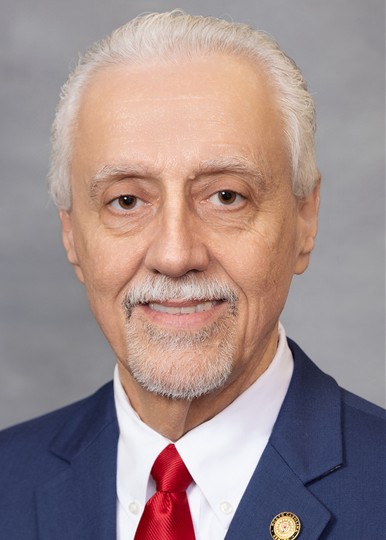
Sen. Carl Ford
Sponsored bills
Maddy summaryThis bill changes the schedule for regular municipal elections in China Grove, North Carolina, moving them from odd-numbered years to even-numbered years. It specifically prohibits elections in 2025 and extends the terms of current officials whose terms were set to expire that year (three Aldermen in 2025, two Aldermen and the Mayor in 2027) by one year. Starting in 2026, regular elections will occur every two years in even-numbered years, aligning with North Carolina's uniform municipal election laws. The bill directly affects China Grove residents who vote in municipal elections and the current town officials whose terms are adjusted.
Maddy summaryThis bill provides local boards of education with a new alternative for setting their school calendars, directly affecting public schools and students. It allows schools to start as early as the Monday closest to August 19, provided fall and spring semesters have an equal number of instructional days, and end no later than the Friday before the last Monday in May. The bill also establishes stricter enforcement mechanisms, enabling the State Board of Education to investigate non-compliance and withhold central office administration funds from local boards that fail to follow calendar requirements. Additionally, it permits residents or businesses to file civil actions against non-compliant local boards, potentially leading to court-ordered remedies, attorney's fees, and civil penalties.
Maddy summarySB 357 expands and modernizes collaborative practice agreements between physicians and pharmacists. It allows licensed pharmacists, designated as "clinical pharmacist practitioners," to provide a broader range of "health care services" under a physician's supervision, including modifying drug dosages, ordering tests, and managing drug therapy for patients. These services must be conducted under specific, written collaborative practice agreements and adhere to rules set by the North Carolina Medical Board and Board of Pharmacy. The bill also permits therapeutic drug substitutions by pharmacists with physician authorization and allows for multi-provider collaborative agreements in institutional settings.
Maddy summaryThis bill proposes to repeal North Carolina's Certificate of Need (CON) laws, which currently require healthcare providers to obtain state approval for certain projects. These projects include building new facilities, expanding existing services, or acquiring major medical equipment. By eliminating these requirements, the bill would remove a regulatory step for various healthcare facilities, such as hospitals, nursing homes, and diagnostic centers, looking to establish or grow their operations. The bill achieves this by amending several state statutes to remove references to the Certificate of Need process.
Maddy summarySenate Bill 335 allows pharmacists to order and perform CLIA-waived tests to treat influenza, provided they follow statewide protocols and do not use controlled substances. The bill mandates that health benefit plans cover healthcare services provided by pharmacists if the services are within their licensed scope of practice and would be covered if performed by another healthcare provider. It also ensures consistent application of prescription drug and pharmacy service coverage requirements across insurers, third-party administrators, and pharmacy benefits managers. These changes aim to expand access to certain healthcare services through pharmacists, affecting patients, pharmacists, and health insurance providers. Most provisions become effective October 1, 2025.
Maddy summarySB 63 establishes a nine-member Board of Motor Vehicles to oversee North Carolina's Division of Motor Vehicles, replacing the current structure where the Commissioner is appointed by the Transportation Secretary. The Board will appoint the Motor Vehicles Commissioner and include members from the Transportation Secretary, Information Technology Secretary, Highway Patrol, and appointments by the Governor and General Assembly. The bill also mandates a study by the Department of Transportation to evaluate creating a separate Motor Vehicle Authority (replacing the current Division), including feasibility, required legal changes, a timeline, and implementation steps. The study must be completed and reported to the General Assembly by January 1, 2026, but does not create the Authority itself.
Maddy summarySB 359 reorganizes and standardizes death benefit rules across North Carolina's retirement systems for teachers, state employees, local government workers, judicial staff, and legislators. It updates the structure of survivor benefits, including the "survivor's alternate benefit," and ensures funding for line-of-duty death benefits (deaths occurring during official duties). The bill primarily affects beneficiaries - like spouses or dependents - of deceased members in these retirement systems by clarifying how death benefits are calculated and paid. It makes technical adjustments to existing laws without creating new benefits or changing eligibility rules.
Maddy summarySB 363 makes two key changes to North Carolina retirement systems. First, it extends the temporary entry period for charter schools seeking to join the Teachers' and State Employees' Retirement System, allowing up to two additional years beyond the initial one-year provisional period, and requires financial reviews before full participation. Second, it shifts authority from the State Treasurer to the Board of Trustees to decide whether to restore benefits forfeited due to criminal convictions, requiring individuals to repay contributions with 6.5% annual interest in a lump sum upon reversal. These changes apply to charter schools and retirement system members affected by forfeiture rules under multiple retirement systems. The bill focuses on administrative clarity and procedural updates without altering benefit eligibility or funding.
Maddy summarySB 478 allows banks in North Carolina to deduct income tax on interest, fees, and penalties from loans secured by agricultural land, as defined by state law. This tax deduction applies to loans specifically backed by farmland, directly benefiting banks that provide such financing. The policy change takes effect for tax years beginning on or after January 1, 2025. The bill does not directly affect farmers or landowners but alters tax treatment for financial institutions offering agricultural loans.