

Maddy summarySB 50, "Freedom to Carry NC," allows most North Carolina residents aged 18 or older (who are U.S. citizens) to carry concealed handguns without a permit, while maintaining existing permit options for reciprocity. The bill prohibits concealed carry for individuals with certain felony convictions, domestic violence misdemeanors, active warrants, or specific mental health or substance use conditions. It also requires carrying valid ID and disclosing concealed weapons to law enforcement upon request. Additional provisions include increased penalties for assaults on first responders, new offenses for felons discharging firearms during crimes, and expanded benefits for law enforcement families. The bill does not change current restrictions on carrying firearms in sensitive locations like schools or government buildings.
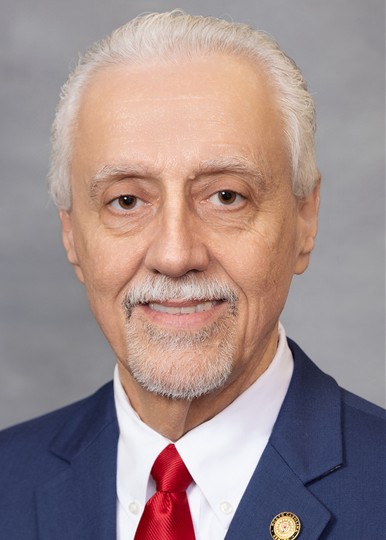
Sen. Carl Ford
Sponsored bills
Maddy summarySJR 776 is a procedural resolution that changes the adjournment and reconvene dates for North Carolina's 2025 legislative session. It adjusts key dates, such as moving the session's adjournment from September 22 to September 25, 2025, and setting reconvene times for subsequent weeks (e.g., October 20 instead of October 21). The bill also restricts the business that can be addressed during reconvened sessions to only conference reports and bills related to disaster recovery that met a July 31, 2025, deadline. This affects the legislature's scheduling flexibility and prioritization of bills during the final weeks of the session.
Maddy summarySJR 774 is a procedural joint resolution confirming Stephanie Lynch's appointment to the North Carolina Investment Authority Board of Directors. It specifically confirms her appointment for a term beginning July 1, 2025, and ending June 30, 2028, as required by state law (G.S. 147-71.1). The resolution does not create new policies or affect any broader group; it solely confirms the State Treasurer's existing appointment of Lynch to this specific board position. This is a routine confirmation process, not a substantive legislative change.
Maddy summaryThis joint resolution confirms Governor's appointment of Sallie Shuping-Russell to the North Carolina Investment Authority Board of Directors for a term beginning July 1, 2025, and ending June 30, 2029. It directly affects the appointee (Sallie Shuping-Russell) and the board, which manages state investment funds. The resolution follows existing law (G.S. 147-71.1) requiring legislative confirmation for such appointments, but does not create new policy or change board responsibilities. This is a procedural confirmation, not a substantive legislative change.
Maddy summarySB 775 is a procedural bill appointing individuals to fill unexpired terms on various North Carolina public boards and commissions. It specifically names people like Richard Parrotte to the State Bar Disciplinary Hearing Commission, Dr. Marc Sosne to Cape Fear Community College’s board, and Joaquin Fuster to the Home Inspector’s Licensure Board. The bill also corrects previous appointment details in other laws (Part III). As a routine appointment measure, it does not create new policies but ensures vacancies are filled as required by law.
Maddy summarySB 124 aims to make North Carolina state government hiring more accessible by reducing unnecessary barriers. It requires the State Human Resources Commission to review job requirements starting October 2025, removing mandatory four-year degree requirements where practical experience (like military service or trade school) is sufficient. The bill also modernizes the application process by allowing resume uploads to auto-fill forms and simplifies job postings to limit additional qualifications to five, ensuring applicants clearly see basic requirements. These changes apply to all state agencies hiring staff, directly affecting job seekers and hiring managers across North Carolina's government workforce.
Maddy summarySB 344 ensures that North Carolina seniors aged 65+ who transfer funds into qualifying pooled special needs trusts (meeting federal standards) won't lose Medicaid or State-County Special Assistance eligibility. The bill requires the state health department to update eligibility rules so these transfers are treated as "fair market value" transactions - meaning the funds aren't counted against benefit eligibility if the trust uses the money to provide goods/services equal to the transfer value within the senior's life expectancy. It directly affects seniors using these trusts to manage assets while maintaining public benefits. The law amends state rules to align with federal guidelines (42 U.S.C. § 1396p(d)(4)(C)) and takes effect upon enactment.
Maddy summarySB 771 proposes a constitutional amendment to allow North Carolina to provide state funds for restoring privately-owned business buildings damaged by federally declared natural disasters. Currently, the state constitution prohibits such payments under its "emoluments" clause, but this bill would create an exception specifically for disaster recovery. If approved by voters in March 2026, the amendment would permit the state to use funds for rebuilding private structures after events like hurricanes or floods officially labeled major disasters by the federal government. This change directly affects businesses that own property damaged in these events, removing a legal barrier to receiving state disaster relief.
Maddy summarySB 639, the North Carolina Farm Act of 2025, updates agricultural water planning, addresses feral swine damage, and strengthens farm conservation protections. It requires the Department of Agriculture to revise the state’s agricultural water plan by 2026, including funding for water infrastructure, conservation practices, and flood mitigation. The bill creates a Feral Swine Working Group with industry and agency representatives to develop control strategies and report annually, while also mandating 100-foot vegetative buffers around protected farm tracts in new subdivisions. Local governments gain authority to deny development permits that would negatively impact agricultural production, directly affecting farmers, landowners, and municipal planning decisions.
Maddy summarySR 769 is a ceremonial Senate resolution honoring Elizabeth Hanford Dole, a former U.S. Senator from North Carolina and pioneering public servant. The resolution recognizes her career achievements, including being the first woman appointed Secretary of Transportation (1983), her leadership as president of the American Red Cross, and her founding of the Elizabeth Dole Foundation supporting military caregivers. It does not create new laws or policies but formally expresses the Senate's gratitude for her decades of service. The resolution was adopted by the Senate on June 4, 2025, and a copy will be sent to Ms. Dole.