

Maddy summarySB 211 reenacts North Carolina's state Earned Income Tax Credit (EITC), providing a cash refund to low-to-moderate income workers. It allows eligible residents to claim a credit equal to 5% of the federal EITC amount they qualify for, which is refundable (meaning they receive a cash payment even if they owe no state tax). The credit applies to taxable years beginning on or after January 1, 2025, and directly benefits working individuals and families with low earnings. The bill reinstates a previously sunsetted provision, ensuring continued state-level support aligned with the federal EITC.
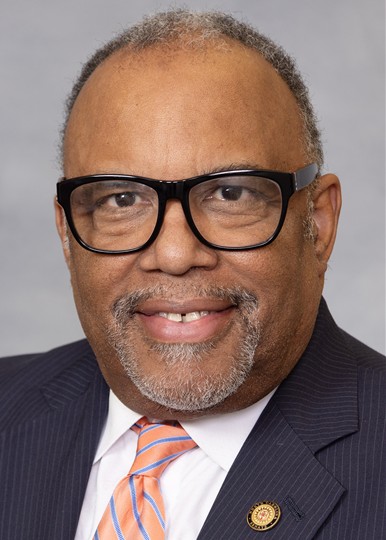
Sen. Paul Lowe
Sponsored bills
Maddy summarySB 186 appropriates $2 million from North Carolina's General Fund to the City of Winston-Salem for a one-time purchase of a ladder truck for Fire Station 19. The funds are directed as a grant specifically for the Winston-Salem Fire Department's Station 19, which serves the local community. This bill creates a nonrecurring allocation for equipment procurement, with no ongoing funding implications. The measure becomes effective July 1, 2025, and directly affects the operational capacity of Station 19.
Maddy summarySB 189 amends Winston-Salem's city charter to change eligibility rules for the Civil Service Board. It requires former city employees appointed to the Board to have separated in "good standing" without serious misconduct or disciplinary action, and to have been separated for at least seven consecutive years. The bill also prohibits individuals with financial ties to city business (or family members with such ties) from serving, and bars Board members from working with the city for two years after their term ends. This applies to all appointments made on or after August 1, 2025.
Maddy summarySB 185 restores Forsyth County and its municipalities' authority to initiate "down-zoning" without requiring written consent from all affected property owners. Down-zoning refers to changing land use rules to allow less dense development, fewer permitted uses, or create nonconforming properties. The bill reverses a prior law (S.L. 2024-57) that mandated owner consent for such changes, allowing local governments to implement these zoning adjustments directly. This applies retroactively to December 11, 2024, for any affected ordinances.
Maddy summarySB 184 allows North Carolina local governments to exempt properties being developed for affordable housing from system development fees (such as those for water and sewer infrastructure). It requires local units to establish their own criteria for determining which housing projects qualify as "affordable" for the exemption. The bill does not change existing fee structures but gives localities flexibility to support affordable housing development. This directly affects developers building affordable housing projects and local governments that set these fees.
Maddy summaryThis bill (SB 187) is a procedural local act that solely references North Carolina's 32nd Senatorial District. It contains no substantive policy changes or new requirements - it simply states the act relates to that specific district and becomes effective upon enactment. The bill does not affect any residents, policies, or funding, as it serves only as a formal reference within legislative records. Procedural acts like this typically handle administrative matters without altering laws or impacting constituents.
Maddy summaryThis bill increases North Carolina's income limit for the property tax homestead exclusion for elderly or disabled homeowners from $25,000 to $48,000, effective for taxes due in 2025. It applies to qualifying homeowners whose income would otherwise disqualify them from the exclusion. The new limit will automatically adjust annually based on Social Security cost-of-living adjustments, rounded to the nearest $100. This change directly affects low-to-moderate-income elderly or disabled homeowners seeking property tax relief.
Maddy summarySB 143 expands North Carolina's property tax exemption for disabled veterans by increasing the excluded value from the previous amount to $45,000 of a home's appraised value. It applies to veterans who own and occupy their permanent residence as their primary home, excluding this amount from property taxes. The bill prohibits qualifying veterans from using this exemption alongside other property tax relief programs. This change takes effect for property taxes due on or after July 1, 2025.
Maddy summarySB 154, the North Carolina CROWN Act, prohibits employment discrimination based on hair texture or protective hairstyles. It explicitly defines "protective hairstyles" (including braids, locks, twists, and bantu knots) as protected under existing anti-discrimination law, stating that race discrimination includes hair texture and type. The bill amends Chapter 95 to add Section 95-28.1B, making it illegal for employers to deny jobs, fire, or otherwise discriminate against employees because of these hair characteristics. This applies to all employers, employees, and job applicants in North Carolina starting from the law's effective date.
Maddy summarySB 128, the Heroes Homestead Act, increases the property tax exemption for disabled veterans in North Carolina from $45,000 to $76,500 of a home's appraised value. This change directly affects qualifying disabled veterans who own and occupy their primary residence, providing greater tax relief on their homes. The bill amends North Carolina's property tax law to set the new exclusion amount, effective for taxes due on or after July 1, 2026. It does not apply to other property tax relief programs.