

Maddy summarySB 353, the Second Chance Coding Act, requires North Carolina's Division of Juvenile Justice to create a program teaching coding and computer skills to juveniles in youth development centers. The program must include specialized courses, industry certification opportunities, and workforce connections like mentorship and job placement to help these youth transition into careers after release. Implemented by January 1, 2026, with $250,000 in funding for 2025-2026, the bill aims to reduce recidivism by improving job prospects. It directly affects youth committed to juvenile facilities, focusing on concrete skill-building rather than speculative outcomes.
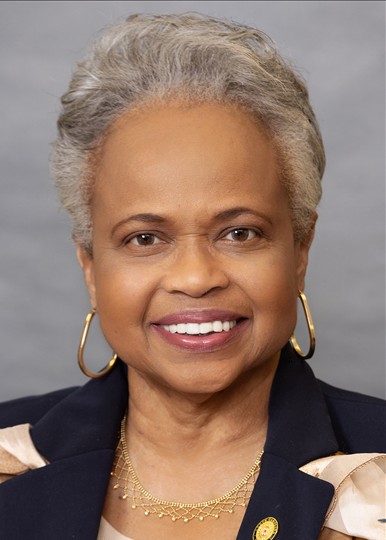
Sen. Gladys Robinson
Sponsored bills
Maddy summarySB 324, the 2025 Safe Drinking Water Act, requires North Carolina's Commission for Public Health to establish safe limits for harmful chemicals in drinking water by October 2025. It directly affects all North Carolina residents by mandating maximum contaminant levels (MCLs) for specific toxins like PFAS, PFOA, PFOS, hexavalent chromium, and 1,4-Dioxane - chemicals linked to cancer or serious health risks. The bill directs the Commission to base these limits on scientific evidence from other states and federal agencies, ensuring protections for vulnerable groups like children and pregnant people, while aligning with U.S. Environmental Protection Agency standards. The law also requires annual reviews to update these limits as new health science becomes available.
Maddy summarySB 325 establishes North Carolina's Department of Housing and Community Development as a unified cabinet-level department, replacing fragmented housing and community development functions across state agencies. The department includes four divisions: Community Development (focusing on revitalization and broadband access), Housing (managing affordable housing, homelessness, and disaster resilience), Operations, and a Policy and Legislative Office. It directly affects low- to moderate-income residents through housing programs and community development initiatives, with $30 million in recurring funding allocated for the 2025-2026 fiscal year. The bill formalizes the department’s structure, mission, and governance, including a nine-member board appointed by the Governor and legislative leaders.
Maddy summarySB 323 establishes a $9.6 million annual grant program (2025-2027) to provide free condoms and lubricants to students in North Carolina public high schools, community colleges, and UNC system institutions. It directly affects these educational settings by requiring grant recipients to offer supplies in designated campus locations without parental permission, while prioritizing student privacy and collaboration with health organizations. Key mechanisms include mandatory Student Health Advisory Committees, annual reporting on usage and health savings, and rules ensuring grants supplement rather than replace existing funding. The program aims to reduce STI-related healthcare costs and support student retention through preventive health access.
Maddy summarySB 301 modifies North Carolina's Film and Entertainment Grant Fund to clarify eligibility and funding limits for film and TV productions. It sets minimum qualifying expenses (e.g., $1.5 million for theatrical films, $500,000 per TV episode) and caps grants at 35% (for rural areas) or 25% (for urban areas) of production costs, with maximums like $7 million for feature films. Priority is given to productions hiring North Carolina residents and featuring state landmarks to boost tourism. The bill directly affects film producers meeting these financial and geographic criteria who seek state funding.
Maddy summarySB 297 establishes a Nursing Fellows Program at Winston-Salem State University (WSSU) to provide forgivable loans to nursing students. The program offers up to $5,000 per semester (or $2,500 per summer) for tuition, books, and fees toward a Bachelor of Science in Nursing (BSN) or Master of Science in Nursing Education (MSN) degree, contingent on recipients committing to work as nurses or nursing instructors in North Carolina. Eligibility requires WSSU nursing degree completion within 10 years, North Carolina RN licensure, and a demonstrated commitment to serve in-state, with loan forgiveness tied to employment in qualifying nursing roles after graduation.
Maddy summarySB 284 allocates $8.3 million in state funds to Guilford County Schools for the 2025-2026 school year. Specifically, $5 million will expand high-dosage tutoring programs by hiring more tutors, broadening subject areas, and increasing session availability. An additional $3.3 million will support learning hubs designed to help at-risk students complete graduation requirements and improve graduation rates. The bill directly affects Guilford County Schools students and staff through these targeted academic support programs.
Maddy summarySB 285 authorizes supplemental funding for teacher and qualifying school administrator salary supplements in North Carolina for the 2025-2027 fiscal biennium, specifically including Guilford County Schools as an eligible recipient. The bill establishes a funding formula based on county-specific factors like property values, household income, and tax rates to determine allocations, with a maximum of $5,000 per State-funded teacher. Eligible school districts must use these funds to supplement, not replace, existing non-State funding for teacher salaries. The bill directly affects teachers and administrators in eligible school districts across the state, with Guilford County explicitly named as an eligible jurisdiction.
Maddy summarySB 283 appropriates $1.678 million annually in recurring funds (plus supplemental nonrecurring funds) to expand sickle cell disease services for North Carolina's estimated 7,000+ patients. It directly funds six medical centers (including Duke, UNC Chapel Hill, and Atrium Health) for comprehensive care, creates transition coordinator positions to support youth moving from pediatric to adult care, and provides grants to community organizations in underserved areas. The bill also allocates funds to develop a statewide emergency department toolkit for better acute care and supports the state's sickle cell program with new staff positions. All funding is allocated for the 2025-2027 biennium and becomes effective July 1, 2025.
Maddy summarySB 281, the Essential Relief for Child Care Act, appropriates $50 million in nonrecurring state funds for the 2024-2025 fiscal year to continue compensation grants for child care providers. This funding directly supports licensed child care facilities across North Carolina, helping them cover operational costs and prevent closures. The bill requires the Department of Health and Human Services to maintain these grants at current 2024-2025 funding levels through the fourth quarter. It aims to address ongoing financial pressures on providers, which the bill states could lead to 20% facility closures without continued support.