

Maddy summarySB 571 (MOMnibus 3.0) establishes a North Carolina grant program to address racial disparities in maternal health outcomes, specifically targeting Black women. The bill requires the Department of Health and Human Services to award competitive grants (between $10,000 and $50,000) to community-based organizations serving Black women in areas with high maternal health disparities. Grants prioritize organizations led by Black women that provide evidence-based services, including culturally respectful care, mental health support, assistance with social determinants like housing and transportation, and doula support. The program mandates technical assistance for grantees and annual reports to the legislature on funding and outcomes. This bill directly affects Black women in North Carolina and community health organizations providing maternal care services.
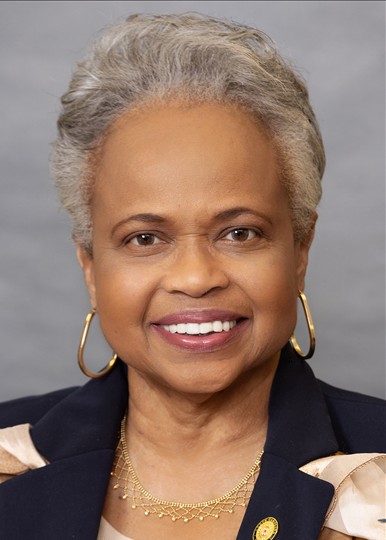
Sen. Gladys Robinson
Sponsored bills
Maddy summarySB 529, the Second Chance Success Act, eliminates the ability to extend probation solely due to failure to pay a $40 monthly supervision fee. It directly affects individuals on supervised probation in North Carolina who might have faced extended probation terms for nonpayment. The bill modifies probation rules to state that a probation term cannot be extended if nonpayment of the fee is the only reason, though the fee itself remains required (with court exemptions possible for good cause). Fees collected still go to the county clerk and then the state's General Fund, but probation officers can no longer use nonpayment as grounds for extending probation.
Maddy summarySB 542 allocates $20.3 million in one-time funding and $1 million annually to support Western North Carolina recovery and economic development. It provides $10 million specifically for long-term housing recovery for residents impacted by Hurricane Helene, $5 million to Community Development Corporations (CDCs), $300,000 for women’s business centers, and $5 million for broader economic development programs. The bill also includes $1 million in recurring funds to assist with ongoing housing recovery, match federal disaster funds, and support community services statewide. This legislation directly affects Western NC residents recovering from Hurricane Helene, CDCs, and women’s business centers in Western NC, the Triad, and Piedmont regions.
Maddy summarySB 534 allocates $237.5 million in one-time state funding from the Capital and Infrastructure Fund for capital projects at two North Carolina universities. Specifically, it provides $125 million to North Carolina A&T State University for an Agricultural Research Classroom and $112.5 million to Winston-Salem State University for a Health, Physical Education, and Recreation Complex. The funding is designated for the 2025-2026 fiscal year and becomes effective July 1, 2025. This bill directly affects the operations and infrastructure development of these two public universities.
Maddy summarySB 627 allows North Carolina small businesses with annual gross receipts under $10 million to reduce their state income tax by deducting funds deposited into a special capital improvement account. Businesses can deduct up to 5% of their adjusted gross income (capped at $1 million), 2% (up to $2 million), or 1% (up to $3 million) for qualifying property improvements like upgrades that add value, extend property life by 10+ years, or adapt property for new business uses. Funds must be deposited into a federally insured bank account and used solely for these improvements; unused funds must be added back to taxable income. The bill takes effect for tax years beginning January 1, 2025, and directly affects small businesses making eligible capital investments.
Maddy summarySB 618, the Lasting Economic and Academic Prosperity (LEAP) Act, establishes a state-funded endowment program to support early childhood development and child care initiatives in North Carolina. It directs the Department of Health and Human Services' Division of Child Development and Early Education (DCDEE) to use private donations (called "excluded amounts") and state funds held in a LEAP Reserve to generate investment income, which will supplement existing early childhood programs. The bill requires strict accounting to separate these funds, mandates annual reporting on spending and income to lawmakers, and appropriates $450,000 for fundraising in 2025-2026, with annual 5% increases for eight years. This directly affects North Carolina children by stabilizing early childhood program funding and incentivizes private donors through state matching.
Maddy summarySB 622 requires North Carolina employers to provide earned paid sick leave, directly affecting over 1.6 million private-sector workers currently without access. Employees earn 1 hour of paid sick time for every 30 hours worked, with small businesses (10 or fewer employees) limited to 32 hours annually and larger employers to 56 hours. Workers can use this time for their own health needs, family care, or addressing domestic violence, sexual assault, or stalking. The law applies to all covered employees except certain exempt workers and volunteers, aiming to ensure workers don’t lose pay for essential health-related absences.
Maddy summarySB 621 reinstates a temporary sales tax exemption for school supplies in North Carolina, effective July 1, 2025. The bill reenacts G.S. 105-164.13C, which exempts qualifying items like notebooks, pens, and backpacks from state sales tax during a designated period each year. This directly affects families purchasing school supplies for children, reducing their out-of-pocket costs. The policy change is limited to tax relief for specific items and does not alter education funding or curriculum.
Maddy summarySB 642, the SAVE Students Act, requires all North Carolina public school students in grades 6-12 to receive two hours annually of evidence-based training on suicide/violence prevention and social inclusion. The training, approved by the Department of Public Instruction, covers identifying warning signs, accessing mental health resources, and fostering peer connections. School staff with regular student contact must also complete one hour of annual suicide/violence prevention training. Schools may use assemblies, digital tools, or other methods for delivery, and parents can opt students out. The bill also mandates school mental health plans and allows student-led suicide prevention clubs.
Maddy summarySB 643 expands North Carolina's Teaching Fellows Program by increasing funding for forgivable loans to recruit and support future teachers in high-need areas. It directly affects students pursuing teaching careers in qualifying fields (like STEM, special education, and elementary education) and North Carolina public schools facing teacher shortages, especially in rural communities. The bill establishes a Trust Fund to cover loan costs, administrative expenses, and new support services - including mentoring for teachers in low-performing schools and recruitment efforts targeting regions with the worst teacher retention. Key provisions include prioritizing funding for rural schools and requiring the program to use stricter selection criteria for applicants based on academic performance.