

Maddy summarySB 360 requires every public school in North Carolina (including traditional, charter, regional, and laboratory schools) to have at least one full-time, permanent school nurse starting in the 2025-2026 school year. The bill appropriates $95 million in recurring state funds to the Department of Public Instruction to cover the cost of adding these nurse positions, ensuring funding supplements existing resources without replacing them. This policy directly affects all K-12 public schools across the state by mandating nurse staffing levels and providing dedicated funding to meet that requirement. The law becomes effective July 1, 2025, with implementation beginning for the 2025-2026 school year.
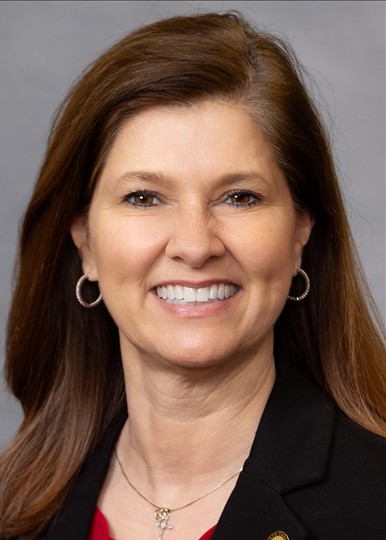
Sen. Sophia Chitlik
Sponsored bills
Maddy summarySB 382 prohibits licensed mental health professionals from providing conversion therapy to minors or adults with disabilities. The bill bans attempts to change a person’s sexual orientation, gender identity, or gender expression. It directly affects vulnerable individuals, including minors and adults with disabilities, who might otherwise be subjected to these practices. The law aligns with medical consensus from major health organizations stating such therapies are ineffective and harmful. Licensed practitioners would be barred from offering these services under this legislation.
Maddy summarySB 383, titled "Right to IVF," protects patients' access to assisted reproductive technology (ART) like in vitro fertilization (IVF), gamete intrafallopian transfer, and zygote intrafallopian transfer. It prohibits North Carolina or its subdivisions from restricting or interfering with patients' access to ART or healthcare providers' ability to offer or perform these services. The bill also clarifies that fertilized eggs or embryos outside the uterus are not legally considered "human beings" under state law. Additionally, it allocates $500,000 annually from 2025-2027 to expand Medicaid maternal support services (the Baby Love Program), matching federal funds for this purpose. The bill directly affects patients seeking ART and healthcare providers offering these services in North Carolina.
Maddy summarySB 371 would require North Carolina charter schools with four consecutive years of low academic performance (grades D/F with insufficient growth) to have their charters revoked. It directly affects charter schools identified as "continually low-performing," including the 14,400 students currently enrolled in such schools, and restricts their enrollment expansion until performance improves. Key provisions include mandating that charter schools display their annual performance grade on enrollment applications, limiting remote charter academies to three-year terms, and requiring the state board to identify consistently failing schools annually. The bill aims to address chronically underperforming schools by creating a clear pathway for charter cancellation while allowing limited exceptions for schools showing improvement. It takes effect for the 2025-2026 school year.
Maddy summarySB 91 allows qualified emergency facilities (like hospitals, police stations, and fire departments) to install secure "newborn safety devices" where parents can safely leave infants under 30 days old without legal consequences. The bill requires these devices to be temperature-controlled, equipped with dual alarms, inspected weekly, and located visibly on the facility exterior. Facilities must cover installation costs, develop emergency response plans, and undergo annual inspections by the Department of Health and Human Services. This law directly affects parents seeking to surrender infants safely and the 24-hour emergency facilities that install these devices, effective October 1, 2025.
Maddy summarySB 352 allocates $2.5 million annually from 2025-2027 to fund grants for nonprofit community health centers in North Carolina. These grants will allow centers to purchase and provide long-acting reversible contraceptives (LARCs), such as IUDs or implants, to underserved, uninsured, or medically indigent patients. LARCs must meet specific criteria: they provide extended birth control without daily user action, are temporary, FDA-approved, and require a prescription. The bill becomes effective July 1, 2025, focusing on expanding access to affordable, long-term contraceptive options.
Maddy summarySB 347 allows North Carolina legislators experiencing childbirth, adoption, stillbirth, or miscarriage (a "triggering event") to vote remotely via a designated proxy. A legislator must file a written "voting designation" with the clerk, appoint a party leader as their proxy, and access real-time session streams. The proxy must vote in the chamber after over half the chamber has voted, and the arrangement lasts up to 16 weeks. This policy change enables legislators to fulfill constitutional voting duties while caring for newborns or managing family events, without altering voting outcomes or other legislative processes.
Maddy summarySB 350, the Marijuana Justice and Reinvestment Act, would legalize recreational cannabis for adults 21 and older in North Carolina, allowing possession of up to 2 ounces of cannabis, 15 grams of concentrate, or products containing no more than 2,000mg THC. It establishes a regulatory framework requiring licenses for cultivation, manufacturing, and retail sales, with mandatory lab testing, potency labeling, and restrictions on advertising. The bill directly affects North Carolina residents over 21, cannabis businesses, and communities disproportionately impacted by past cannabis prohibition - addressing the ACLU finding that Black individuals were 3.6 times more likely to be arrested for possession than white individuals despite similar usage rates. Key provisions include creating three funds to reinvest tax revenue into affected communities for substance abuse treatment, education, and business support, while requiring licensed businesses to prioritize diversity, fair wages, and community investment.
Maddy summarySB 324, the 2025 Safe Drinking Water Act, requires North Carolina's Commission for Public Health to establish safe limits for harmful chemicals in drinking water by October 2025. It directly affects all North Carolina residents by mandating maximum contaminant levels (MCLs) for specific toxins like PFAS, PFOA, PFOS, hexavalent chromium, and 1,4-Dioxane - chemicals linked to cancer or serious health risks. The bill directs the Commission to base these limits on scientific evidence from other states and federal agencies, ensuring protections for vulnerable groups like children and pregnant people, while aligning with U.S. Environmental Protection Agency standards. The law also requires annual reviews to update these limits as new health science becomes available.
Maddy summarySB 325 establishes North Carolina's Department of Housing and Community Development as a unified cabinet-level department, replacing fragmented housing and community development functions across state agencies. The department includes four divisions: Community Development (focusing on revitalization and broadband access), Housing (managing affordable housing, homelessness, and disaster resilience), Operations, and a Policy and Legislative Office. It directly affects low- to moderate-income residents through housing programs and community development initiatives, with $30 million in recurring funding allocated for the 2025-2026 fiscal year. The bill formalizes the department’s structure, mission, and governance, including a nine-member board appointed by the Governor and legislative leaders.