

Maddy summarySB 708, the "Working Families Act," directly affects low- and middle-income North Carolina families by reducing child care costs, increasing tax credits, raising wages, and providing housing assistance. It cuts parent copayments for subsidized child care to 7% of gross income (down from 10%), reenacts a refundable child tax credit with income-based payments up to $250 per child, and raises the statewide minimum wage to $15 per hour starting September 1, 2025 - while allowing cities to set higher local rates. The bill also increases income limits for property tax relief and creates a homebuyers' program offering assistance to first-time public servant homebuyers (including teachers, firefighters, police, and EMTs). These changes aim to reduce living costs and support working families through concrete financial adjustments.
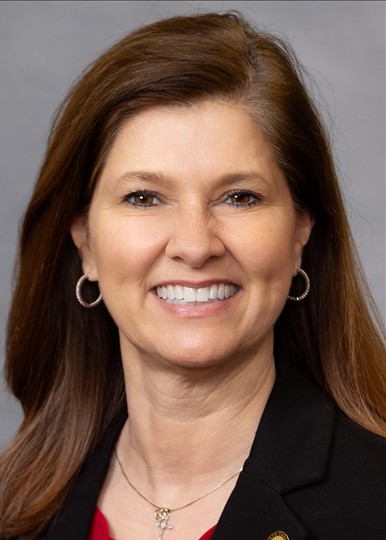
Sen. Sophia Chitlik
Sponsored bills
Maddy summarySB 704, the "Ronnie Long No Cap Act," removes the $750,000 cap on compensation for exonerees in North Carolina, replacing it with $50,000 per year of wrongful imprisonment. It also requires the state to seek federal approval for Medicaid coverage without income or asset limits for exonerees and mandates the Department of Adult Correction to provide tailored transition services (including housing and employment support) with a $25,000 per person spending limit. The bill directly affects individuals exonerated after wrongful convictions, such as Ronnie Long (44 years incarcerated), by expanding financial compensation, healthcare access, and reintegration support. These provisions apply to exonerees released after the bill's effective date, with compensation retroactive for living individuals.
Maddy summarySB 714 prohibits corporal punishment (physical punishment) in all North Carolina public schools, making it the first statewide statutory ban despite no current school districts using it. The bill requires schools to report detailed data on any corporal punishment administered - including student race, gender, disability status, and reasons - to the State Board of Education annually. It also mandates parental notification and written explanations for any rare instances where it might still occur, while clarifying that physical restraint under federal law and reasonable force are excluded. The law applies starting the 2025-2026 school year and aligns with existing practices where all 115 school districts already prohibit the practice.
Maddy summarySB 729 clarifies that North Carolina public schools may conduct routine health screenings (such as vision, hearing, dental, and developmental screenings) without parental consent. Schools must still notify parents at the start of each school year about which screenings will be offered and share the results with them. This applies to all public schools in North Carolina and affects parents of students in all grades. The bill specifically excludes these screenings from the parental consent requirement that applies to other health services, while maintaining notice requirements.
Maddy summarySB 712, the "Caring for Our Caregivers Act," provides two key benefits for specific frontline workers. First, it exempts income earned by qualifying workers (including firefighters, EMTs, law enforcement, child care staff, teachers, and corrections officers) from North Carolina's state income tax. Second, it allocates $165 million annually to fund subsidized child care for families where at least one parent works in one of these qualifying roles, with priority given to child care workers. These provisions apply to taxable years beginning January 1, 2025, and the child care program starts July 1, 2025, for workers earning under $125,000 annually and working at least 30 hours weekly. The bill targets direct financial relief for essential service workers facing high childcare costs.
Maddy summarySB 715 appropriates $500,000 to create a grant program for North Carolina community colleges. The program provides up to $20,000 per college to upgrade equipment and facilities needed to produce student ID cards that meet state voting requirements (G.S. 163-166.16). It directly affects community colleges that lack voter-acceptable student IDs, removing financial barriers to providing these cards. Colleges must submit plans for fund use by August 15, 2025, and the State Board of Elections must approve the IDs before they can be used for voting.
Maddy summarySB 744, the Voucher School Accountability Act, requires nonpublic schools receiving North Carolina Opportunity Scholarship funds to meet new reporting and accountability standards. It mandates annual transparency on tuition fees (capped at 5% annual increases), staff background checks, standardized testing (including ACT for 11th graders), and financial audits for schools receiving over $250,000 in scholarship funds. Schools must also publish student progress data, maintain physical facilities for in-person instruction, and comply with state academic standards. These requirements directly affect participating nonpublic schools and the families using scholarship funds. The bill focuses on enforcing accountability through concrete reporting mechanisms, not changing scholarship eligibility.
Maddy summarySB 752 allows North Carolina schools to use epinephrine nasal spray in addition to auto-injectors for treating severe allergic reactions (anaphylaxis). The bill requires schools to stock at least two emergency epinephrine products (including nasal spray) in secure but accessible locations, train staff to recognize symptoms and administer treatment, and develop emergency action plans. It applies to all public, charter, and regional schools, directly affecting students with severe allergies and school staff trained to respond to emergencies. The policy change takes effect for the 2025-2026 school year.
Maddy summaryThis bill requires judges to find probable cause that giving notice would endanger lives before issuing no-knock search warrants. It also mandates officers to wait after announcing their presence for occupants to respond or for officers to verify if forced entry is necessary. These changes apply to all law enforcement executing search warrants in North Carolina, directly affecting how officers enter homes during searches. The bill amends North Carolina General Statutes §§ 15A-244(b) and 15A-249(b) to clarify these procedures.
Maddy summarySB 656 exempts natural hair care services, blow-dry styling, and makeup artistry from mandatory licensing under North Carolina's Cosmetic Art Board. It converts the existing mandatory natural hair care specialist license into a voluntary certificate and expands where these services can be offered. The bill specifically defines "natural hair care" as tension-based techniques (like twisting or wrapping hair) without chemical treatments, "blow-dry styling" as using mechanical devices without chemicals or haircutting, and "makeup artistry" as cosmetic application without other licensed services. These changes directly affect service providers and businesses offering these specific cosmetic services, reducing regulatory barriers.