

Maddy summarySB 746 establishes a 11-member Study Committee on Automation and the Workforce to examine how automation impacts North Carolina's labor market, with specific focus on low-income and minority workers. The committee will review effects of AI, robotics, self-service technologies, and software on jobs, analyze education gaps and systemic barriers, and recommend strategies to support affected workers through retraining and new economic opportunities. It must submit its first report to the Governor by the 2027 General Assembly, including specific policy proposals for mitigating negative impacts. This bill creates a study mechanism, not new laws or programs, to inform future state action.
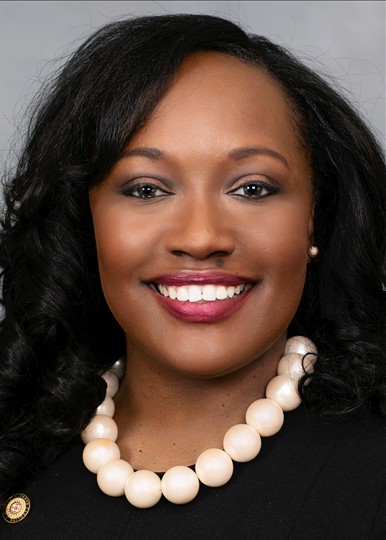
Sen. Natalie Murdock
Sponsored bills
Maddy summarySB 483, "The Children First Act," expands affordable child care access for North Carolina families by increasing financial assistance eligibility to 85% of the state median income and raising subsidy rates to match 2023 market costs. It allocates $50 million annually for subsidies and $15 million for grants to establish new child care facilities in rural or underserved areas, targeting "child care deserts." The bill also creates an employer child care credit and includes workforce licensing reforms to address staffing shortages. These provisions directly affect low-to-moderate-income families, child care providers, and employers seeking to support working parents.
Maddy summaryThis bill requires judges to find probable cause that giving notice would endanger lives before issuing no-knock search warrants. It also mandates officers to wait after announcing their presence for occupants to respond or for officers to verify if forced entry is necessary. These changes apply to all law enforcement executing search warrants in North Carolina, directly affecting how officers enter homes during searches. The bill amends North Carolina General Statutes §§ 15A-244(b) and 15A-249(b) to clarify these procedures.
Maddy summarySB 692 reduces the copayment rate for subsidized child care in North Carolina from 10% to 5% of a family's gross income. This directly affects low-income families who qualify for state-subsidized child care services. The bill amends existing law to lower the percentage parents pay for care, while maintaining the same blended and part-time care calculations (83% and 75% of full-time copayments, respectively). The change takes effect on July 1, 2025.
Maddy summarySB 656 exempts natural hair care services, blow-dry styling, and makeup artistry from mandatory licensing under North Carolina's Cosmetic Art Board. It converts the existing mandatory natural hair care specialist license into a voluntary certificate and expands where these services can be offered. The bill specifically defines "natural hair care" as tension-based techniques (like twisting or wrapping hair) without chemical treatments, "blow-dry styling" as using mechanical devices without chemicals or haircutting, and "makeup artistry" as cosmetic application without other licensed services. These changes directly affect service providers and businesses offering these specific cosmetic services, reducing regulatory barriers.
Maddy summarySB 691 would allow certain non-citizens, including those without lawful immigration status, to pay in-state tuition at UNC constituent institutions and North Carolina community colleges. To qualify, students must have graduated from a North Carolina high school or earned a high school equivalency diploma in the state, attended North Carolina schools for two consecutive years before high school, and (if undocumented) submit an affidavit about applying for legal status. The bill requires colleges to use a centralized process for residency determination and ensures all applicant information remains confidential. It takes effect July 1, 2025, applying to the 2025-2026 academic year.
Maddy summarySB 659, the "Investing in North Carolina Act," raises salaries for public school teachers and state employees for the 2025-2026 fiscal year. It establishes a new monthly salary schedule for teachers based on experience (ranging from $4,600 for 0 years to $6,370 for 29+ years), adds specific supplements for certified teachers, nurses, counselors, and specialists, and provides cost-of-living increases for retirees. The bill also expands the Wage$ program statewide and creates a tax credit for qualifying employers equal to 5% of wages paid or $10,000, whichever is lower. Directly affecting teachers, state employees, community college staff, UNC employees, retirees, and participating employers, it focuses on concrete pay adjustments through funding appropriations.
Maddy summarySB 575 makes failing to yield to a pedestrian when causing serious injury a Class 2 misdemeanor for drivers. It requires North Carolina's driver education programs to add a new pedestrian safety module covering when drivers must yield the right-of-way. The bill also mandates the Division of Motor Vehicles and Department of Public Instruction to study and report by January 1, 2026, on improving pedestrian safety instruction in driver education. These changes directly affect drivers, public school driver education curricula, and state agencies responsible for traffic safety training.
Maddy summarySB 611 allows drivers with non-REAL ID compliant licenses in North Carolina to renew their licenses remotely two times in a row. After two consecutive remote renewals, these licenses must be renewed in person. The bill applies only to licenses that do not meet federal REAL ID standards (required for certain federal purposes like air travel) and does not affect REAL ID-compliant licenses, which still require an in-person renewal after a remote one. The change takes effect January 1, 2026, for all renewals on or after that date.
Maddy summarySB 606 requires North Carolina state services to be accessible in 25 additional languages, including Spanish, Mandarin, Arabic, and Cherokee, by mandating translations for driver's license materials, tests, and traffic signs. It also mandates that public schools translate parent documents - such as enrollment forms, consent forms, and disciplinary notices - into those 25 languages. Additionally, the bill encourages schools to grant excused absences for religious observances and allocates $1 million to cover substitute teacher costs when educators take leave for such holidays. These provisions aim to improve access to essential services and education for non-English speaking residents while respecting cultural traditions.