

Maddy summarySB 641 reenacts North Carolina's refundable child tax credit, providing financial support to low- and moderate-income families with children. It offers $1,900 annually for each child under age 6 and $1,600 for older qualifying children, with credit amounts phasing out based on income (e.g., married couples filing jointly receive full credit up to $40,000 AGI, reduced to $100 between $40,000-$100,000, and none above $100,000). The credit is refundable, meaning families may receive a cash payment if the credit exceeds their state tax liability. This policy directly affects North Carolina households with children who meet income thresholds, aiming to reduce child poverty by supplementing family income. The bill takes effect for tax years beginning January 1, 2025.
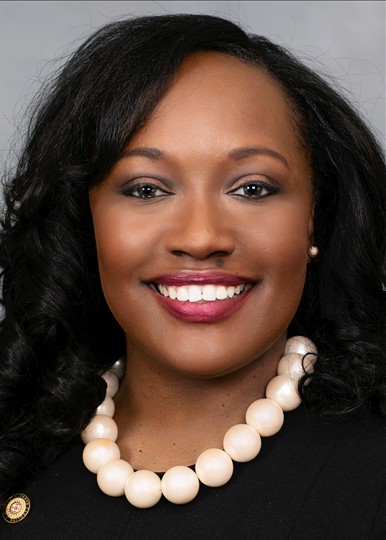
Sen. Natalie Murdock
Sponsored bills
Maddy summaryThis bill requires North Carolina public schools to teach age-appropriate artificial intelligence (AI) literacy from kindergarten through 12th grade starting in the 2025-2026 school year. It mandates state standards covering basic AI concepts, real-world uses, ethical issues like privacy and bias, and responsible AI use - such as preventing academic dishonesty. The standards can be integrated into existing computer science courses for middle and high school students. The bill directly affects all North Carolina public schools and their curriculum planning. It focuses on equipping students with foundational knowledge about AI systems and their societal impacts, rather than creating new programs or funding.
Maddy summarySB 643 expands North Carolina's Teaching Fellows Program by increasing funding for forgivable loans to recruit and support future teachers in high-need areas. It directly affects students pursuing teaching careers in qualifying fields (like STEM, special education, and elementary education) and North Carolina public schools facing teacher shortages, especially in rural communities. The bill establishes a Trust Fund to cover loan costs, administrative expenses, and new support services - including mentoring for teachers in low-performing schools and recruitment efforts targeting regions with the worst teacher retention. Key provisions include prioritizing funding for rural schools and requiring the program to use stricter selection criteria for applicants based on academic performance.
Maddy summarySB 652, titled "Voter Fraud Prevention Act" (though it addresses party switches, not fraud), requires North Carolina legislators who change political party affiliation during their term with over six months remaining to vacate their seat automatically. This triggers a special election within 90 days, as outlined in Section 1 of the bill. Additionally, Section 2 mandates that such legislators must refund campaign contributions from the most recent election cycle to donors who request it within 30 days. The bill applies specifically to elected or appointed members of the North Carolina General Assembly and is currently pending in the Senate Rules committee.
Maddy summarySB 653, titled "Polluter Pays," requires companies or entities causing water or air pollution to cover cleanup costs and provide alternative water supplies to affected residents. It amends environmental laws to let the state’s Commission order polluters to pay for investigations, cleanup, and temporary or permanent replacement water systems (including whole-house filtration for households) when pollution endangers health or safety. The Commission can enforce these orders through civil lawsuits if polluters refuse payment, and must provide affected residents with water solutions within specified timeframes. This directly affects polluting businesses and residents whose water or air quality is harmed by pollution.
Maddy summarySB 644 allocates $1.5 billion to North Carolina public schools for energy efficiency upgrades, solar panel installations, and replacing combustion-powered school buses with electric models. The bill provides specific funding: $1 billion for building improvements like high-efficiency lighting and HVAC upgrades, $250 million for solar panels on school rooftops, and $250 million to replace qualifying buses (over 10 years old and using motor fuel) with electric buses assembled in North Carolina. These changes directly affect all local school districts through funding tied to student enrollment, aiming to reduce energy costs and emissions. The program begins July 1, 2025, with concrete, measurable infrastructure changes as the core mechanism.
Maddy summaryThis North Carolina bill creates a civil remedy for victims of domestic violence, their children, and former foster youth who incurred debt through coercion (e.g., threats, fraud, or intimidation). It allows these individuals to submit documentation like police reports, court orders, or certified statements from domestic violence professionals to stop debt collection and repair credit reports. Debt collectors must halt collection efforts upon receiving valid documentation, but the law does not cover secured debts or require refunds for money already paid. The bill explicitly states it does not replace existing legal rights or defenses.
Maddy summarySB 645, "The Protect Our Schools Act," requires North Carolina's Department of Transportation to identify "school walk zones" near schools with high pedestrian traffic and set lower speed limits (minimum 20 mph) in those areas during school hours. It increases penalties for speeding in school zones (a $250 fine) or causing injury to a minor (a misdemeanor charge), applying to both public and private schools. The bill creates a $10 million Pedestrian Safety Enhancement Fund to support zone assessments, crosswalk guard training, and public awareness campaigns about school zone safety. These changes directly affect drivers, students, and school communities by strengthening traffic safety measures around schools. The law takes effect on December 1, 2025, with fund allocations beginning July 1, 2025.
Maddy summarySB 647, the Child Promise Act, allocates $90.25 million to expand North Carolina's Pre-K program to 10,000 new slots by 2027, serving 4-year-olds from families earning up to 300% of the federal poverty level (FPL). It provides $6.8 million annually in grants for childcare facilities in underserved areas (where child-to-provider ratios exceed 3:1), with funding levels based on facility size (up to $500,000 for large centers) and requiring a 15% match and 5-year service commitment. The bill also funds after-school programs in high-need public schools (over 50% free/reduced lunch students) for 3 hours daily, adjusts childcare subsidies to cover up to 300% FPL for children under 5, and creates a $1,500 tax deduction per child for families earning 300-400% FPL.
Maddy summarySB 651, "The Hustle Act," establishes North Carolina's Small Business Capital Access Act to improve financing for underserved small businesses and Minority/Women-Owned Business Enterprises (MWBEs). It creates a new Office of Small Business Capital Access within the Department of Commerce and a 11-member Oversight Board to manage a program offering loan guarantees (up to 90% for MWBEs, 80% for others), direct investments, and technical assistance. The program targets businesses headquartered in North Carolina, operating for at least one year, with demonstrated growth potential but denied traditional financing, prioritizing those in low-income or rural communities. Key provisions include requiring qualified lenders (like community banks and CDFIs) to provide loans covered by state guarantees, with funds directed toward business expansion, equipment, or working capital.