

Maddy summaryThis bill provides funding and expanded flexibility for North Carolina's Children of Wartime Veterans Scholarship Program, directly affecting eligible children of veterans attending state colleges and universities. It appropriates $1 million for the 2025-2026 academic year to increase award amounts for students whose scholarships were previously reduced, with any leftover funds reserved for additional scholarships starting in 2026-2027. For the 2026-2027 academic year, the bill allocates $10 million to double the number of available scholarships from 100 to 200 per class and extends administrative flexibility to allow officials to adjust award amounts, prioritize applicants, and manage room and board payments based on available funds. The legislation also permits the use of up to 2.5% of the program's budget for administrative costs and requires that all scholarship awards be contingent upon the availability of money.
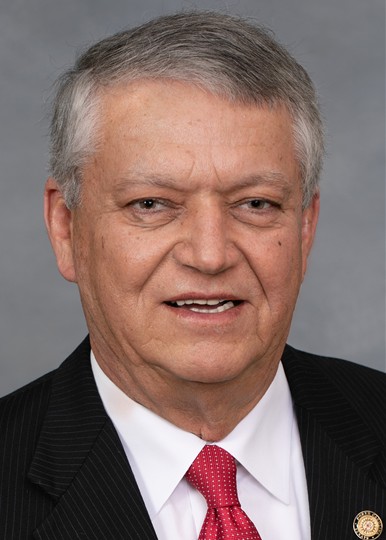
Sen. Norman Sanderson
Sponsored bills
Maddy summaryThis bill requires North Carolina state agencies to use zero-based budgeting on a rotating eight-year schedule starting in 2026. Under this method, agencies must justify every dollar of spending from scratch by listing specific activities, their legal basis, and the costs needed to maintain minimum or current service levels, rather than simply adjusting previous budgets. The Office of State Budget and Management will provide technical assistance to agencies as they prepare these plans, which must include data on program outcomes and the potential negative impacts of discontinuing any activity. Funding of $10,000 is allocated to the budget office to support the administration of this new requirement.
Maddy summaryThis bill proposes a constitutional amendment to allow any law-abiding citizen in North Carolina to carry a legal weapon for self-defense, either openly or concealed, without needing a permit. The proposal would remove the current prohibition on concealed carry while maintaining a permit system solely for reciprocity with other states and to facilitate weapon purchases. Eligibility for this right is restricted to individuals who have not been indicted or convicted of a violent crime or a felony involving controlled substances and who have not been adjudicated mentally incompetent. The amendment would also establish that carrying is not allowed on public or private property that is legally posted against it. If approved by voters in the 2026 general election, this change would become part of the state constitution.
Maddy summaryThis bill, known as the Hands Free NC Act, makes it illegal for drivers in North Carolina to hold a wireless communication device while operating a motor vehicle on public roads. The law prohibits texting, watching videos, or holding any electronic device, such as a cell phone or smartwatch, except when the vehicle is safely stationary or during specific emergencies like medical crises or unsafe road conditions. Drivers under 18 are allowed to use navigation systems if all destinations are entered before driving, while law enforcement, first responders, and emergency vehicle operators are exempt from these restrictions. Violations result in fines ranging from $100 to $200 depending on prior offenses within a 36-month period, and repeat offenders will face insurance points on their records. The legislation also prevents local governments from passing their own ordinances on this matter and requires driver education programs to include instructions on these new rules.
Maddy summaryThis bill is a procedural resolution setting specific dates for the North Carolina General Assembly to reconvene after its summer recess in 2025. It requires the legislature to reconvene on August 26, September 22, and October 21, 2025, with strict limits on what can be considered during each session. Only specific matters are allowed, including veto override attempts, appointments, election law bills, litigation challenges, and unfinished conference reports. It directly affects the General Assembly’s ability to work on legislation during these reconvened sessions. As a procedural measure, it does not create new policies but governs the session schedule and agenda.
Maddy summaryThis bill, officially titled "An Act to Establish Exemptions from Certain Floodplain Requirements for the Replacement or Reconstruction of Structures Damaged by Historic Flood Events," corrects the misstated title "Power Bill Reduction Act." It directly affects property owners seeking to rebuild or replace structures damaged by a "historic flood event" (defined as a flood meeting or exceeding a 200-year flood standard) within the base floodplain. The key provision allows rebuilding to the same or lesser size/volume as before the flood, without adhering to newer state or local flood regulations, but prohibits increases in size/volume unless hydrologic analysis proves it won’t raise flood elevations. This exemption applies to structures lawfully established before the flood event.
Maddy summaryThe provided context does not include the text or specific provisions of SB 254, only its procedural history (e.g., committee referrals and withdrawal). Without details on the bill's actual content, such as proposed changes to charter school funding, oversight, or operational rules, a substantive summary cannot be created. Legislative actions like "Re-ref to Judiciary" or "Withdrawn From Com" describe process, not policy. To summarize the bill's purpose or effects, the full text or official description would be required.
Maddy summarySB 311, titled "The Law and Order Act," increases penalties for assaulting utility and communications workers while they are identifiable in uniform and performing duties. It also creates new offenses, including criminal possession of embalming fluid, larceny of gift cards, and unlawful possession of certain explosive devices. The bill enhances punishments for reckless driving causing death, hit-and-run offenses, and firearm use by felons during crimes, while adding a mitigating factor for impaired drivers using ignition interlocks. Additional provisions revise burglary penalties, expand workplace violence prevention to cover mass picketing, and establish civil liability for gift card theft. The bill directly affects workers in essential services and individuals committing specified violent or property crimes.
Maddy summarySB 479, the SCRIPT Act, requires health insurers in North Carolina to allow patients to choose any participating pharmacy without restrictions. It prohibits insurers from imposing unequal copayments, financial penalties, or incentives that steer patients toward specific pharmacies. The bill directly affects insurers offering prescription drug coverage, independent pharmacies (defined as groups of 10 or fewer under common ownership), and patients seeking pharmacy services. Key provisions ensure equal treatment for all pharmacies in a plan and prevent insurers from limiting patient choice based on financial incentives.
Maddy summarySB 118, the Military and Veteran Support Act, reduces concealed handgun permit fees for veterans and streamlines school enrollment for military families. It allows veterans with honorable discharge (using DD-214 or VA ID) to pay $45 for applications and $40 for renewals - matching fees for retired law enforcement officers - effective July 2025. For military families, it permits remote school enrollment for students of active-duty members or those separating within 12 months, delaying proof of residency until enrollment begins, with extensions for high school seniors until graduation. These provisions directly affect North Carolina veterans seeking concealed carry permits and military-connected students enrolling in public schools. The bill is pending legislative action and not yet law.