

Maddy summarySB 259, the School Psychologist Omnibus, aims to improve the number and quality of school psychologists in North Carolina public schools. It provides $8.1 million for 2025-2026 to increase school psychologists' salaries by $650 monthly plus 12% for those with NCSP credentials, and allocates $5 million for a grant program offering signing bonuses (up to $5,000) to recruit psychologists, requiring a one-year commitment. Another $5 million funds an internship program with stipends for psychology students and supervisor bonuses, while $5 million supports a virtual training program at Appalachian State University. These provisions directly affect school psychologists, school districts, and psychology training programs across North Carolina.
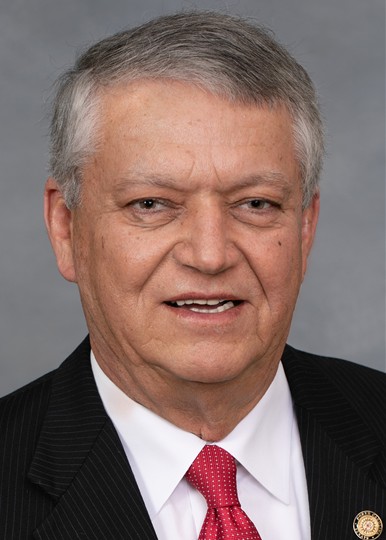
Sen. Norman Sanderson
Sponsored bills
Maddy summaryThis bill allocates funding for North Carolina's state agencies and departments to cover their current operations during the 2025-2027 fiscal biennium. It provides base budget appropriations from the General Fund, Highway Fund, and federal block grants to maintain existing services without creating new programs. The funding is set at maximum necessary levels, with unused amounts reverting to their respective funds at year-end. The bill applies solely to the 2025-2027 period and becomes effective July 1, 2025.
Maddy summaryThis bill permits the sale, possession, and use of specific consumer fireworks (like sparklers, party poppers, and novelty items) in North Carolina, while maintaining restrictions on most pyrotechnics. It directly affects consumers and retailers by allowing limited fireworks that comply with strict weight limits (e.g., no more than 16 milligrams for party poppers) and requires compliance with new regulations under Part 2 of Chapter 58. The bill establishes an excise tax on consumer fireworks sales and amends existing laws to define permitted items, such as wire sparklers (under 100 grams) and sparklers emitting showers of sparks. It does not change prohibitions on most fireworks, including indoor displays or sales to minors under 18.
Maddy summarySB 228 modifies North Carolina's property tax exclusion for disabled veterans, replacing a flat $45,000 exemption with a percentage-based system tied to the veteran's VA disability rating. It directly affects veterans with a 50% or higher service-connected disability rating (or surviving spouses if the veteran died from a service-connected condition), who own their primary residence. Under the bill, the tax exclusion equals the veteran's disability percentage multiplied by their home's appraised value (e.g., a 70% disabled veteran would get 70% of their home's value excluded). Eligibility requires VA certification of the disability rating as of January 1 prior to the tax year, and the change takes effect for taxes due in 2025.
Maddy summarySB 160, the Respiratory Care Modernization Act, updates North Carolina's laws governing respiratory care professionals to reflect current practices, especially after increased pandemic demands. It creates a new "Advanced respiratory care practitioner" (ARCP) role for licensed professionals with specialized training, allowing them to perform advanced procedures under physician supervision - while explicitly excluding medical diagnosis, prescribing, or invasive surgeries. The bill clarifies the scope of practice for both standard respiratory care practitioners and ARCPs, defining permitted tasks like mechanical ventilation support and diagnostic testing, and establishing requirements for board-approved training. This directly affects respiratory therapists seeking advanced roles, their supervising physicians, and healthcare facilities providing respiratory care services.
Maddy summarySB 162 establishes a rebuttable presumption that joint custody and shared parenting - where a child spends near-equal time with both parents - is in the best interest of the child. It requires North Carolina courts to consider 11 specific factors (including domestic violence history, child's wishes, and parental cooperation) when determining custody, while mandating mediation for custody disputes before hearings unless waived. The bill does not override safety concerns; courts must protect children and victims of domestic violence, and a parent's absence due to domestic violence cannot be used against them in custody decisions. It directly affects families involved in custody cases and alters how courts evaluate parenting arrangements. The law becomes effective upon enactment.
Maddy summaryThis bill allows North Carolina local governments to borrow money to accelerate transportation projects already identified for funding under the State Transportation Improvement Program (STIP). Local governments can issue "grant anticipation notes" to cover project costs before receiving state funds, but notes must mature within 12 months after the project's scheduled completion year (no renewals allowed). Borrowing is capped at the full project cost, requires a special agreement with the DOT outlining project details and repayment plans, and must be repaid solely from state grant funds - without using local tax revenue or pledging the government's credit. The bill also ensures STIP program changes won't delay repayment of these notes.
Maddy summarySB 170 requires North Carolina's child welfare system to notify foster parents before a juvenile is placed with a biological parent. Specifically, it mandates that foster parents receive 15 days' written notice of court hearings about placement decisions and at least 48 hours of verbal notice if a child returns to a parent after a permanency hearing. This directly affects foster parents by ensuring they are informed about potential changes in a child's living situation. The bill amends existing law to explicitly include "the person providing care for the juvenile" (i.e., foster parents) as a required recipient of notice, strengthening their role in transition planning. It takes effect October 1, 2025.
Maddy summarySB 126 requires North Carolina state agencies to create zero-based budget plans every eight years on a rotating schedule, starting in 2025. Agencies must justify all activities from a "zero" funding baseline (not building on past budgets), detailing current services, minimum service levels, potential impacts of cuts, and program outcomes. The bill specifically excludes statutory appropriations (legally mandated funds) from these plans. It affects all executive branch agencies, with the Department of Health and Human Services divisions first required to submit plans in 2025. This policy mandates agencies to justify each program's necessity and cost-effectiveness before requesting funding.
Maddy summarySB 123 requires all North Carolina public schools - including traditional, charter, regional, and university-operated schools - to display U.S. and North Carolina flags in every classroom and near school entrances, and to schedule daily Pledge of Allegiance recitation with age-appropriate historical instruction. The law explicitly states that no student or staff member may be compelled to stand, salute, or recite the pledge. It allocates $1 million (nonrecurring) for flag purchases in 2025-2026 and $100,000 annually starting in 2026-2027. This applies to all public schools beginning with the 2025-2026 school year.