

Maddy summarySB 537 defines the scope of practice for Advanced Practice Registered Nurses (APRNs) in North Carolina, specifically for nurse practitioners (NPs), certified nurse midwives (CNMs), certified registered nurse anesthetists (CRNAs), and clinical nurse specialists (CNSs). The bill provides statutory definitions for each role, detailing permitted activities like diagnosing conditions, prescribing medications, ordering diagnostic tests, and managing patient care within their specialized focus areas. By codifying these definitions in state law, the bill removes longstanding ambiguity about APRN practice that has persisted for decades, as noted by North Carolina courts and the executive branch. This change directly affects over 20,000 APRNs in the state by legally clarifying their scope of practice.
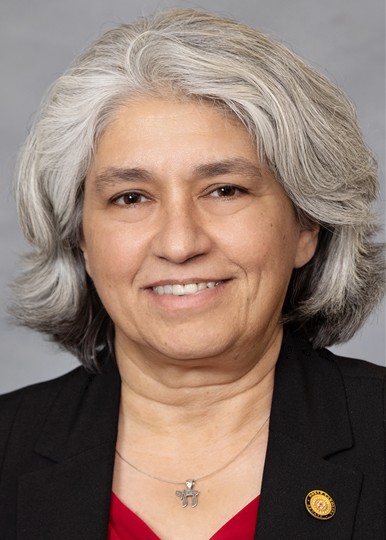
Sen. Lisa Grafstein
Sponsored bills
Maddy summarySB 638, the "Fair Maps Act," proposes a constitutional amendment to replace North Carolina’s current legislative redistricting process with an independent commission. It would establish the North Carolina Citizens Redistricting Commission to draw congressional and state legislative districts after each federal census, removing direct control from the General Assembly and governor. The law requires districts to have equal population, remain contiguous, avoid splitting counties, and preserve communities of interest (like shared cultural or geographic ties). If approved by voters in 2026, this change would take effect for the 2030 census-based redistricting cycle.
Maddy summarySB 636, the School Psychologist Omnibus, increases compensation for North Carolina school psychologists and creates programs to boost recruitment and training. It provides a $650 monthly salary supplement for all school psychologists, plus a 12% supplement for those with a nationally certified credential, funded by $8.1 million. The bill also allocates $1.7 million for grants to school districts offering up to $5,000 signing bonuses to recruit psychologists, $5 million for internship stipends, and $5 million for a virtual training program at Appalachian State University, plus $1.6 million to expand university training programs at five UNC schools. These changes, effective July 2025, directly affect school psychologists, public school districts, and university training programs to address staffing shortages.
Maddy summarySB 634, "Kayla's Act: Protecting Domestic Violence Victims," allows domestic violence victims to testify remotely in court to reduce trauma from facing their abuser. It directly affects victims in criminal cases involving domestic violence (as defined under North Carolina law), including assault, stalking, or violations of protection orders. The bill requires prosecutors to notify the defense 15 business days before remote testimony, with the defense needing to object in writing 5 days prior to prevent it. If the defense objects, a judge may still allow remote testimony if the victim would suffer serious emotional distress from testifying in person or if their communication would be impaired. The law also sets specific standards for how remote testimony must be conducted, including real-time audio/video and safeguards for cross-examination.
Maddy summarySB 618, the Lasting Economic and Academic Prosperity (LEAP) Act, establishes a state-funded endowment program to support early childhood development and child care initiatives in North Carolina. It directs the Department of Health and Human Services' Division of Child Development and Early Education (DCDEE) to use private donations (called "excluded amounts") and state funds held in a LEAP Reserve to generate investment income, which will supplement existing early childhood programs. The bill requires strict accounting to separate these funds, mandates annual reporting on spending and income to lawmakers, and appropriates $450,000 for fundraising in 2025-2026, with annual 5% increases for eight years. This directly affects North Carolina children by stabilizing early childhood program funding and incentivizes private donors through state matching.
Maddy summarySB 632 ("Homes for Heroes") creates a homebuyers' assistance program for North Carolina public servants (including teachers, firefighters, law enforcement, and emergency medical personnel) who are first-time homebuyers. It provides up to $25,000 or 10% of a home's purchase price - covering down payments, mortgage insurance, and closing costs - using $200 million in state funds, with mortgage assistance limited to 60 months. Separately, it establishes a tax credit for volunteer firefighters and rescue workers who incur unreimbursed work expenses, capping the credit at $5,000 or the taxpayer's annual income tax liability, requiring 36 hours of annual training. The program begins July 1, 2025, and the tax credit applies to taxable years starting January 1, 2025.
Maddy summarySB 630, the School Mental Health Support Act, creates two programs to improve student mental health services in North Carolina public schools. It appropriates $50 million for a grant program to help schools hire mental health support personnel (like counselors and psychologists), prioritizing schools serving students without insurance or with disabilities. Additionally, it allocates $50 million for a loan repayment program covering 20% of student debt annually for mental health workers (e.g., counselors, psychologists) who graduated from UNC schools and work in high-need areas. Both programs require annual reporting to legislative committees on funding distribution and outcomes. The bill directly affects public school units and mental health professionals in North Carolina.
Maddy summarySB 622 requires North Carolina employers to provide earned paid sick leave, directly affecting over 1.6 million private-sector workers currently without access. Employees earn 1 hour of paid sick time for every 30 hours worked, with small businesses (10 or fewer employees) limited to 32 hours annually and larger employers to 56 hours. Workers can use this time for their own health needs, family care, or addressing domestic violence, sexual assault, or stalking. The law applies to all covered employees except certain exempt workers and volunteers, aiming to ensure workers don’t lose pay for essential health-related absences.
Maddy summarySB 626, the Domestic Violence Divorce Reform Act, allows victims of domestic violence in North Carolina to obtain an absolute divorce without waiting the standard one-year-six-month separation period. To qualify, a victim must provide evidence (such as police reports, medical records, or domestic violence program documentation) proving the abuse and submit a statement confirming their status as a victim. The bill also abolishes outdated common-law lawsuits for "alienation of affection" (suing someone for breaking up a marriage) and "criminal conversation" (suing for adultery). These changes directly affect domestic violence survivors seeking divorce and eliminate specific legal claims that no longer align with modern family law. The bill takes effect upon enactment and applies to new divorce cases filed after that date.
Maddy summarySB 588, the Pregnant Workers Protection Act, protects pregnant employees and those with pregnancy-related conditions from workplace discrimination and requires employers to provide reasonable accommodations. It explicitly adds pregnancy to anti-discrimination laws (covering hiring, pay, and termination) and mandates accommodations like modified schedules, temporary transfers to less strenuous roles, or additional break time - unless providing them would cause significant difficulty for the business. The bill also extends these protections to housing by prohibiting discrimination against pregnant people when renting or buying homes. It applies to all employers in North Carolina and takes effect July 1, 2026.