

Maddy summaryHB 1192, known as the Energy and Housing Affordability Act, modifies how electric utilities in North Carolina handle changes in fuel costs and establishes rules for on-site power generation by large customers. The bill requires utilities to provide detailed data on fuel usage and emissions treatment to the Public Service Commission, which will then use a new sharing mechanism to adjust customer rates. Under this mechanism, if fuel costs rise or fall from a baseline, customers and utility shareholders will split the financial impact, with customers covering eighty percent and shareholders absorbing the remaining twenty percent of any variance. Additionally, the act appropriates funds to support a workforce housing loan program aimed at improving housing affordability.
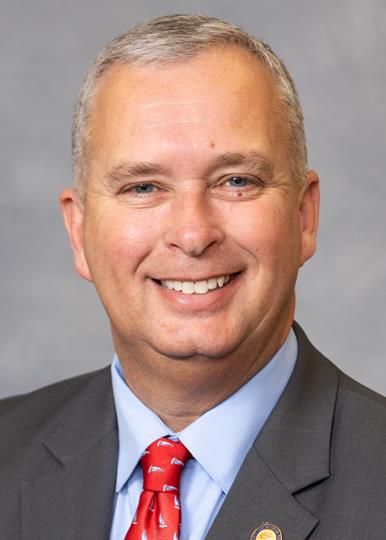
Rep. Todd Carver
Sponsored bills
Maddy summaryHB 1186 directs the North Carolina Collaboratory to create a pilot program that provides participating law enforcement agencies with new, more accurate drug-detecting technology to replace traditional color-based field tests. The bill requires these new devices to be portable, avoid relying on visual color changes for identification, and generate digital records for auditing and tracking emerging substances. Additionally, the program must conduct a comprehensive study to measure the technology's impact on case outcomes, officer safety, and the accuracy of drug testing across different communities.
Maddy summaryThis bill, titled the Workforce Act of 2026, provides funding and policy changes to expand workforce development programs in North Carolina. It allocates $3.1 million to the Community Colleges System Office to support the ApprenticeshipNC program, which helps connect employers with learners through work-based training. The legislation also directs the Department of Commerce to maintain a list of industry-valued credentials and collect data on wages and job outcomes to better align education with labor market needs. Additionally, it increases financial aid for short-term workforce development grants to help students pursue credentials that are not eligible for federal funding.
Maddy summaryThis bill establishes a program to provide free hyperbaric oxygen therapy to North Carolina veterans diagnosed with traumatic brain injury or posttraumatic stress disorder. The legislation appropriates $3 million from the state General Fund to a nonprofit organization to deliver approximately 15,000 treatments to an estimated 350 eligible veterans over the 2026-2027 fiscal year. The program includes structured clinical care and requires the provider to submit a detailed report on outcomes and fund usage by June 2027.
Maddy summaryThis bill allocates $260,538 in recurring state funds to the Iredell County Partnership for Young Children, Inc. starting in the 2026-2027 fiscal year to support the North Carolina Pre-K program. The legislation ensures that Iredell County receives the same per-child funding level as Beaufort County. The act is set to take effect on July 1, 2026.
Maddy summaryThis bill creates a new loan program in North Carolina to help nonprofit organizations prepare land for affordable housing by offering below-market interest rate loans. The funds, totaling $50 million for the 2026-2027 fiscal year, can only be used for site-related expenses like land acquisition, utility installation, and environmental testing, but not for building the actual homes. To qualify, borrowers must be experienced nonprofits that provide zero-interest mortgages to buyers and ensure at least 40% of units in mixed-income projects are reserved for low- and moderate-income families. The program is designed to support the development of housing for households earning up to 80% of the local area median income.
Maddy summaryHB 434, titled "Lower Healthcare Costs," is a procedural bill focused on updating definitions related to health insurance utilization review in North Carolina. It rewrites statutory definitions (e.g., "medical necessity," "clinical peer," "closely related service") within existing insurance regulations but does not introduce new cost-saving mechanisms or policy changes. The bill directly affects insurers, healthcare providers, and covered individuals by standardizing terminology used in prior authorization processes. As a definition-only update, it has no concrete policy impact on healthcare costs or patient access, and the title does not align with its actual scope.
Maddy summaryHB 118 modifies North Carolina's property tax exemption for disabled veterans, replacing a flat $45,000 exclusion with a percentage-based system tied to the veteran's VA disability rating. It directly affects veterans with a 50% or higher service-connected disability rating (or surviving spouses under specific conditions), allowing them to exclude a portion of their home's appraised value from property taxes - equal to their disability percentage. For example, a veteran with a 70% disability rating would exclude 70% of their home's value from taxes. The bill takes effect for taxes due in 2025 and prohibits combining this relief with other property tax exemptions.
Maddy summaryThis bill revises North Carolina's burglary and breaking-and-entering laws to increase penalties when a firearm or deadly weapon is used. It raises the felony classification by one level for offenses like burglary (first/second degree), breaking out of a dwelling at night, or entering a building with intent to commit a felony or terrorize occupants, if a weapon was present during the crime. The law directly affects individuals convicted of these specific offenses when a firearm was involved, not the general public. It does not change sentencing for weapon-free offenses or address police pay, despite the title "Back the Blue Pay Act" suggesting otherwise. The changes take effect December 1, 2025.
Maddy summaryThe bill title "Defund Planned Parenthood and Cost Transparency" does not match the actual content of HB 192, which is focused on education funding. This bill raises teacher salaries for the 2025-2026 school year using a new salary schedule (e.g., $5,000 for 0 years experience, $6,823 for 25+ years) and reinstates education-based supplements for advanced degrees ($126-$253 monthly). It appropriates $1.597 billion for salary increases and $8 million for supplements, while directing the North Carolina Collaboratory to study a student-based funding system by February 2026. The bill directly affects public school teachers, instructional support staff, and school psychologists. The title appears to be incorrect based on the provided bill text.