

Maddy summaryThis North Carolina bill requires all private employers with 25 or more employees to use the federal E-Verify system to check the work authorization of every new hire. It mandates that state and local government agencies also comply with these verification rules and allows employers to avoid penalties if they can prove they acted in good faith and did not knowingly accept fraudulent documents. The legislation establishes a 30-day grace period for employers to fix minor compliance errors and increases fines for repeat offenders while protecting workers who report suspected violations from retaliation. Additionally, it grants the state labor commissioner the authority to conduct random or risk-based audits of employers and provides funding to support enforcement efforts.
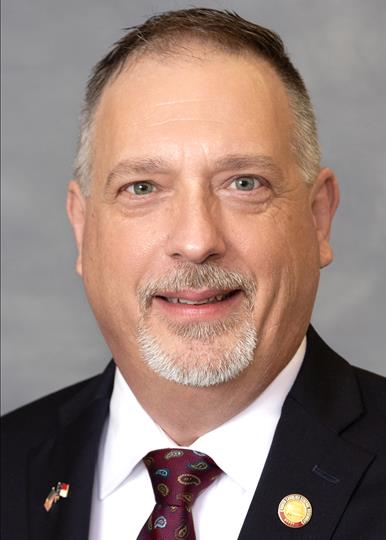
Rep. Ray Pickett
Sponsored bills
Maddy summaryThis bill establishes an Interstate Compact for School Psychologists in North Carolina, allowing licensed professionals to practice in other participating states without facing repetitive licensing requirements. The legislation creates a commission to oversee the agreement and defines specific rules for mobility, including provisions for military families and standards for professional conduct. Additionally, the bill allocates funds to support a virtual training program for school psychologists. By streamlining the licensure process, the measure aims to increase the availability of qualified mental health services in schools across member states.
Maddy summaryHB 443 proposes a constitutional amendment requiring the Governor to appoint a replacement for certain state officers (Secretary of State, Auditor, Treasurer, etc.) from a list of three nominees provided by the vacating official's political party, if the party submits recommendations within 30 days. This change would apply to vacancies occurring after the amendment's approval and would modify the current process where the Governor appoints without party input. The amendment must be approved by voters in the November 2026 general election to take effect. It directly affects the Governor's appointment authority and the political parties of the affected offices.
Maddy summaryHB 921, the ABC and Gaming Omnibus Bill, makes several key changes to North Carolina's alcohol laws. It allows ABC stores to open on Sundays with local government approval (subject to specific ordinances), clarifies rules for mobile bars to serve alcohol at events without requiring additional permits, and requires ABC stores to prominently display North Carolina-made spirits. The bill also permits businesses with mixed beverage permits to purchase spirits from any designated ABC store in the state and removes restrictions on draft line cleaning services for alcohol manufacturers. These changes primarily affect ABC stores, mobile bar businesses, local governments approving Sunday sales, and nonprofit organizations running 50/50 raffles.
Maddy summaryThis bill allocates $6 million in state funds to expand two food assistance programs in North Carolina for the 2026-2027 fiscal year. The first $4 million supports FarmSHARE, which provides grants to buy locally grown food and distribute it for free to food-insecure individuals and households. The second $2 million funds the Double Up Food Bucks Program, allowing people receiving nutrition assistance to use their benefits to purchase fresh fruits and vegetables at farmers markets and other local retailers. Both programs require the state department to submit annual reports detailing participation numbers, distribution metrics, and financial data to legislative oversight committees. The legislation takes effect on July 1, 2026.
Maddy summaryThis bill creates a pilot program to train new individuals with no prior experience as lead teachers in North Carolina's licensed child care centers. Funded by state money and requiring a local match, the program offers free, intensive training courses through community colleges in selected counties, with graduates receiving a state credential and potential stipends for completing the course and working for a year. The initiative aims to expand the child care workforce by establishing academies across the state, starting in Johnston and Wayne counties, and includes requirements for local partnerships to select additional sites. Additionally, the bill directs the North Carolina Partnership for Children to study the feasibility of liability insurance for providers and update bidding rules for child care grants.
Maddy summaryThis bill creates a new Rural Healthcare Infrastructure Fund in North Carolina to help build, repair, and modernize healthcare facilities in rural areas. The fund will provide money through grants and low-interest loans to support construction and renovation projects, while also replacing an older stabilization program. A state council must first develop and get approval for a detailed plan outlining how the fund will be managed and who can apply before any money is awarded. The bill also updates the duties of the state health council and requires annual reports on how the fund is being used.
Maddy summaryHouse Bill 433 allows licensed registered nurses (RNs) to serve as school nurses in North Carolina public schools. The bill prohibits the State Board of Education from requiring a four-year degree for school nurse employment. It specifies that RNs with at least two years of experience in a hospital or health clinic can work as school nurses without needing additional certifications or licenses. These qualified registered nurses will be paid under the certified school nurse pay scale.
Maddy summaryHB 1186 directs the North Carolina Collaboratory to create a pilot program that provides participating law enforcement agencies with new, more accurate drug-detecting technology to replace traditional color-based field tests. The bill requires these new devices to be portable, avoid relying on visual color changes for identification, and generate digital records for auditing and tracking emerging substances. Additionally, the program must conduct a comprehensive study to measure the technology's impact on case outcomes, officer safety, and the accuracy of drug testing across different communities.
Maddy summaryThis bill establishes a new North Carolina-Ireland Trade Commission to strengthen economic and cultural connections between the state and Ireland. The commission will be composed of seven members appointed by state legislative leaders and the governor, including representatives from business, education, and Irish-American civic organizations. Its primary responsibilities include encouraging trade and investment, facilitating exchanges, and submitting annual reports to the state legislature. The state will allocate $10,000 for administrative support, and the commission is set to begin operations in October 2026.