

Maddy summaryHB 564 provides a 2% cost-of-living adjustment for retirees in North Carolina's Teachers' and State Employees' Retirement System, Consolidated Judicial Retirement System, and Legislative Retirement System. It increases retirement payments for retirees who retired on or before specific dates (July 1, 2024, for most systems, or January 1, 2025, for the Legislative system) and offers a prorated increase for those retiring between July 1, 2024, and June 30, 2025. The bill appropriates $106.2 million from the General Fund to fund this adjustment, effective July 1, 2025. This policy change directly affects current retirees in these systems by increasing their monthly benefits.
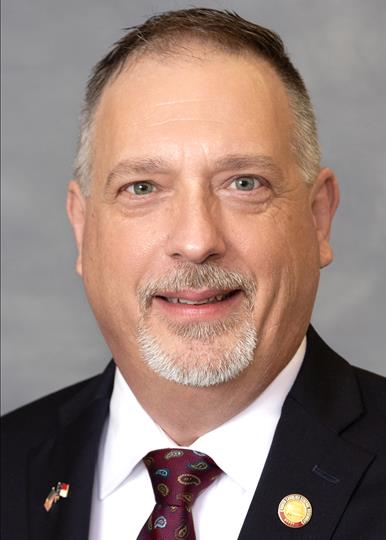
Rep. Ray Pickett
Sponsored bills
Maddy summaryHB 540 allocates $2 million in recurring state funds from the General Fund to the UNC Board of Governors for the 2025-2026 fiscal year. This funding will be directed to the Patriot Foundation to support its existing North Carolina Patriot Star Family Scholarship Program. The bill specifically provides financial resources for the program's operation, without creating new eligibility rules or altering the scholarship's structure. It becomes effective July 1, 2025, and directly affects the scholarship program's budget for that fiscal year.
Maddy summaryHB 542 appropriates $7.5 million annually from the ARPA Temporary Savings Fund for the 2025-2027 fiscal biennium to expand mental and behavioral health services for children, families, and staff in North Carolina child care facilities and out-of-school programs. The funds, managed by the North Carolina Partnership for Children (NCPC), must supplement existing services and cannot replace current funding, with unused funds remaining available until fully spent. NCPC must distribute the funds to local partnerships and submit annual progress reports detailing services provided, participants served, and recommendations for future initiatives. The bill also establishes a special fund to hold unexpended funds, allowing NCPC to retain up to $5 million in cash annually for future use.
Maddy summaryHB 534 appropriates $700,000 from North Carolina's General Fund for the 2025-2026 fiscal year to establish sexual assault nurse examiner (SANE) training programs at Rowan-Cabarrus Community College and Wake Technical Community College. Each college receives $350,000 to hire a full-time faculty member ($105,000), a clinical coordinator ($105,000), purchase equipment/supplies ($45,000), and cover program development and accreditation costs ($95,000). The bill directly affects these two community colleges and future healthcare professionals seeking SANE certification. It creates a concrete funding mechanism to expand training capacity for nurses specializing in sexual assault victim care.
Maddy summaryHB 505, "Kayla's Act: Protecting Domestic Violence Victims," allows domestic violence victim witnesses in North Carolina criminal cases to testify remotely (via video or similar technology) instead of in person during trials. This directly affects victims, prosecutors, defense attorneys, and courts in domestic violence cases involving crimes like assault or stalking under Chapter 14 of state law. The bill requires prosecutors to notify defendants 15 business days in advance of remote testimony, with defendants having 5 days to object in writing; if no objection is filed, remote testimony is permitted. If a defendant objects, a judge may still allow remote testimony only if the victim would suffer serious emotional distress from testifying in the defendant's presence or if their ability to communicate with the court would be impaired, with strict court oversight to ensure fair cross-examination.
Maddy summaryHB 498 creates a retirement credit for North Carolina teachers who served in the military. It allows veterans to count up to four years of active duty service toward their state retirement system, provided they weren’t dishonorably discharged, served before becoming a teacher, and meet licensure requirements. The bill modifies the retirement system to include this credit, requiring employers to pay a lump sum covering the retirement system’s increased liability for the credited service. This directly affects military veterans transitioning to teaching careers in North Carolina, making their prior service count toward retirement benefits.
Maddy summaryHB 490 revises North Carolina's community college funding model to prioritize enrollment in workforce-focused programs. It requires the State Board of Community Colleges to allocate base funding plus additional funds based on full-time student enrollment in curriculum, workforce training, and Basic Skills courses, with weighted funding for high-demand fields. The bill also creates an "Enrollment Increase Reserve" to fund colleges with enrollment growth exceeding 5% in targeted programs and permits community colleges to add up to a 10% tuition surcharge for eligible courses, with funds restricted to instructional costs. These changes directly affect community colleges and students in workforce education, effective July 1, 2025.
Maddy summaryHB 475 creates a pilot program allowing high school students aged 16 and older in Mecklenburg, Randolph, Union, and Watauga counties to obtain a state-issued special identification card at no fee. The bill requires schools and the DMV to coordinate on two designated school days each year (before and after December 31) for students to apply, with schools providing necessary information to the DMV. It also permits schools to request certified birth certificates for applications without making them public records. The pilot program runs until December 31, 2027, and does not apply to other counties or age groups.
Maddy summaryHB 47, the Disaster Recovery Act of 2025 - Part I, allocates $524 million from the Helene Fund to support recovery efforts in North Carolina counties impacted by Hurricane Helene. The bill directs funds to specific programs including home reconstruction ($120 million), agricultural crop loss assistance ($200 million), road and bridge repairs ($100 million), small business infrastructure grants ($55 million), debris removal ($20 million), fire department equipment ($10 million), and tourism promotion ($4 million). These resources directly assist residents, farmers, local governments, and businesses in designated hurricane-affected counties by addressing immediate rebuilding needs and supporting economic recovery. The bill requires programs to align with federal disaster recovery guidelines to maximize potential federal reimbursement, with reporting requirements for certain initiatives.
Maddy summaryHB 449 increases penalties for computer solicitation of minors, making second offenses or those involving actual meetings Class D felonies (up from Class H). It requires sex offender registration petitions to be filed with courts and placed on criminal dockets for timely review. The bill also creates new offenses: "habitual indecent exposure" (Class F felony for two prior convictions) and "aggravated habitual indecent exposure" (Class E felony), both mandating sex offender registration. These changes directly affect individuals convicted of repeated indecent exposure or online solicitation of minors in North Carolina.