

Maddy summaryHB 766 appropriates $1.87 million to fund expanded Teen Mental Health First Aid (tMHFA) training for North Carolina high school students in grades 9-12 (ages 14-18). The bill directly affects students by providing evidence-based training to help them recognize, understand, and respond to peers' mental health and substance use challenges. Key provisions include funding for the Department of Health and Human Services to scale up tMHFA programs statewide, building on a pilot that trained 1,519 teens and showed a 50% increase in teens' willingness to seek adult support. The training focuses on connecting peers to trusted adults during crises, addressing high rates of unmet mental health needs among teens (64% don’t seek help, per the bill’s rationale).
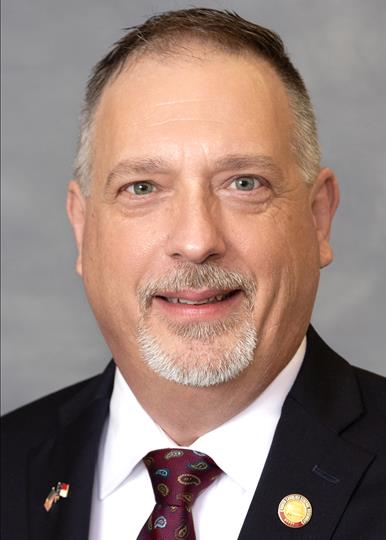
Rep. Ray Pickett
Sponsored bills
Maddy summaryHB 753 allows eligible North Carolina law enforcement officers aged 59.5 or older to continue receiving retirement benefits while remaining actively employed. Retired officers who separated from service for at least six months may return to duty and retain their retirement benefits. The bill requires employers to cover both employee and employer retirement contributions during this period and clarifies that beneficiaries remain eligible for death benefits under specific conditions. It directly affects current and retired state/local law enforcement officers meeting age and service criteria.
Maddy summaryHB 780 appropriates $2 million to expand the All Pro Dad program in North Carolina through Family First, Inc., funding school-based chapters, father-child engagement events, and parenting resources. It also creates the "Responsible Fatherhood NC" program under the Department of Health and Human Services, requiring a nonprofit manager to run a statewide media campaign, provide father-focused resources, and promote existing fatherhood initiatives. The bill directs grants to community organizations addressing fathers' needs - such as employment, child support, and parenting skills - with priority given to areas facing high unemployment, incarceration, or single-parent households. The program directly supports North Carolina fathers and their children, aiming to improve family well-being through increased paternal involvement.
Maddy summaryHB 716 modifies North Carolina's bail bond laws to clarify when a bail bond forfeiture can be overturned. It directly affects defendants, bail bondsmen (sureties), and courts by adding specific requirements for setting aside forfeitures related to defendant incarceration. The key provision requires that if a defendant is held in any U.S. jail or prison during a failure to appear, the jail must notify the local district attorney in writing (via hand delivery, electronic filing, or certified mail) and provide proof the defendant remained incarcerated for 10 days after notification. This replaces vague prior language with clear, documented procedures for bondsmen to avoid liability when defendants are incarcerated. The bill does not change bail amounts or eligibility but streamlines how forfeitures are resolved in cases of incarceration.
Maddy summaryHB 355 directs North Carolina's Legislative Research Commission (LRC) to study challenges facing rural fire departments, focusing on volunteer recruitment, funding, equipment needs, interdepartmental cooperation, firefighter well-being, and public education. The LRC must examine specific issues like financial incentives for volunteers, equitable resource distribution, mutual aid agreements, and community fire safety programs. It requires regional public hearings and a 90-day comment period before submitting interim and final reports to the 2025 and 2027 General Assemblies. This bill does not change current law but sets up a review process to inform future legislative action.
Maddy summaryHB 658 allows licensed optometrists in North Carolina to provide telehealth services (remote video consultations) to patients within the state, without requiring the optometrist to be physically present in North Carolina or hold a license in the state where they are located during the consultation. This directly affects optometrists licensed in North Carolina who wish to offer remote care to NC patients. The bill specifies that telehealth practice must follow all existing optometry laws and Board rules, and the North Carolina Board of Examiners in Optometry must create implementing rules by December 2025 covering patient records, diagnoses, and telehealth standards. The law takes effect on October 1, 2025.
Maddy summaryHB 582, titled "Providing Relief to Impacted Families Act," creates a quarterly tax refund program for specific nonprofits using motor fuel. It directly affects eligible organizations like volunteer fire departments, rescue squads, sheltered workshops (recognized by DHHS), and nonprofits distributing free food, by refunding the excise tax paid on fuel minus one cent per gallon. The key provision requires these nonprofits to claim refunds quarterly based on prior quarter purchases, reducing their operational costs. The bill does not address family relief as implied by its title but focuses solely on tax refunds for qualifying nonprofit entities. The measure is currently pending in the House Finance Committee.
Maddy summaryHB 588 aims to improve the number and quality of school psychologists in North Carolina through multiple funding initiatives. It provides a $650 monthly salary boost and a 12% supplement for certified school psychologists (totaling $8.1 million), establishes a $5 million grant program to fund signing bonuses (up to $5,000) for recruiting new psychologists with a one-year commitment requirement, and creates a $5 million internship program offering stipends at starting salaries. Additionally, it allocates $5 million for a virtual training program at Appalachian State University and $1.6 million to expand school psychology programs at five UNC institutions to double graduate output. The bill also includes an interstate licensure compact to facilitate practice across state lines, with all programs requiring annual reporting to the legislature.
Maddy summaryHB 571 appropriates $500,000 from the state General Fund to the Department of Public Safety for a grant program treating police officers diagnosed with PTSD. It directly affects North Carolina police officers who have received a clinical PTSD diagnosis. The key provision establishes a state-funded grant program to cover treatment costs, with funds allocated for the 2025-2026 fiscal year. The program becomes effective July 1, 2025, and focuses solely on providing financial support for treatment, not on expanding eligibility or altering diagnosis standards.
Maddy summaryHR 563 adopts the permanent rules for the North Carolina House of Representatives during the 2025 Regular Session. These rules establish procedural guidelines including session hours (e.g., no Friday sessions in January and February, adjournment by 10:00 PM on Mondays and 9:00 PM on other days), quorum requirements, and the order of business for legislative proceedings.