

Maddy summaryHB 241 allocates $15.8 million in one-time state funds for specific projects in Person County and nearby areas. It provides $10 million for Roxboro’s wastewater plant repairs, $800,000 for Person County’s splash pad construction, and $5 million for Piedmont Community College’s health/trades center equipment. The funds are directed to these specific entities via grants from the Office of State Budget and Management for the 2025-2026 fiscal year. The bill becomes effective July 1, 2025, with no policy changes beyond the funding allocations.
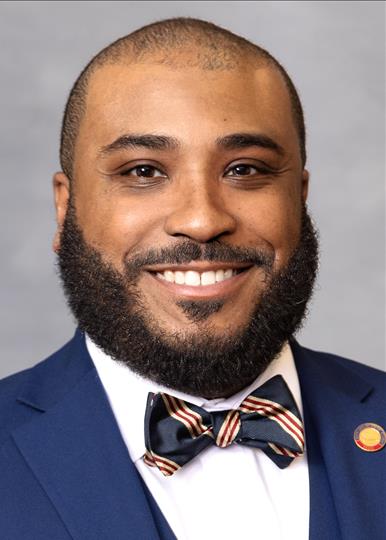
Rep. Terry Brown
Sponsored bills
Maddy summaryHB 249 allocates $10,112 to North Carolina State University for a Wake County pilot program to increase diversity in pickleball, specifically targeting underrepresented communities of color. The program requires focus groups with people of color, branded marketing materials, two 4-week sessions at Raleigh recreation centers (Method Road and Chavis) in fall 2025 and spring 2026, and a post-program toolkit for wider community use. It directly affects residents in Wake County by creating accessible pickleball opportunities through public recreation facilities. The bill focuses on concrete steps to address current underrepresentation in the sport, leveraging its low-cost, inclusive nature. Funds are restricted to these specific activities and do not revert.
Maddy summaryHB 256 repeals North Carolina's current ban on public employee collective bargaining, allowing state and local government workers (like teachers, police, and administrative staff) to negotiate wages and working conditions with their employers. The bill removes existing legal restrictions (Article 12 of Chapter 95) and explicitly states that public employees' bargaining rights apply to all state and local government employers. It does not create new benefits or funding but aligns public sector bargaining rights with those already available to private sector employees. The bill’s key provision is the repeal of the prohibition, enabling public employees to collectively bargain under existing state law.
Maddy summaryHJR 157 is a procedural resolution inviting Governor Josh Stein to address a joint session of the North Carolina General Assembly on March 12, 2025. It directs a committee of five House members and five Senate members to extend the invitation and specifies that the governor's cabinet, Council of State members, and state judges may attend. This resolution does not create new policy or affect any laws; it solely schedules a ceremonial address. The invitation is effective upon ratification, as noted in the resolution's text.
Maddy summaryHB 130 establishes a $475 million program to provide financial assistance to North Carolina farmers who suffered crop losses from natural disasters in 2024. It directly affects farmers in counties designated by the USDA as disaster areas, requiring verified losses of eligible agricultural commodities (like crops, livestock, or specialty plants) planted but not harvested by January 1, 2024. The program uses county and state yield/price averages to calculate payments, mandates submission of USDA Form 578 or equivalent documentation within 30 days, and allocates funds from state reserves (Stabilization, IT, and Economic Development) to cover verified losses. Farmers must provide documentation for verification, and the Department of Agriculture may audit claims to ensure proper use of funds, with refunds required for inaccurate information.
Maddy summaryHB 196 appropriates $1.5 million from the General Fund to the North Carolina Museum of Life and Science, Inc., for a new biotechnology exhibit and laboratory. The funds will showcase North Carolina's biotech achievements and promote STEM career interest, directly benefiting the museum and students in the state. The bill creates a specific funding mechanism for this educational project, effective July 1, 2025. As a funding allocation, it does not alter laws or regulations.
Maddy summaryHB 177 requires North Carolina's State Human Resources Commission (SHRC) to review job requirements across state agencies and identify positions where a four-year college degree is unnecessary. The bill directs the SHRC to replace degree requirements with alternative qualifications like military service, apprenticeships, or trade school training where appropriate, and to remove unnecessary degree language from job postings. This policy change directly affects state job applicants who may qualify through non-degree pathways. The SHRC must report annually starting October 2025 on progress toward reducing these barriers.
Maddy summaryHB 179 would allow North Carolina taxpayers to deduct labor union membership dues from their state income tax starting in 2026. The bill creates a new tax deduction for dues, fees, assessments, or other payments required to maintain membership in a labor organization, as defined by state law. This applies specifically to individuals who pay such costs as a condition of union participation. The policy change takes effect for tax years beginning January 1, 2026.
Maddy summaryHB 175 proposes amending North Carolina's constitution to remove the current provision stating "marriage between one man and one woman is the only domestic legal union." If approved by voters in the 2026 general election, this change would allow the state to recognize all marriages equally, directly affecting all North Carolinians seeking marriage licenses or legal recognition. The bill requires voter approval via a yes/no ballot question in November 2026, with the amendment taking effect January 1, 2027, if passed. This is a constitutional referendum, not an immediate law, and would replace the existing constitutional language without altering current marriage laws.
Maddy summaryHB 181 reinstates North Carolina's Earned Income Tax Credit (EITC) for working families with children, providing a state tax credit equal to 5% of the federal EITC amount. The credit is refundable, meaning eligible families receive cash payments even if they owe no state tax, directly benefiting low-to-moderate income households struggling with housing, childcare, and basic living costs. It applies to taxable years beginning January 1, 2025, and aligns with federal EITC eligibility criteria. The bill reenacts the credit after its prior expiration, creating a concrete policy change to supplement family income.